
Last updated September 21, 2026
Full 25-point door and opener safety check with every visit - springs, cables, rollers, tracks, and your LiftMaster or Chamberlain opener included
You get a price before we start. It does not change when the truck arrives.
 Before
 After
After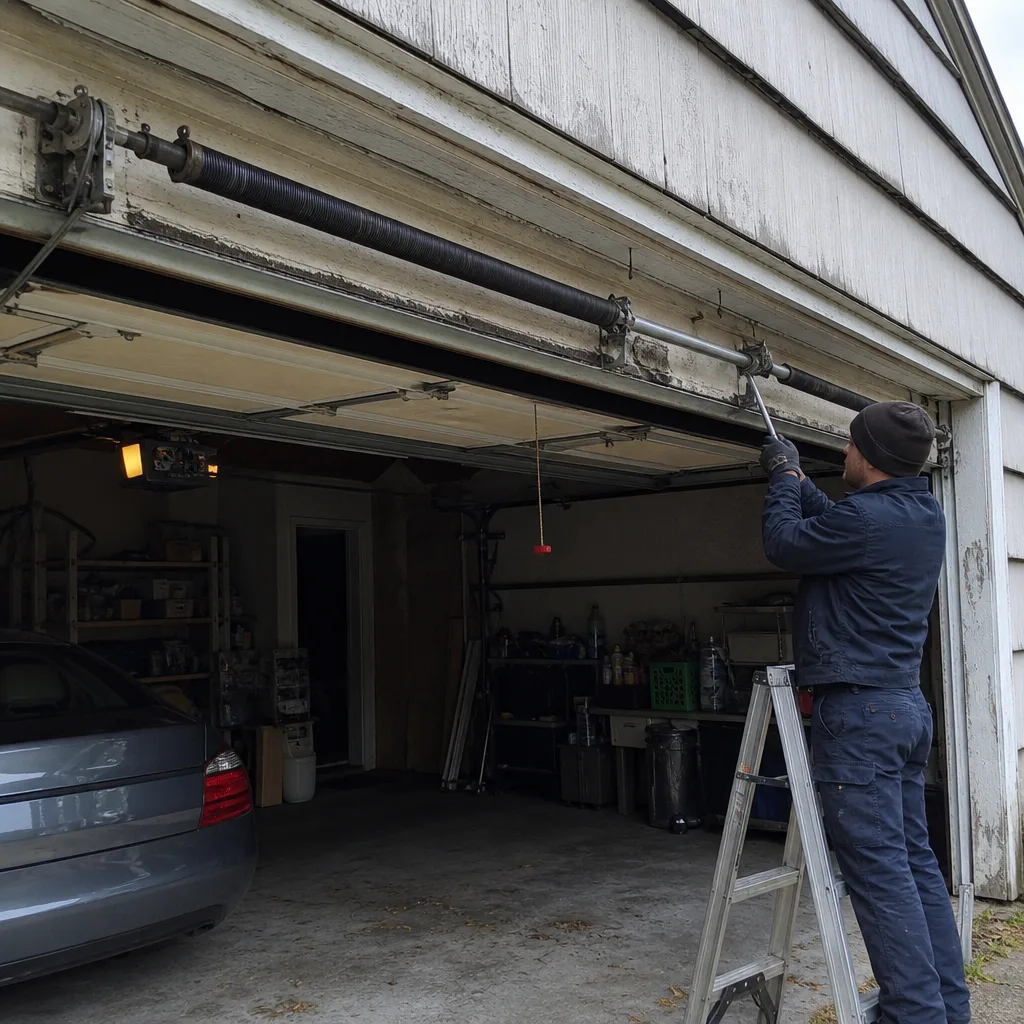 Before
 After
After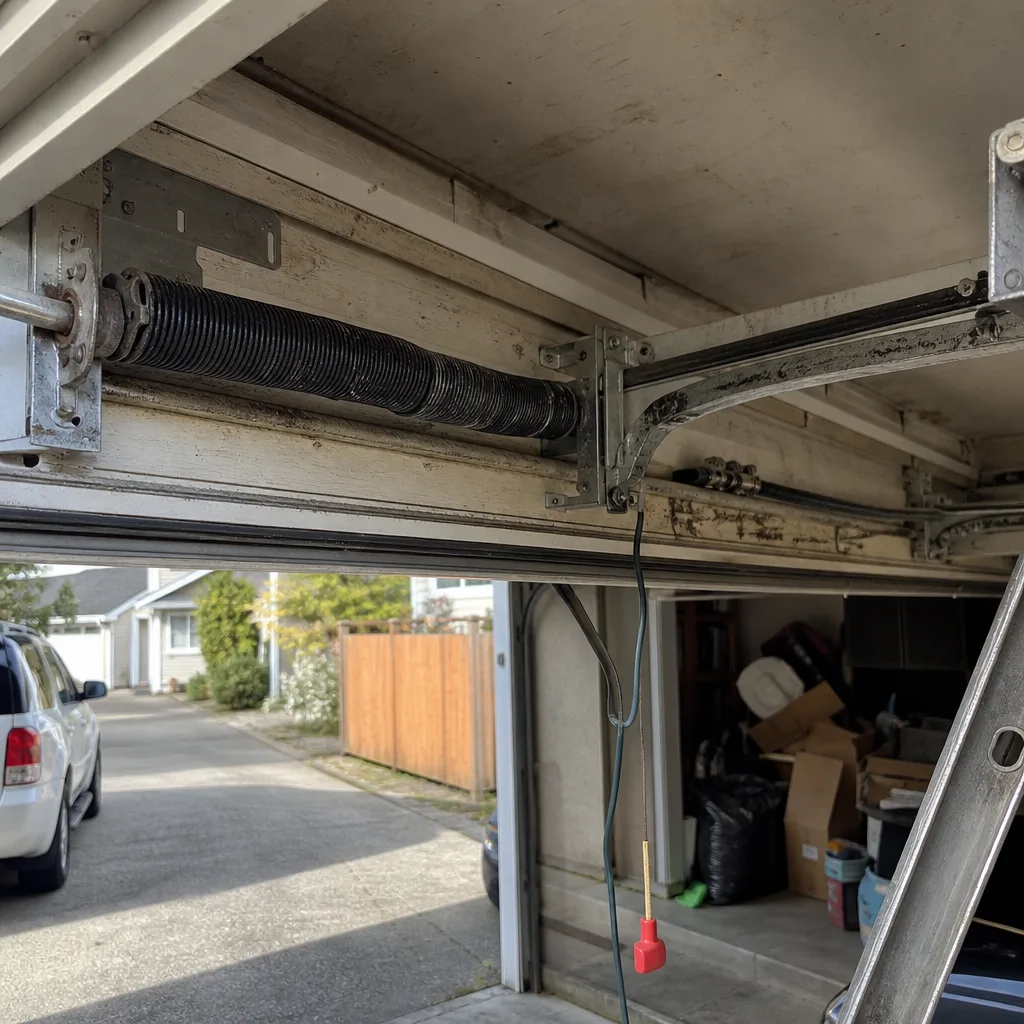 Before
 After
AfterGarage Door Repair Maintenance Checklist for Olympia Homeowners
Most garage door maintenance guides tell you to lubricate the hinges. Almost none tell you that petroleum-based lubricant in a damp Olympia winter attracts grit, accelerates wear, and voids some manufacturer warranties. Silicone spray is the correct product, and the timing matters as much as the task. After servicing garage doors across Olympia since 2015, we’ve learned that a checklist without a calendar is just paper. This guide sequences every task to the month when neglecting it causes measurable damage in our climate, from the October rains that swell wooden jambs to the July heat that throws track alignment off by fractions of an inch.
Quick Answer
A complete garage door maintenance checklist for Olympia homeowners includes monthly visual inspections, quarterly hardware tightening and balance testing, semi-annual lubrication with silicone spray (never petroleum-based), and seasonal weather seal checks timed to our wet winters and dry summers. Following this calendar reduces emergency Garage Door Repair calls by catching torsion spring fatigue, track misalignment, and opener strain before failure.
Table of Contents
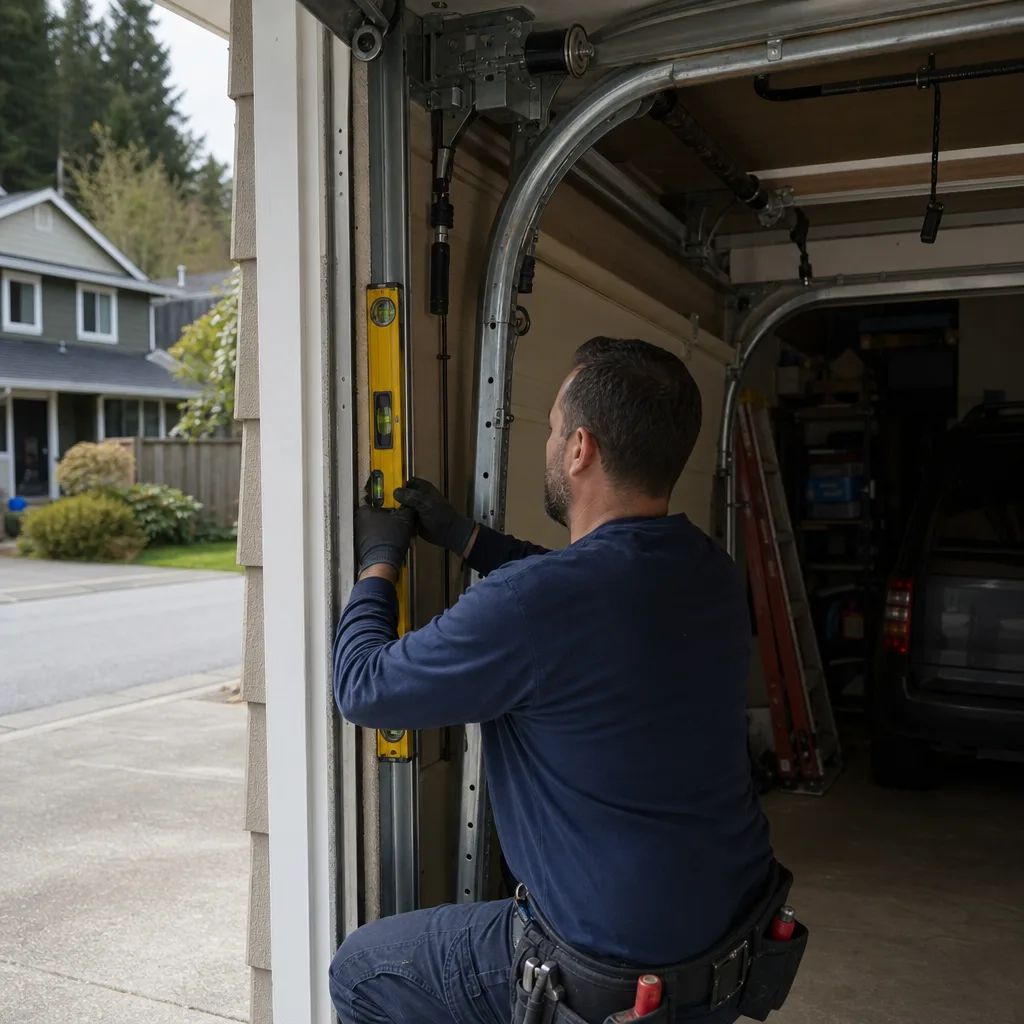
- Monthly Visual Inspections
- Quarterly Hardware & Balance Tasks
- Olympia Seasonal Maintenance Calendar
- The Correct Lubrication Guide
- DIY Balance & Force Tests
- Weather Seal Inspection Criteria
- Building Your Maintenance Record
- Common Mistakes to Avoid
- When to Call a Professional
- Frequently Asked Questions
 Before
 After
AfterMonthly Visual Inspections
The fastest way to spot a problem before it strands your car is a 10-minute walk-around with a flashlight. We recommend the first Saturday of each month, before the coffee cools.
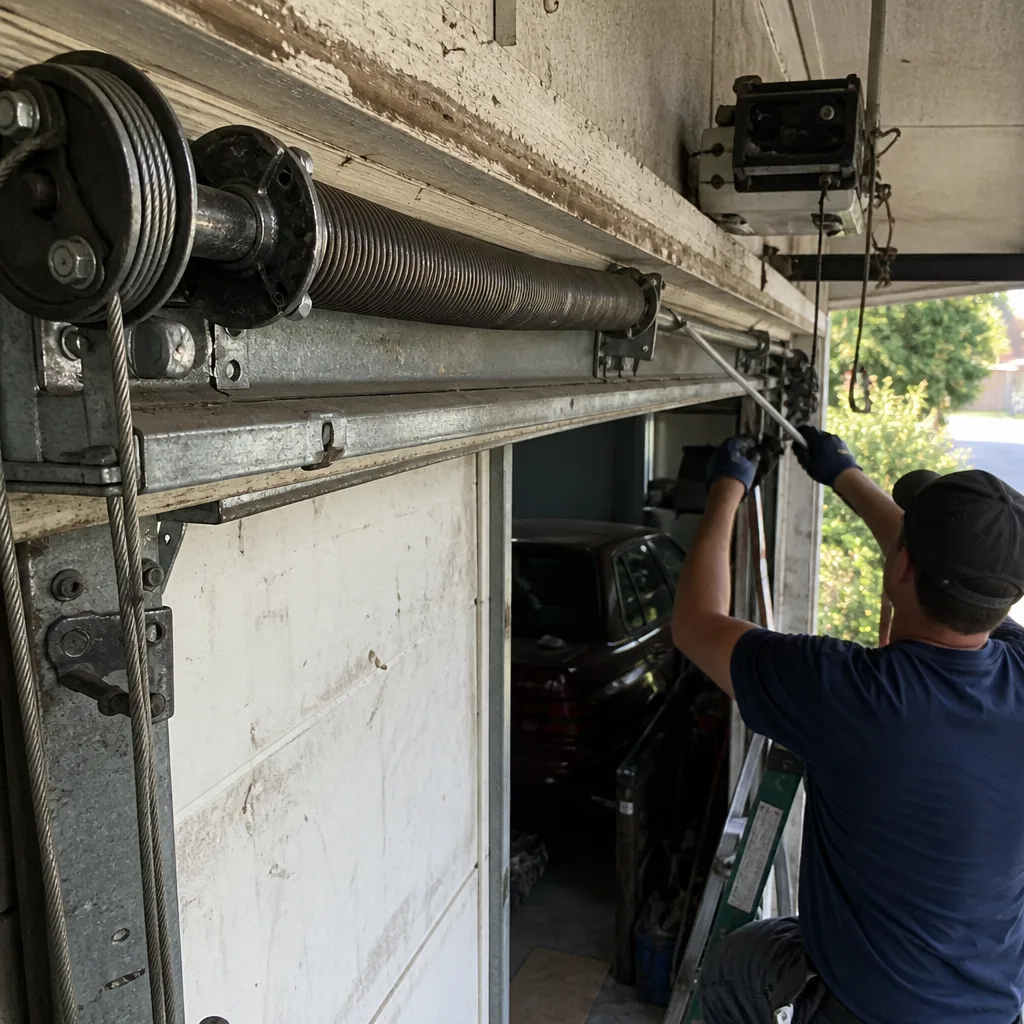
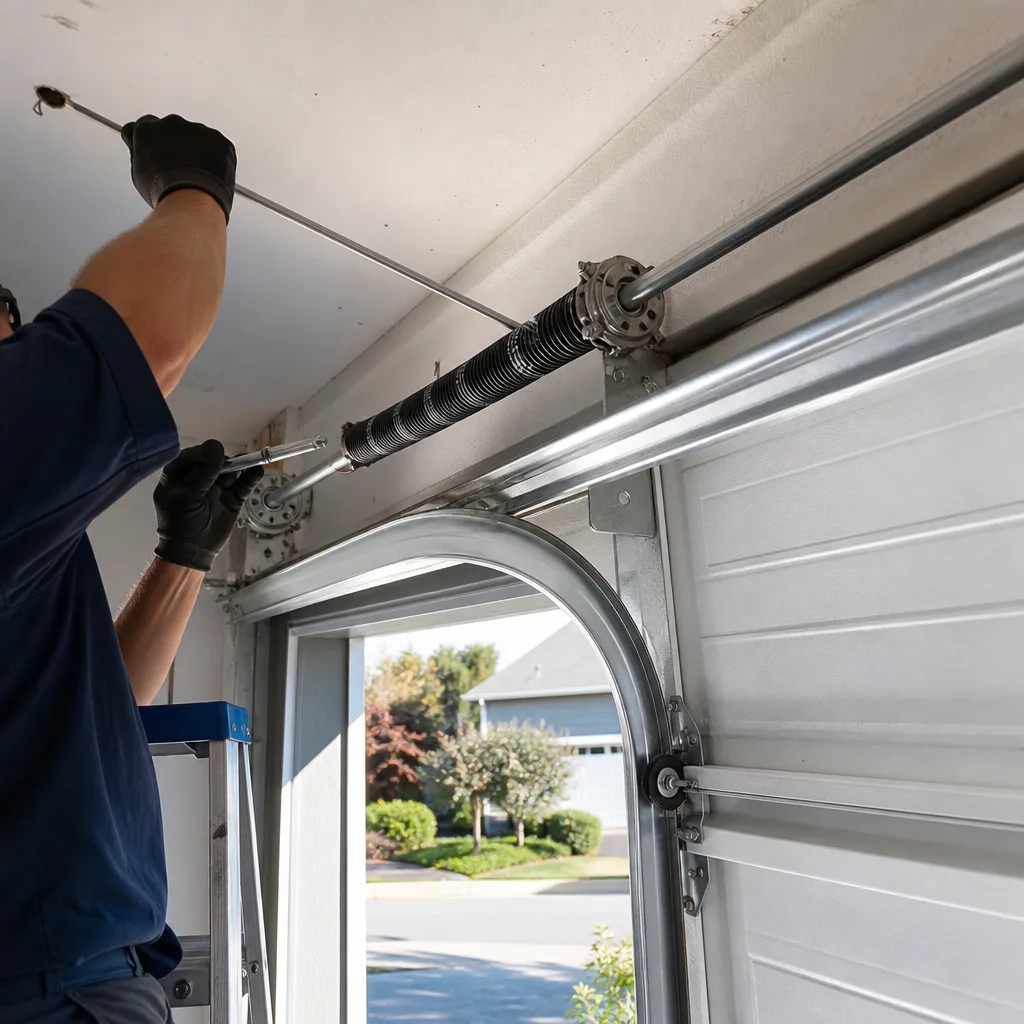
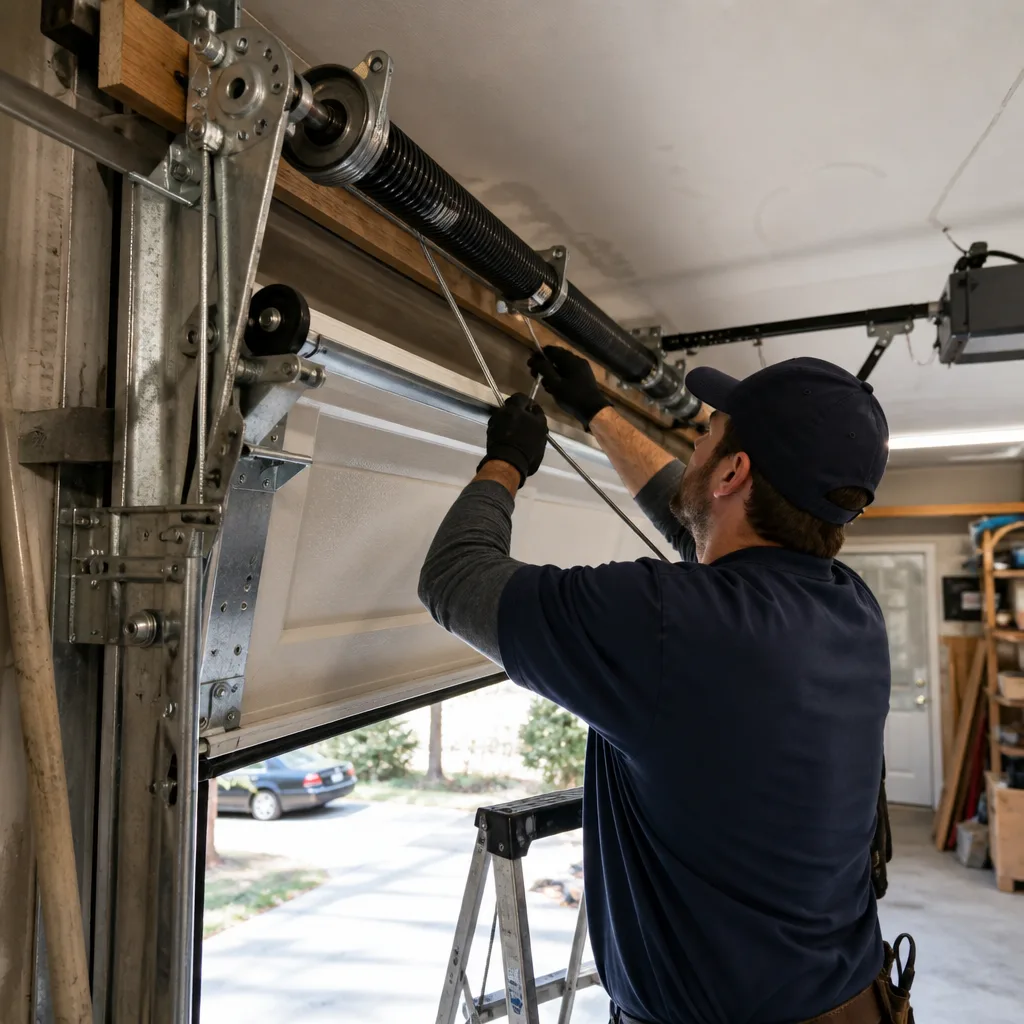
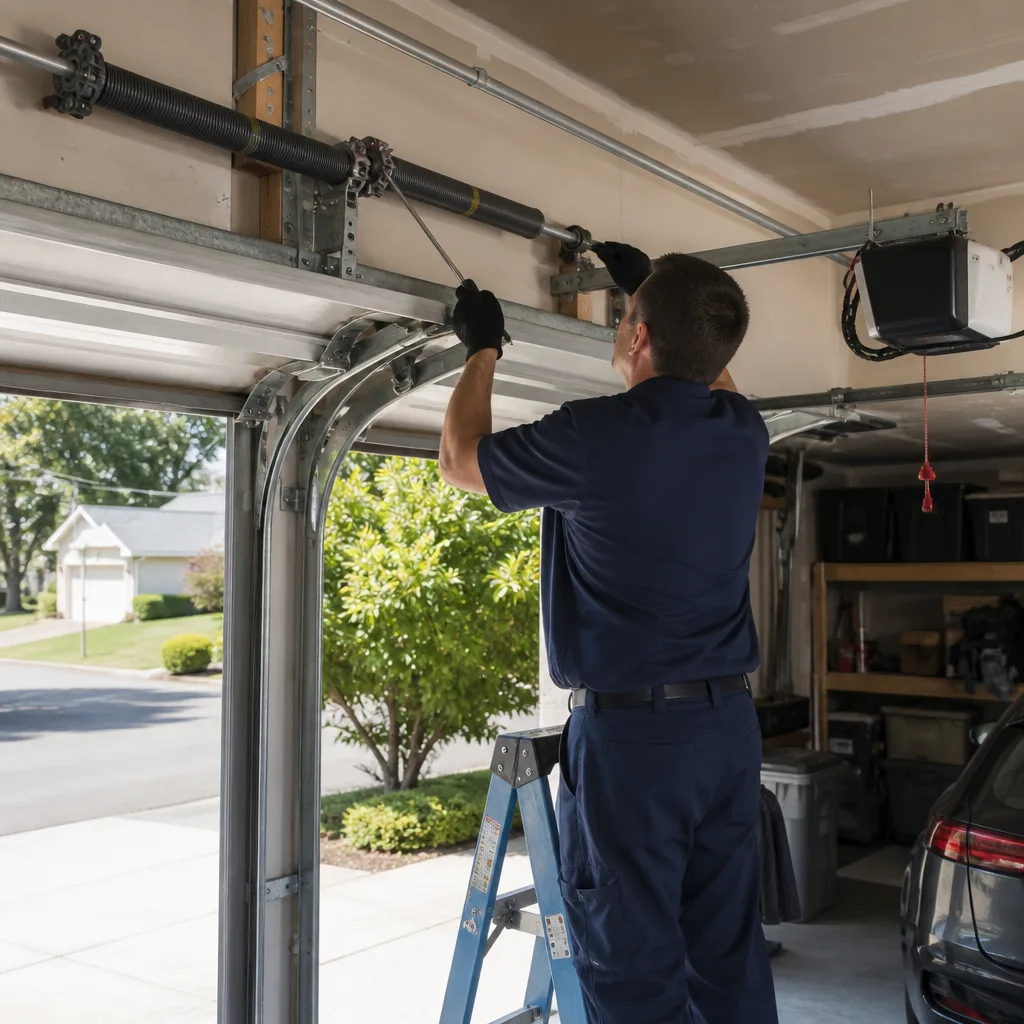
Start with the torsion spring above the door, or the extension springs along the horizontal tracks. Look for a gap in the coils, rust flaking off the wire, or a shiny “stretch mark” where the metal has begun to separate. A torsion spring stores enough torque to lift 150 to 300 pounds of door weight. If you see a clean break at the coil, stop using the door immediately. This is not a DIY repair. The spring is under lethal tension, and unwinding it without the proper winding bars and training causes serious injury every year.
Next, run the door up and down while watching the rollers in the tracks. Nylon rollers should spin freely and quietly. Steel rollers will rattle slightly, but if one is stuck or wobbling in its bracket, the bearing has failed. A failed roller forces the opener to pull unevenly, which warps the horizontal track over time.
Inspect the cables on both sides of the door. Fraying looks like a toothbrush with bristles splayed outward. Any fraying means the cable is losing structural integrity. A snapped cable on one side turns the door into a cantilever, and the resulting twist damages the top panel and the track geometry.
Finally, check the safety sensors at the base of the vertical tracks. The LED indicators should glow steady, not flicker. Wipe the lenses with a dry cloth. In Olympia’s damp climate, condensation can form inside the sensor housing and cause intermittent failures that seem like opener malfunctions but are actually moisture problems.
- Torsion spring: Gap, rust, stretch marks, or coil separation
- Rollers: Free spin, no wobble, no cracked nylon
- Cables: No fraying, no rust blooms, equal tension both sides
- Safety sensors: Steady LED, clean lenses, aligned brackets
- Hardware: No missing bolts at hinges, brackets, or track fasteners
Document what you see. A photo on your phone with the date is enough. When you call for garage door repair in Olympia, that photo becomes the starting point for an accurate phone estimate.
Quarterly Hardware & Balance Tasks
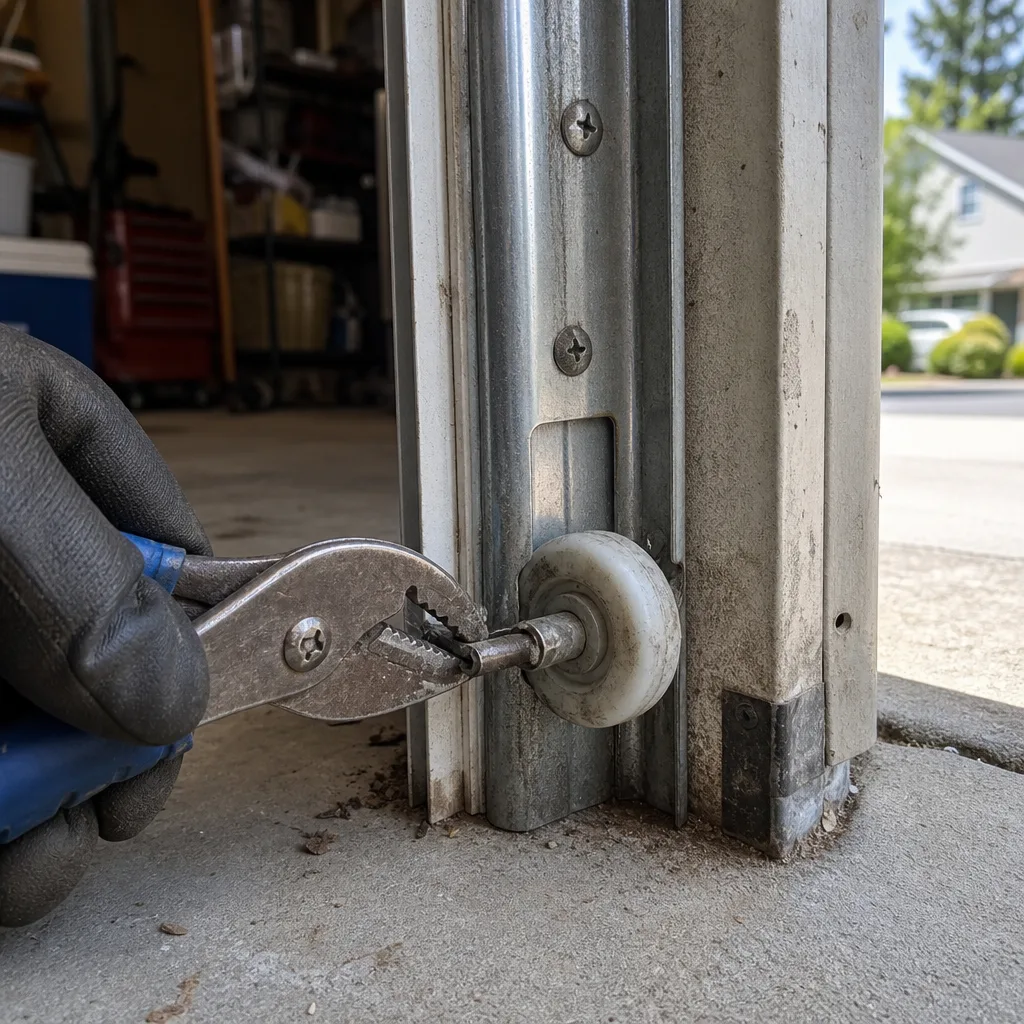
Every three months, test the door’s balance and the opener’s force settings. These two tests reveal whether the mechanical system is working within design limits or creeping toward failure.
The Balance Test
- Close the door and disconnect the opener trolley by pulling the red emergency release cord.
- Lift the door manually to waist height and release it.
- A properly balanced door stays in place or drifts slowly. If it slams down, the spring tension is too low. If it rises on its own, the tension is too high.
- Repeat at shoulder height and three-quarters open.
The threshold is simple: any uncontrolled movement more than 6 inches in either direction means the spring system needs adjustment. In our experience across Olympia neighborhoods from Eastside to Westside, doors that fail this test in spring are the ones that break cables or burn out openers by fall. The opener is not designed to lift an unbalanced door. It’s designed to move a door that the springs have already made weightless.
The Force-Reversal Test
- With the opener reconnected, place a 2×4 flat on the floor under the center of the door path.
- Close the door using the remote or wall button.
- The door should reverse within 2 seconds of contacting the board.
- If it doesn’t reverse, or if it crushes the board, the down-force limit is set too high.
All modern openers, including Genie and LiftMaster models, have this safety feature. A failed reversal test means the force setting is masking a mechanical problem, usually a binding track or failing roller, by brute force. The opener’s logic board and motor are absorbing stress they were never designed for.
While the door is disconnected, tighten every visible bolt with a socket wrench. Focus on the hinge bolts through the door panels, the lag screws securing the vertical tracks to the jamb, and the bolts at the horizontal track curve. Olympia’s seasonal humidity swings, from 85% in December to 40% in July, cause wood jambs to expand and contract. Bolts that were tight in September may be finger-loose by March.
Olympia Seasonal Maintenance Calendar
This is where generic checklists fail and ours earns its place. Olympia’s marine west coast climate creates specific failure modes at specific times of year. We’ve built this calendar from 18,000+ service records since 2015.
October: Pre-Rain Season Preparation
Before the first sustained rains arrive, inspect the bottom weather seal and side astragals for compression set, cracking, or daylight visible from inside the closed garage. The threshold matters: water pooling on an Olympia garage floor in October won’t evaporate until April. Check the concrete apron outside the door for settlement cracks that direct runoff toward the seal, not away from it. Clear the track bottoms of leaves and fir needles. Apply silicone spray to rollers, hinges, and bearing plates now, before the moisture arrives.
December: Mid-Winter Hardware Check
The coldest, wettest months accelerate corrosion on steel components. Re-tighten all bolts; thermal cycling has loosened them. Inspect the torsion spring for rust blooms, which indicate the protective coating has failed. If your door is steel and uninsulated, check the interior face for condensation streaks that suggest inadequate ventilation. In neighborhoods near Budd Inlet or Ellis Cove, salt air accelerates hardware corrosion; a December inspection catches this before spring failure.
March: Post-Frost Transition
As ground thaw begins, check whether the concrete slab has heaved or settled, throwing the vertical track plumb off. Look for new gaps between the door and the jamb. Test the balance again; cold storage of the spring has altered its temper slightly. This is the highest-failure month for openers in our records, as motors that strained through winter finally burn out.
July: Thermal Expansion Peak
Olympia’s brief dry heat creates the largest thermal expansion cycle of the year. Steel tracks expand lengthwise; vinyl-backed doors expand across their width. Run the door and listen for binding at the top of the travel, where the horizontal and vertical tracks meet. Check the opener’s force settings; what was correct in March may now be too tight or too loose. Inspect nylon rollers for flat spots caused by parking the door in the same position for weeks.
September: Pre-Storm Window
Before the October rains return, repeat the full weather seal inspection. Check the photo-eye alignment; summer vibration from frequent cycling may have knocked a bracket askew. Lubricate all moving parts. This is also the ideal time for a professional tune-up if you’ve deferred one, or to review our Garage Door Warning Signs: A Olympia Homeowner’s Reference Guide, before the busy season begins.
| Month | Primary Tasks | Olympia-Specific Risk |
|---|---|---|
| October | Weather seals, lubrication, debris clearing | First sustained rains; water intrusion begins |
| December | Hardware re-tightening, rust inspection | Peak moisture; salt air near waterfront |
| March | Balance test, slab settlement check | Ground thaw; opener motor failures peak |
| July | Thermal expansion check, force settings | Dry heat causes binding at track curves |
| September | Full pre-winter prep, photo-eye alignment | Storm season preparation |
The Correct Lubrication Guide
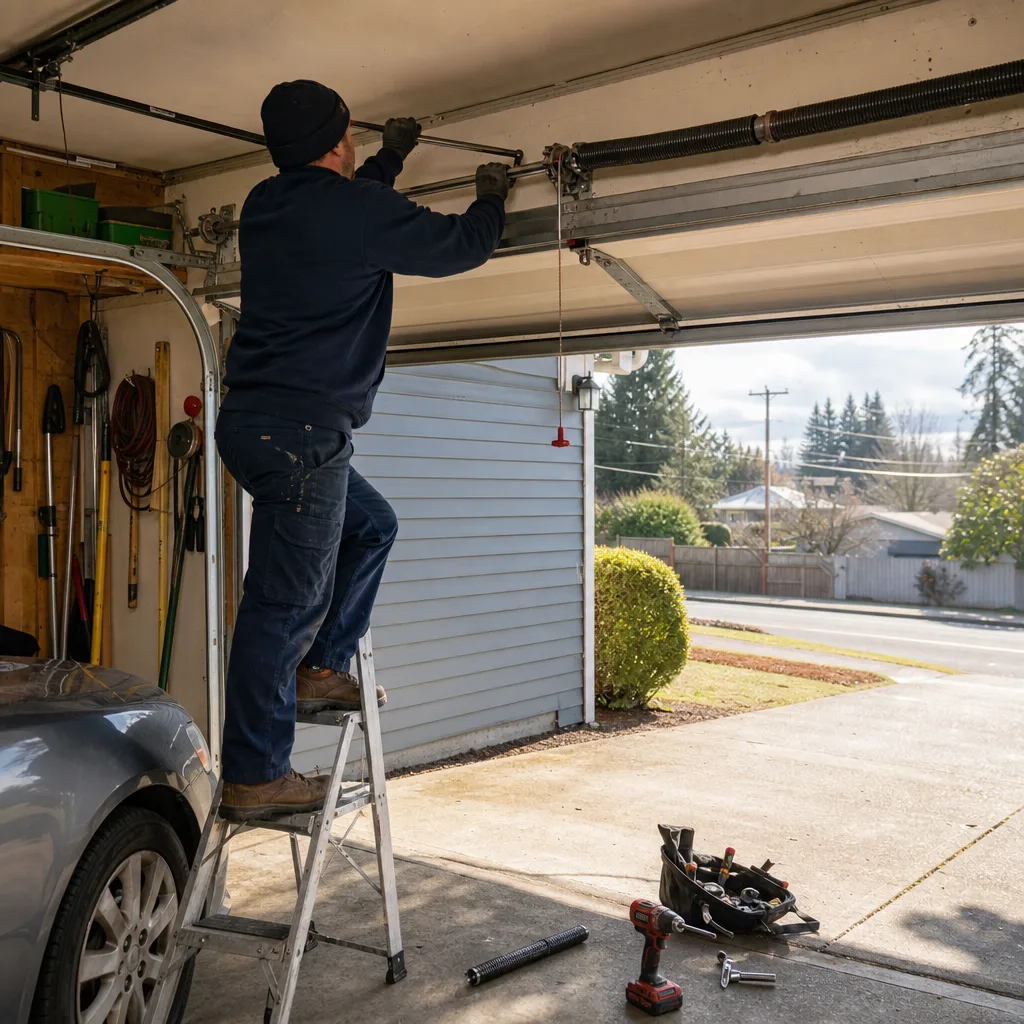
Here’s the detail that separates a useful checklist from a harmful one. WD-40 is not a lubricant for this application. It’s a water displacer and light solvent. It evaporates within days, leaving metal bare. Petroleum-based greases, including white lithium and motor oil, attract airborne grit. In Olympia’s damp environment, that grit forms an abrasive paste that wears rollers and hinges three times faster than dry operation.
The correct product is a silicone spray with Teflon or PTFE additive. It repels water, doesn’t attract dust, and maintains viscosity from 25°F to 120°F. We use it on every maintenance call.
What to Lubricate
- Rollers: Steel rollers need a light coat on the bearing shaft where it passes through the wheel. Nylon rollers need only the shaft; the wheel itself is self-lubricating.
- Hinges: The pivot points between door sections. Open and close the door to work the lubricant into the joint.
- Bearing plates: The stationary plates at both ends of the torsion spring tube. A few drops where the tube rotates inside the plate.
- Lock mechanism: If your door has a manual lock, the internal cam and bolt.
What Must Stay Dry
- The torsion spring itself: Lubricant here traps moisture against the wire and accelerates corrosion. The spring is under enough stress without pitting.
- The opener rail and chain/belt: Most modern openers, including Chamberlain and Genie belt-drive models, have sealed lubrication. Adding product attracts debris and voids warranty.
- The safety sensors: Any residue on the lens blocks the infrared beam.
- The tracks: Rollers need to grip the track, not slide on it. Lubricated tracks cause roller slippage and door drift.
Apply sparingly. A two-second spray per hinge is sufficient. Wipe excess with a rag. Run the door through two complete cycles to distribute the product. If you can see drips, you’ve used too much.
DIY Balance & Force Tests
These tests are safe for any homeowner to perform. They require no tools beyond a 2×4 scrap and attention. The numeric thresholds below come from manufacturer specifications and our field calibration.
Test 1: Static Balance (Manual Lift)
- Disconnect the opener via the red release cord.
- Lift the door manually from the bottom center handle.
- Stop at 3 feet off the floor. The door should hold position or drift less than 6 inches.
- Stop at 5 feet. Same standard.
- Stop at fully open. The door should not roll down more than 12 inches.
Numeric threshold: Movement exceeding 6 inches at any mid-travel position indicates spring tension outside ±10% of door weight. This is the point where we recommend calling for adjustment. Operating beyond this threshold risks opener damage and, in extreme cases, cable jump-off.
Test 2: Dynamic Force (Opener Reversal)
- Reconnect the opener.
- Place a 2×4 flat on the floor, centered under the door path.
- Command a close cycle.
- Time the reversal from first contact. Must occur within 2 seconds.
- Remove the board and verify the door completes a normal close cycle.
Numeric threshold: Reversal beyond 2 seconds, or failure to reverse, means the down-force setting exceeds 15 pounds of resistance. Federal safety standard UL 325 requires reversal within this window. A door that fails this test is a liability issue and a mechanical problem waiting to become an emergency.
Test 3: Photo-Eye Alignment
- Close the door normally.
- Pass a broom handle through the sensor beam at ankle height.
- The door must reverse immediately.
- Check that both sensor LEDs glow steady. One flickering LED means misalignment or wire damage.
These three tests take under 10 minutes. Performing them quarterly, aligned with the calendar above, catches the majority of failure modes before they strand your vehicle or damage the door system.
Weather Seal Inspection Criteria
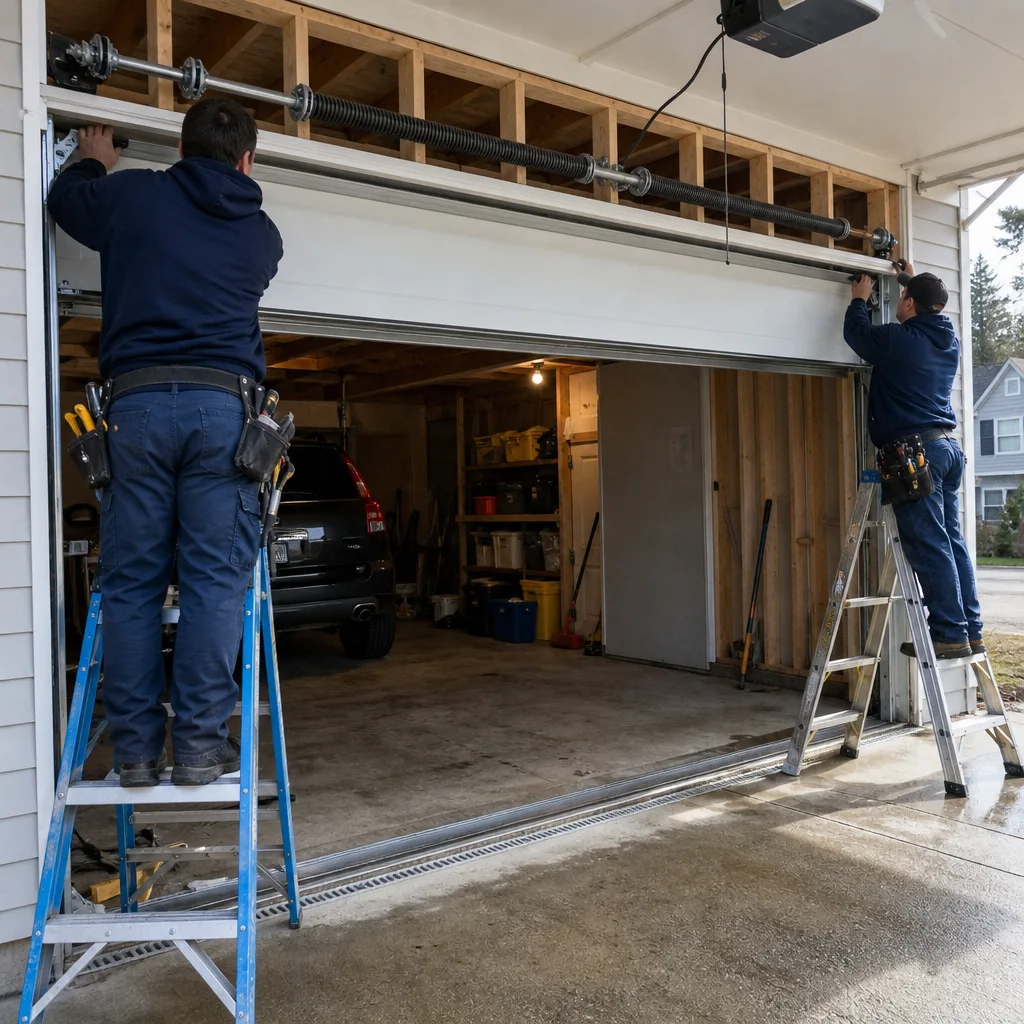
Olympia’s wet climate makes weather seals a maintenance item, not a set-and-forget component. Water intrusion damages stored items, promotes concrete spalling, and creates the damp conditions that corrode door bottom hardware.
Bottom Seal (U-Shaped Vinyl or Rubber)
Inspect with the door closed. Look up from inside the garage. You should see continuous contact between the seal and the concrete floor, with no daylight visible. Common failure patterns in our climate:
- Compression set: The seal no longer springs back to full height. It looks permanently squashed. This happens after 3-5 years of continuous contact, faster in south-facing doors where UV hardens the vinyl.
- Edge curl: The seal curls upward at the ends, creating a channel that directs water inward. Usually caused by petroleum-based lubricant migration from the bottom roller brackets.
- Center sag: The middle of the seal gaps while the ends contact. Indicates the door panel has bowed from moisture absorption (wood doors) or the seal retainer has loosened.
Side Astragals (Vinyl or Brush)
These seal the gap between the door edges and the jamb. In Olympia’s wind-driven rains, a failed side seal allows water to penetrate even when the bottom seal is intact. Inspect for:
- Brittle cracking: Vinyl that shatters when flexed. UV degradation, accelerated on west-facing doors.
- Gap at the top corner: Where the side seal meets the header seal. This is the most common leak point we find in Clopay and Amarr doors after 7-10 years.
- Brush wear: On brush-type seals, bristles matted flat or missing in sections. Less common in residential applications but found on some Wayne Dalton models.
Replacement is straightforward for a trained technician. The retainer style varies by manufacturer. Clopay uses a single-channel vinyl retainer; Amarr uses a dual-bulb design. Matching the correct profile matters for function and warranty.
Building Your Maintenance Record
This is the section no competitor includes, and it’s the one that converts a maintenance habit into real property value. When you sell your Olympia home, a documented maintenance history for major systems, including the garage door, signals responsible ownership to buyers and their inspectors.
We format our internal records as follows, and we encourage homeowners to adopt the same structure:
| Field | Example Entry |
|---|---|
| Date | October 5, 2024 |
| Task Performed | Full inspection, silicone lubrication, balance test |
| Part Condition Noted | Torsion spring: no rust, no gap. Rollers: 2 nylon rollers showing flat spots, replacement recommended within 12 months. |
| Numeric Readings | Balance holds at 3 ft, drifts 4 inches at 5 ft. Force reversal: 1.2 seconds. |
| Next Service Date | January 5, 2025 (quarterly) or upon noted part replacement |
| Technician/Performer | Homeowner, or Servo technician with work order number |
The value is cumulative. A five-year record showing quarterly inspections, lubrication dates, and part replacements demonstrates that the door system was maintained to manufacturer standards. For Clopay or Wayne Dalton doors still under pro-rated warranty, this documentation is often required for claim approval. For the homeowner, it justifies a higher asking price or faster sale in Olympia’s competitive market.
Our technicians provide this record automatically. Clause 4 of The Haven Standard, our founding documentation system, requires that every visit close with a photo record and written summary delivered to the customer. You receive the evidence of what was found and what was done, not a verbal report that fades from memory.
Common Mistakes to Avoid
- Using WD-40 as a lubricant. It displaces water for 48 hours, then leaves metal bare. In Olympia’s climate, that’s an invitation to rust. Silicone spray is the correct product and costs the same.
- Lubricating the tracks. Rollers are designed to roll, not slide. Oiled tracks cause the door to drift and the opener to strain. Keep tracks clean and dry.
- Ignoring the manual release cord. Many homeowners have never tested it. If the opener fails during a power outage, you need to know it moves freely. Test monthly, not annually.
- Adjusting the opener force settings instead of fixing the mechanical problem. A binding door needs track alignment or roller replacement, not a stronger motor. Raising the force mask wears the opener and creates a safety hazard.
- Skipping the December inspection because “it’s too cold.” December is when moisture intrusion and hardware loosening peak in Olympia. A 10-minute inspection prevents a January emergency call.
- Storing chemicals near the bottom seal. Fertilizer, pool chemicals, and de-icing salt accelerate vinyl degradation. The fumes attack the polymer even in closed containers.
- Assuming a noisy door just needs lubrication. Grinding often indicates a failing gear in the opener or a cracked bearing plate. Lubrication quiets it temporarily while the damage progresses.
When to Call a Professional
Some maintenance is homeowner work. Some is not. See our How to Hire a Garage Door Contractor in Olympia: A Step-by-Step Guide for guidance, or call a trained technician for any of the following: a broken or gap-separated torsion spring; a cable that has frayed, jumped its drum, or snapped; a door that has come out of its tracks; an opener that hums but doesn’t move the door; or any situation where the door feels significantly heavier to lift manually than it did six months ago.
These conditions involve high-tension components or complex mechanical relationships that require specialized tools and training. The torsion spring alone stores enough energy to cause serious injury or death if handled improperly. Our policy, per The Haven Standard, is straightforward: we photograph the failed component, quote a flat written price before any work begins, and deliver a documented photo record when we leave. No surprises, no urgency pressure.
Servo Garage Doors Olympia offers free estimates in Olympia. Call (360) 995-1547 to schedule. If you have a written estimate from another company, our Free Second Opinion applies, no coupon required.
Frequently Asked Questions
A complete professional tune-up in the Olympia market typically runs $120 to $180, depending on door size, number of springs, and whether weather seal replacement is included. At Servo, the price is quoted in writing before any work starts, per Clause 1 of The Haven Standard. Call (360) 995-1547 for an exact quote on your door, estimates are free.
Lubricate moving parts twice yearly: once in October before the rainy season, and once in September before the winter storms return. Olympia’s marine climate means moisture is present eight months of the year; more frequent lubrication with the wrong product attracts grit, while silicone applied on this schedule provides continuous protection without buildup.
Bottom seal replacement is within reach of a handy homeowner if the retainer channel is accessible and not rusted solid. Side astragal replacement is more complex, requiring partial door disassembly to access the jamb-side fasteners. If your door is a Clopay or Wayne Dalton model with an integrated seal design, the manufacturer-specific retainer profile must match exactly. An incorrect seal gaps, leaks, and voids warranty.
Cold temperatures stiffen lubricant, contract metal components, and harden nylon rollers. In Olympia, December through February temperatures regularly drop below freezing, which thickens any remaining petroleum-based lubricant into a grease that resists movement. The noise is the opener working harder against increased mechanical resistance. A silicone-based lubrication in October prevents this.
Routine homeowner maintenance, including lubrication, hardware tightening, and visual inspection, does not void warranty on major brands including Genie, LiftMaster, Clopay, or Amarr. Warranty voidance applies to improper repairs, unqualified spring replacement, or use of non-approved parts. Document your maintenance; warranty claims may require evidence of proper care. For more guides & resources, visit our blog.
If the balance test shows drift exceeding 6 inches at any position, the springs need adjustment. If you see a visible gap in a torsion spring coil, rust flaking that exposes bare metal, or if the door feels progressively heavier over months, replacement is likely needed. Torsion springs have a rated cycle life, typically 10,000 cycles for standard wire. At four cycles per day, that’s roughly 7 years. In Olympia’s damp climate, corrosion can shorten this. Call (360) 995-1547 for a measured assessment, estimates are free.
The Bottom Line
A garage door maintenance checklist works only when it’s tied to your actual climate and followed as a calendar, not a one-time event. For Olympia homeowners, that means silicone lubrication before the October rains, hardware checks during the December damp, thermal expansion monitoring in July, and a written record that builds value over time. The tests are simple, the tools are minimal, and the cost of neglect is a failed spring at 6 AM or water damage that compounds for months. Perform the monthly visual, the quarterly balance and force tests, and the seasonal deep checks. When a task exceeds your comfort or the component involves lethal tension, call a technician who documents before quoting and delivers evidence when done.
Written by Marcus Deller, Owner at Servo Garage Doors Olympia, serving Olympia since 2015.