
Last updated September 21, 2026
Full 25-point door and opener safety check with every visit - springs, cables, rollers, tracks, and your LiftMaster or Chamberlain opener included
You get a price before we start. It does not change when the truck arrives.
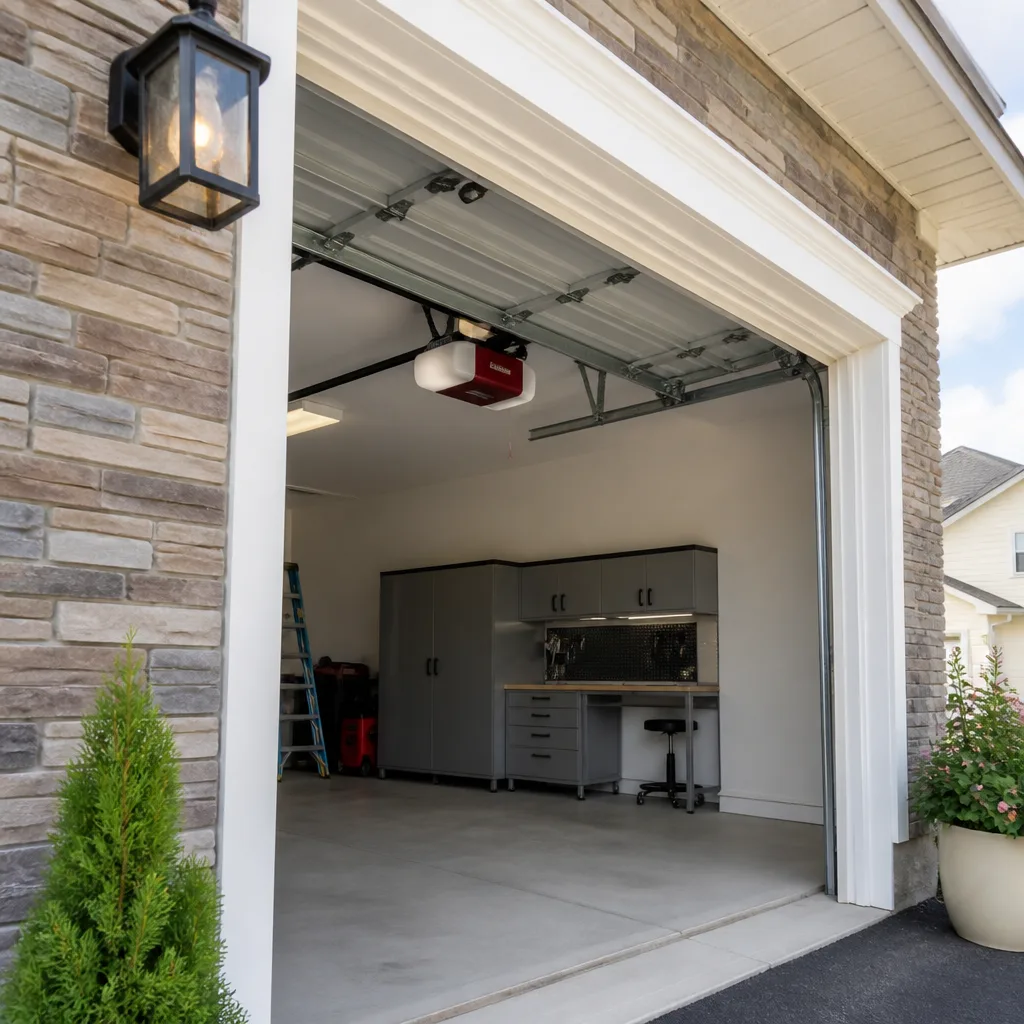
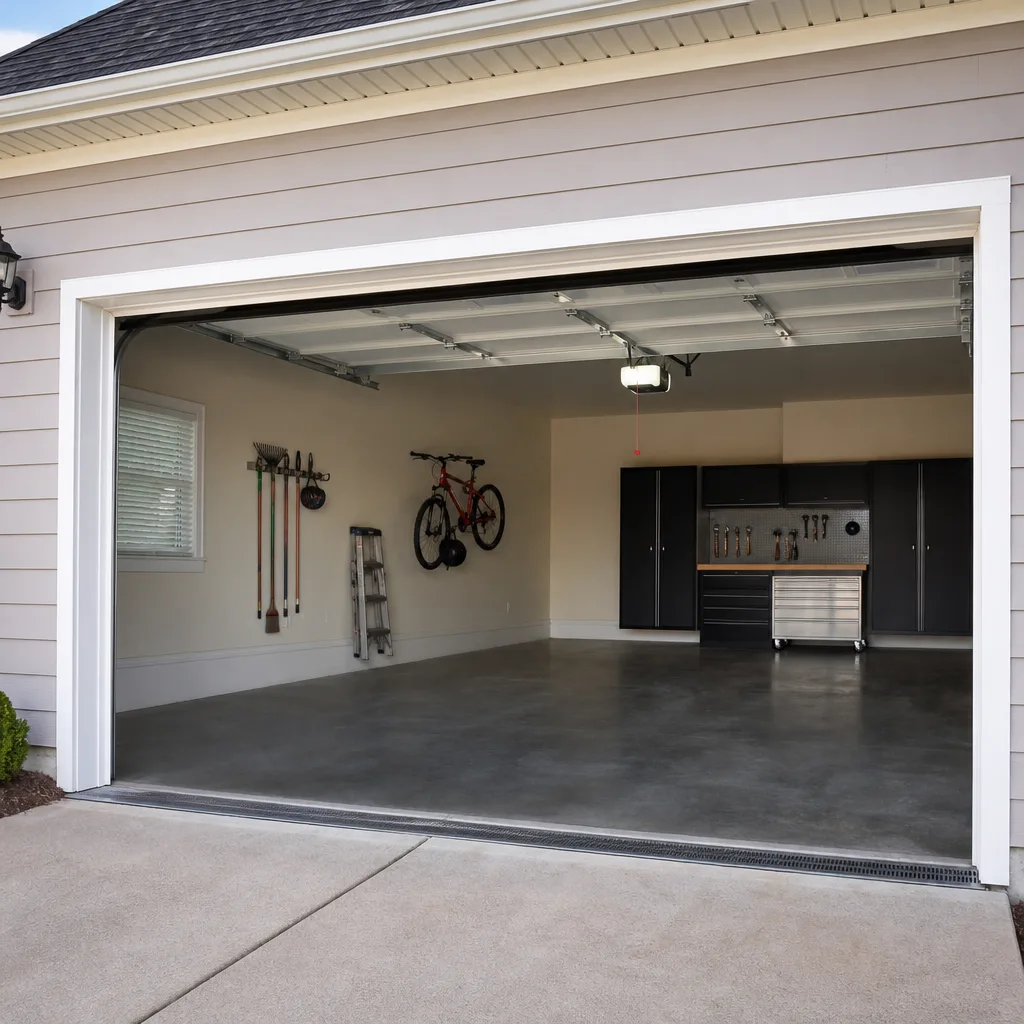
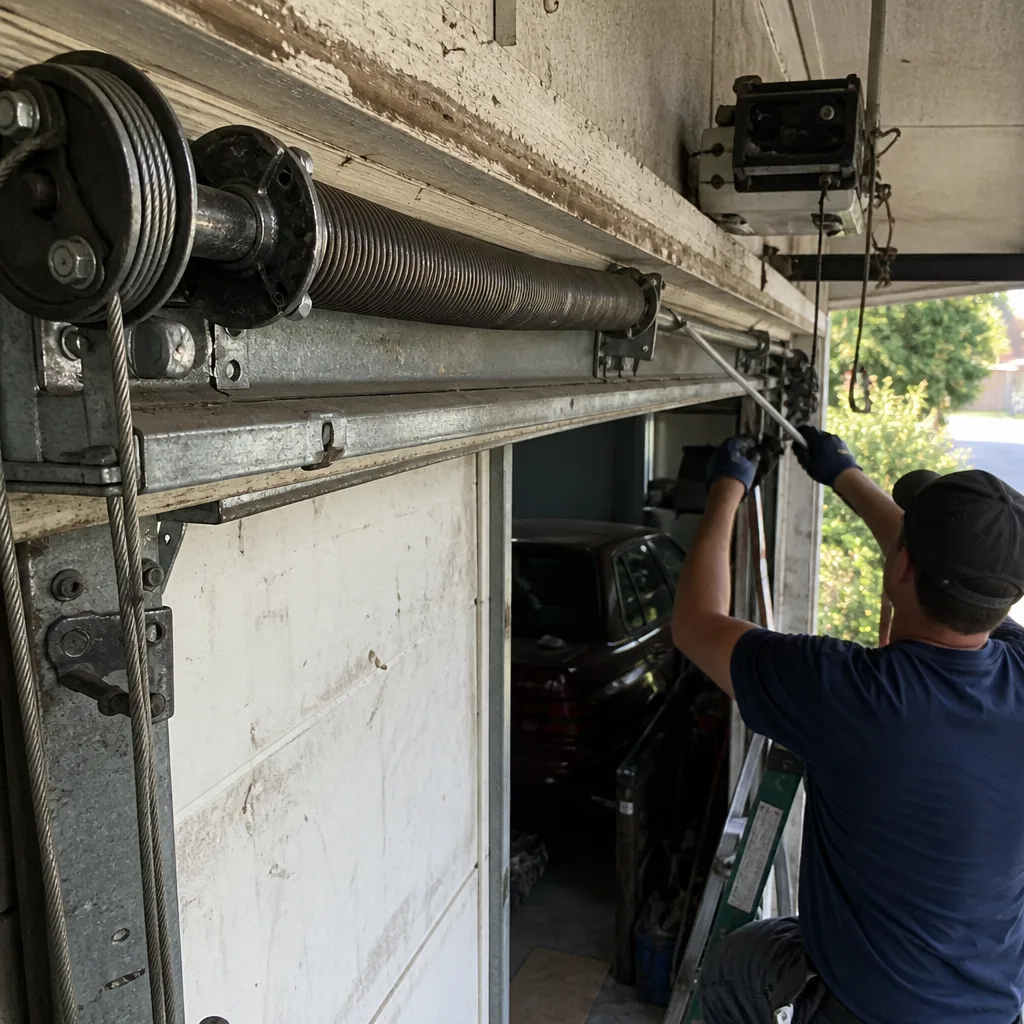 Before
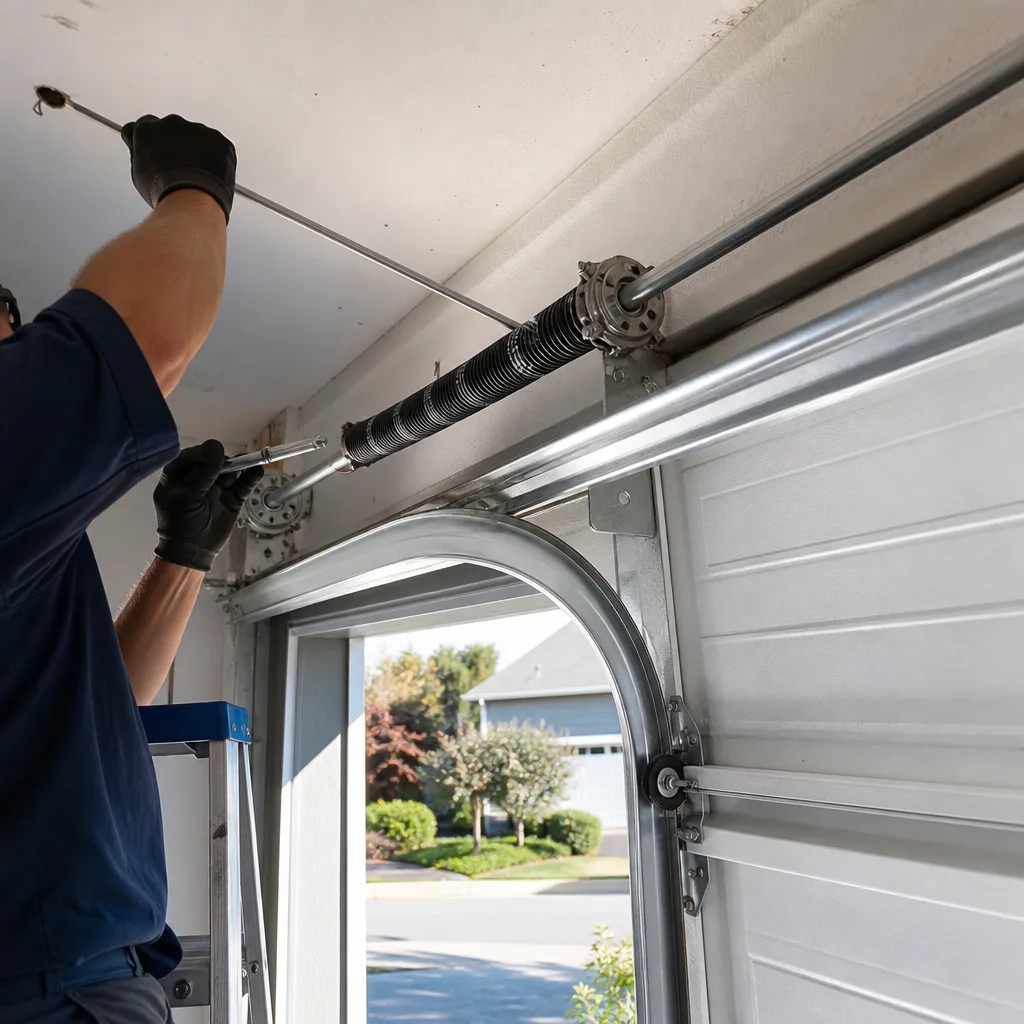 After
After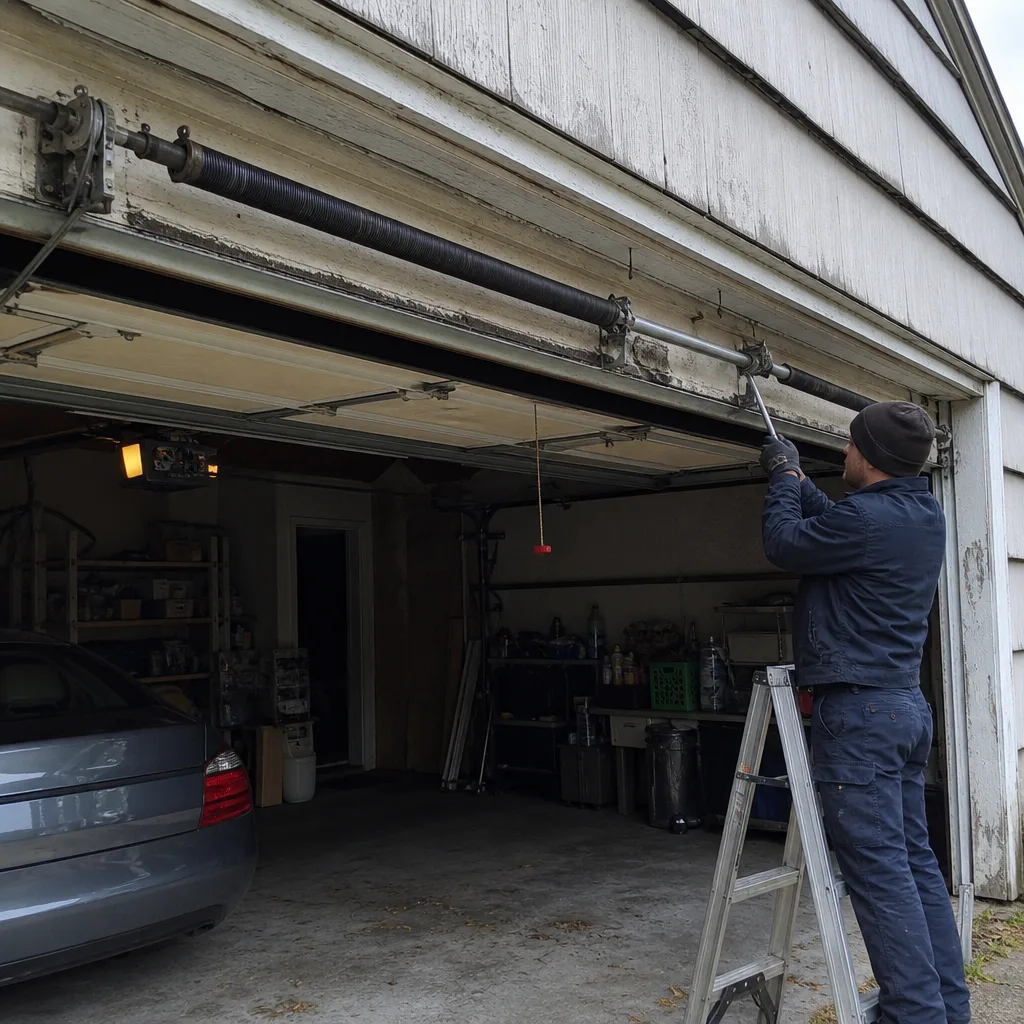 Before
 After
After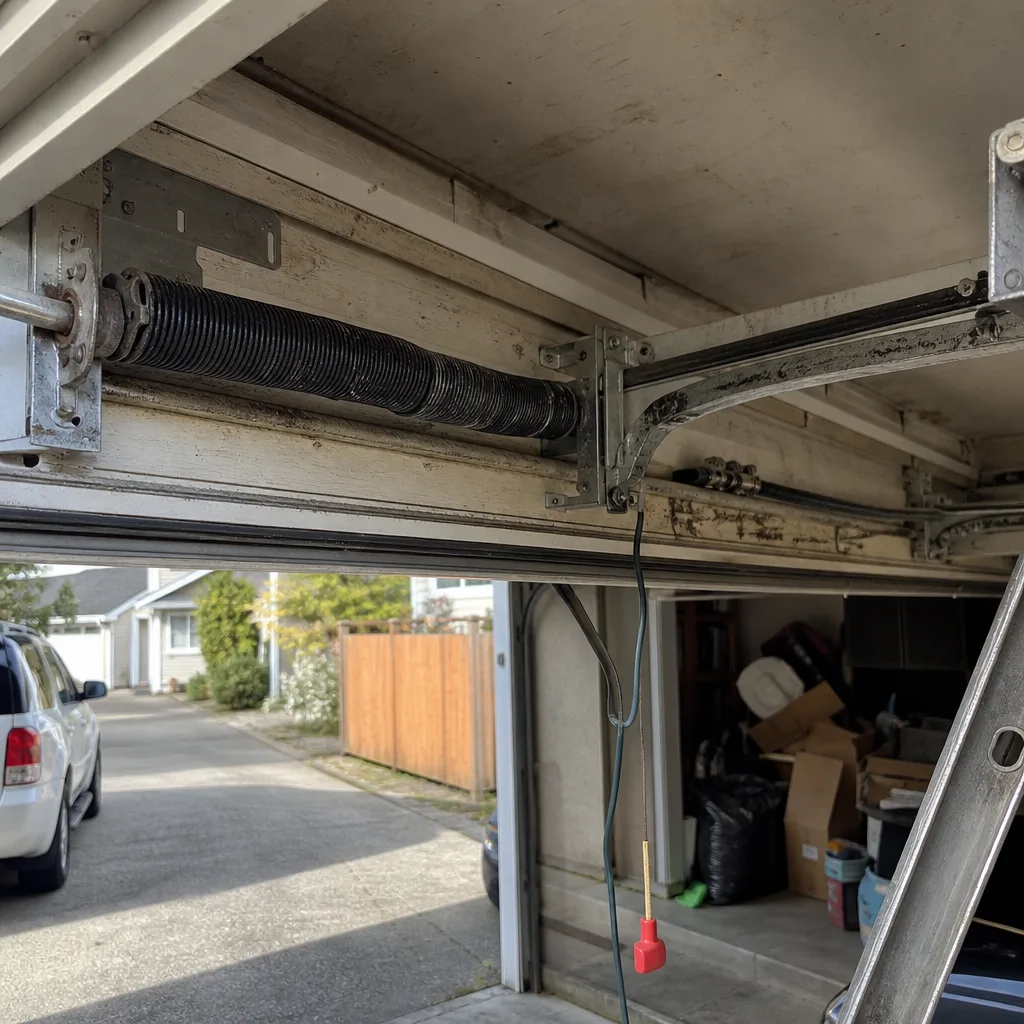 Before
 After
AfterGarage Door Warning Signs: A Olympia Homeowner’s Reference Guide
Most garage door guides for Olympia describe symptoms without naming the component that’s failing, which leaves you calling a contractor with no ability to evaluate the quote. A garage door that reverses before hitting the floor, for instance, is not “acting up” - it is a calibrated safety system responding to a specific input, and the three most common causes each require a different fix at a different price point. In Olympia, where marine air from Puget Sound accelerates corrosion and older homes in neighborhoods like the South Capitol and Eastside still run original hardware, knowing which part is failing can save you both money and a second service call.
Quick Answer
The most critical garage door warning signs are: a door that reverses before closing fully (usually photo-eye misalignment or close-force miscalculation, $85-$180 to correct); a loud pop followed by a door that won’t lift manually (broken torsion spring, $180-$340 to replace); and grinding or squealing during travel (worn rollers or dry hinges, $120-$260 for service and hardware). Any sign of a frayed cable or rust-through on the bottom panel requires immediate stop-use and professional inspection, as these components operate under high tension and can cause serious injury if handled improperly.
Table of Contents
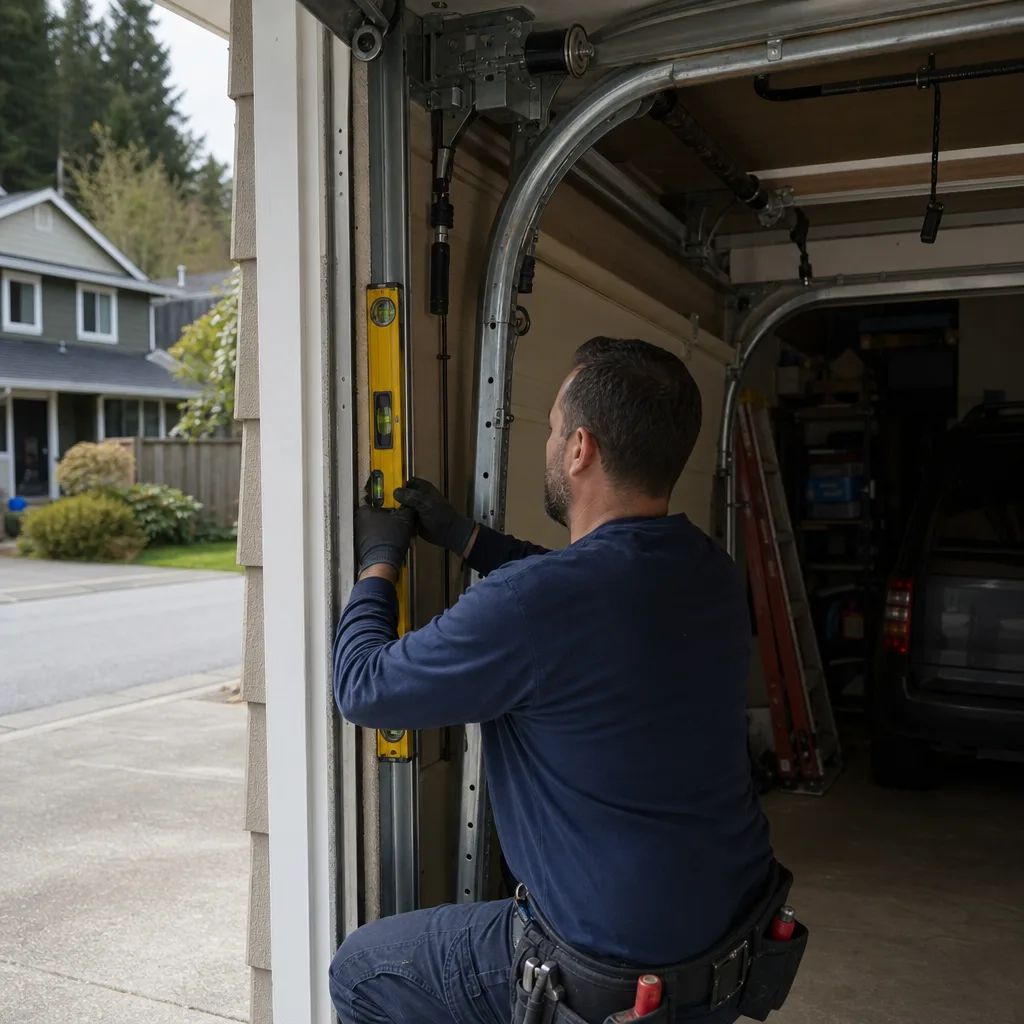
- When Your Door Reverses Before Hitting the Floor
- How to Spot a Broken Torsion Spring
- The Sound Index: What Each Noise Means
- Surface Rust vs. Structural Rust: The Flex Test
- Slow Response and Uneven Travel: Opener Motor Compensating
- The Hidden Danger: Extension Spring Failure on Older Olympia Homes
- Common Mistakes to Avoid
- When to Call a Professional
- Frequently Asked Questions
 Before
 After
AfterWhen Your Door Reverses Before Hitting the Floor
A reversing door triggers more service calls in Olympia than any other symptom, and most homeowners misdiagnose it. The door’s logic - controlled by the opener’s limit switch and safety sensors - is doing exactly what it was designed to do. The question is which input is causing the reversal, because the repair cost differs significantly.
Cause 1: Photo-Eye Misalignment ($85-$140)
The photo-eyes are the infrared sensors mounted 4-6 inches above the floor on each side of the track. When one sensor’s LED glows steadily and the other flickers or goes dark, the beam is broken or misaligned. In Olympia, we see this frequently after winter storms when garage floors heave slightly, or when a bike or storage bin bumps the bracket. The fix is straightforward: clean the lenses, check for loose wiring at the terminal block, and realign the brackets until both LEDs show solid. A technician will also test the wiring run back to the opener motor for continuity breaks, which can add $40-$60 if the low-voltage cable needs replacement.
Cause 2: Close-Force Setting Too Sensitive ($85-$120)
The opener’s force sensor measures resistance during descent. If calibrated too sensitively, normal friction from worn rollers or a slightly binding track triggers reversal. This is a software adjustment on newer LiftMaster and Chamberlain units, accessed through the “force” or “sensitivity” dial on the motor housing. On older Genie chain-drive models, it’s a physical screw. The technician’s job is not just to turn the dial - it’s to identify why the friction increased in the first place. Adjusting force without addressing the underlying wear masks a problem that will accelerate.
Cause 3: Actual Obstruction or Track Damage ($120-$280)
A dented vertical track, a seized roller, or debris in the rail path creates real resistance. In the Priest Point Park and Westside areas, where many garages date to the 1970s and 1980s, we’ve found track sections that have slowly deformed from decades of minor impacts. The repair ranges from roller replacement to track realignment or section replacement.
Key diagnostic step: Disconnect the opener by pulling the red emergency release cord and operate the door manually. If it travels smoothly by hand, the problem is in the opener settings or sensors. If it binds manually, the problem is mechanical.
How to Spot a Broken Torsion Spring
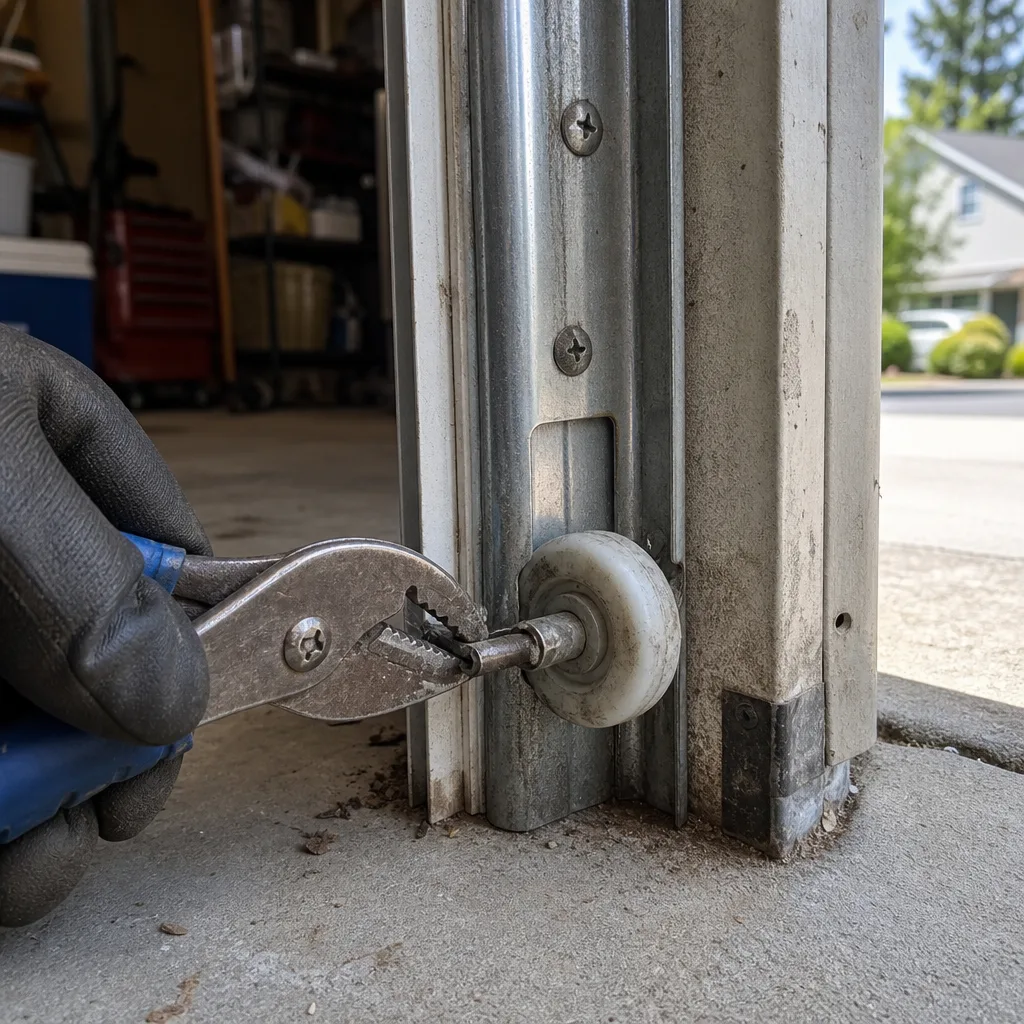
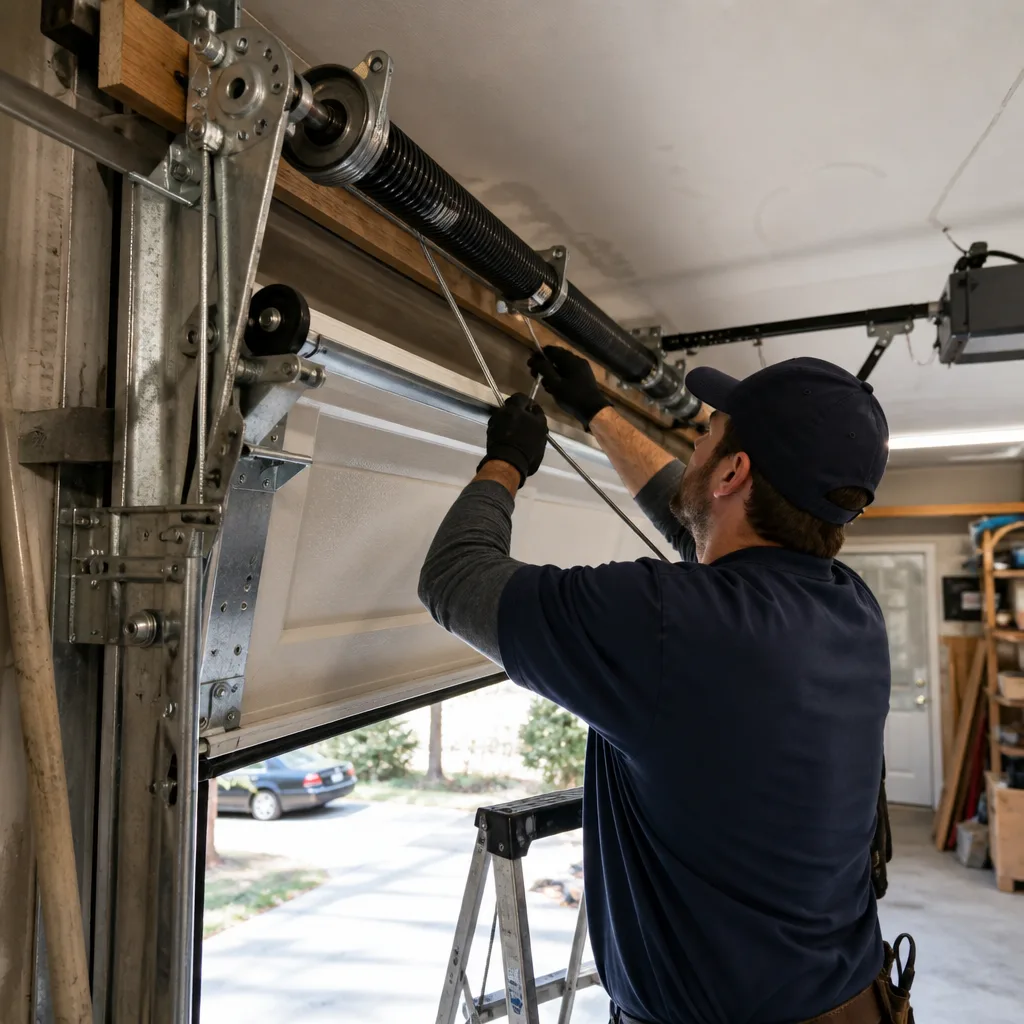
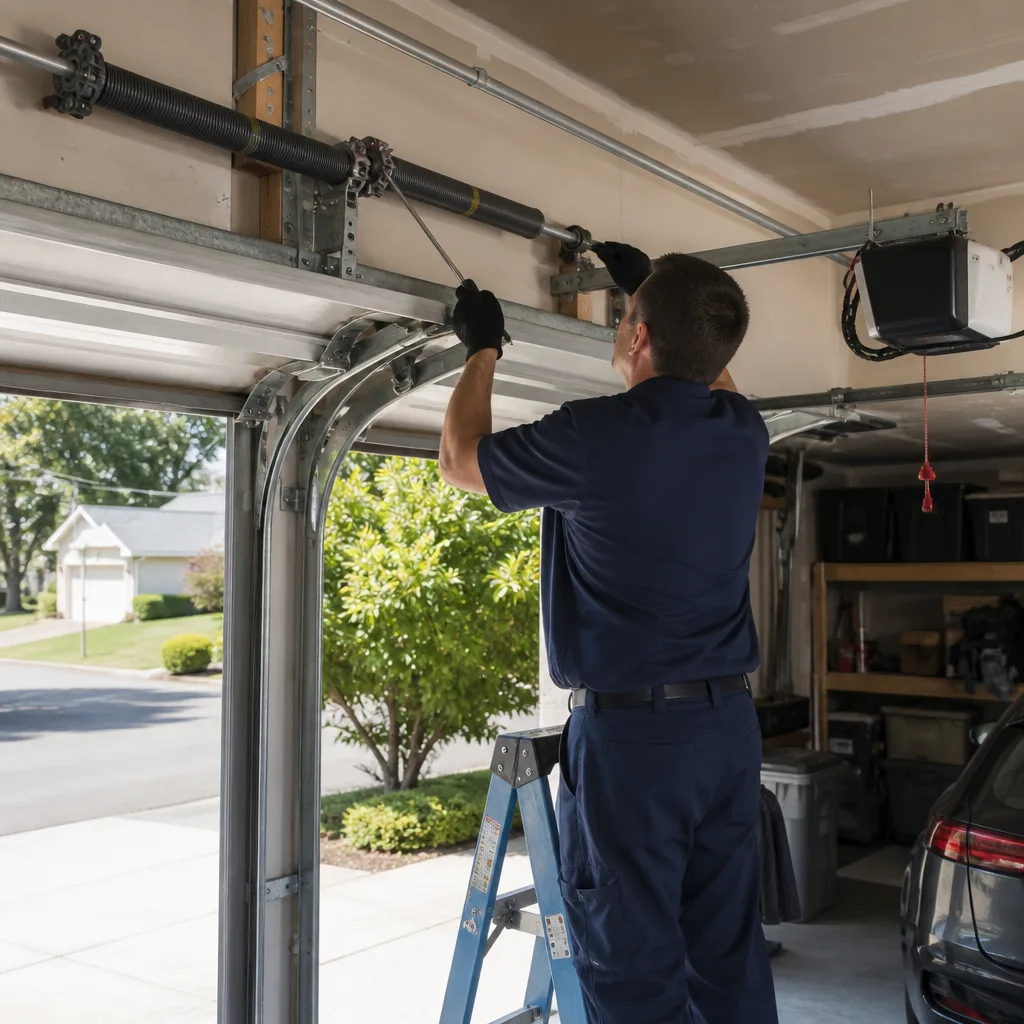
The torsion spring is the coiled steel component mounted horizontally above the door opening. It stores the mechanical energy that counterbalances the door’s weight, so your opener lifts 10-15 pounds instead of 150-250. When it breaks, the door becomes dead weight.
Visual Inspection from Inside the Garage
With the door closed, look at the torsion tube - the 1-inch steel shaft running wall-to-wall above the door. The spring coils should sit tightly against each other with no visible gap. A broken spring shows a clean separation, typically 2-4 inches, with the two ends of the coil relaxed away from each other. In some cases, the break is less obvious: one coil section will appear slightly unwound compared to the rest.
Behavioral Symptoms
When the opener tries to lift a door with a broken torsion spring, you’ll hear the motor strain - a labored humming or clicking from the trolley carriage - while the door moves only a few inches or not at all. The motor’s logic board detects the overload and shuts down to prevent burnout. If you disconnect the opener and try to lift manually, the door will feel its full weight and may be impossible to raise from the inside, or will crash closed if raised from outside.
Olympia-Specific Context
Torsion springs in Olympia fail more frequently than inland markets because marine moisture promotes internal corrosion. A spring rated for 10,000 cycles may fail at 7,000-8,000 in our climate. Galvanized springs last longer but cost 15-20% more. When we replace a spring at a home near Budd Inlet or the waterfront, we typically recommend galvanized hardware and include a photo of the failed spring in our documented record - Clause 4 of The Haven Standard - so the homeowner sees exactly what failed and why.
Cost range: Single torsion spring replacement runs $180-$260; double-spring systems (common on doors wider than 16 feet) run $280-$340. This includes new springs, winding cones, and safety cables if not already present.
The Sound Index: What Each Noise Means
Garage doors are mechanical systems with moving parts, so some sound is normal. The distinction is between the low rumble of rollers in track and the specific noises that indicate progressive failure. Here’s what we’ve documented across 18,000+ service calls since 2015.
| Sound | Source Component | Failure Mode | Urgency | Service Cost Range |
|---|---|---|---|---|
| Grinding, metal-on-metal | Steel rollers or bent track | Roller bearings seized; track section deformed | Schedule within 1-2 weeks | $120-$220 |
| Squealing, high-pitched | Hinges or rollers | Lack of lubrication; hinge pin galling | Schedule within 2-3 weeks | $85-$150 |
| Single loud pop or bang | Torsion or extension spring | Coil fracture | Stop use immediately | $180-$340 |
| Clicking, rhythmic | Trolley carriage or chain/belt | Worn drive gear or loose chain tension | Schedule within 1 week | $140-$280 |
| Rattling, intermittent | Loose hardware or opener mounting | Bracket bolts loosened from vibration | Schedule within 2 weeks | $85-$140 |
| Humming, motor strains | Opener motor | Overload from mechanical resistance or failing capacitor | Stop use; inspect springs first | $160-$340 (motor or spring) |
The Pop That Stops Everything
A single loud bang from above the door is almost always a torsion spring fracture. The sound is the release of stored energy - typically equivalent to lifting a 200-pound weight 7 feet - and it can be startling enough that homeowners call thinking something hit the house. If you hear this sound, do not attempt to operate the door. The safety cable (if installed) should contain the spring fragments, but operating the opener without spring balance risks motor damage or door derailment.
Grinding That Gets Worse
Grinding indicates metal contact where there should be rolling contact. Steel rollers with failed bearings slide instead of roll, chewing flat spots into the track. Nylon rollers are quieter when new but degrade faster in Olympia’s wet climate; we see more nylon roller failures here than in drier eastern Washington markets. The repair is roller replacement - typically 10-12 rollers on a standard door - plus track inspection for damage.
Surface Rust vs. Structural Rust: The Flex Test
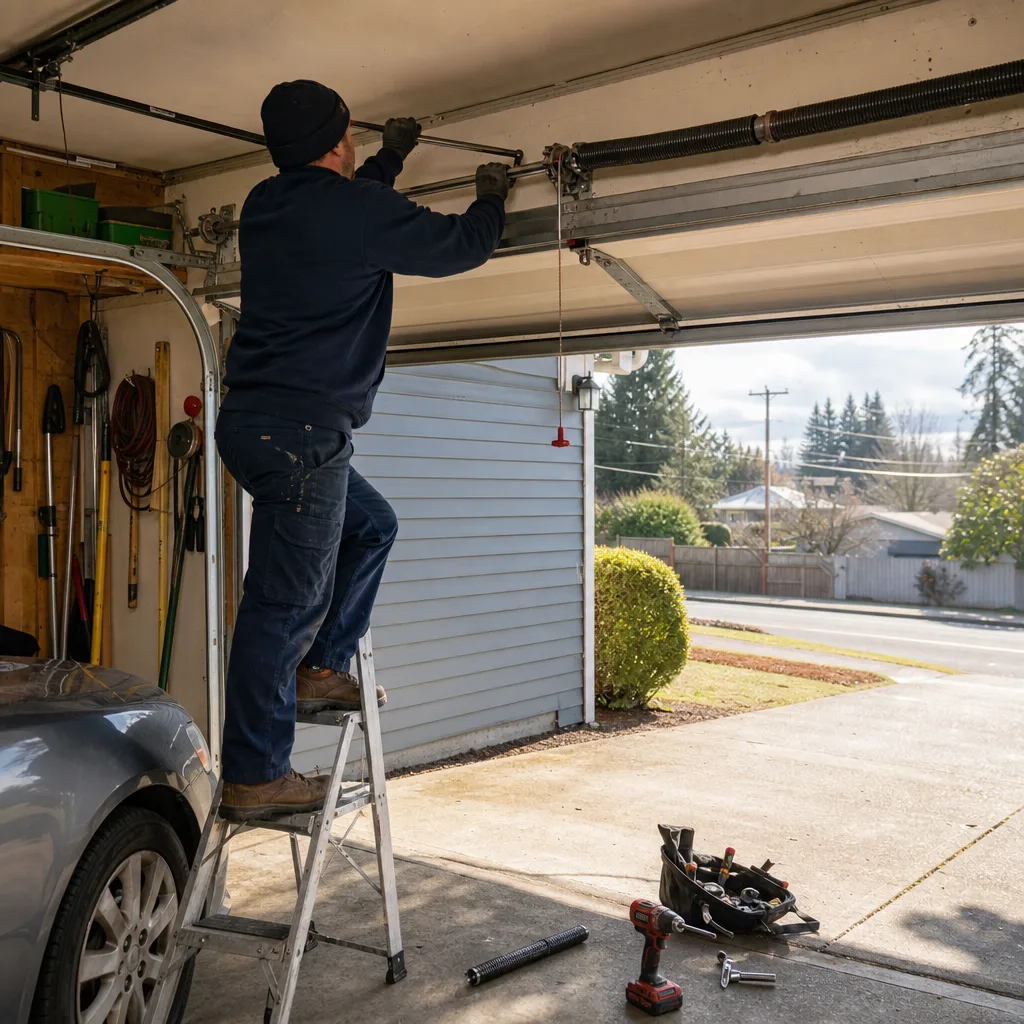
Olympia’s marine climate makes rust the most misdiagnosed condition we encounter. Homeowners see orange staining and assume panel replacement is imminent. Often, it’s cosmetic. The critical question is whether the rust has compromised the steel’s structural integrity.
Surface Rust: Cosmetic, Manageable
Surface rust appears as uniform orange-brown discoloration without pitting or bubbling. It forms on the exterior panel face where paint has thinned from UV exposure, particularly on south- and west-facing doors in neighborhoods like Tumwater Hill and the Eastside. The steel beneath remains sound. Treatment is sanding to bare metal, zinc primer, and quality exterior paint. This is seasonal maintenance, not repair.
Structural Rust: The Flex Test
Structural rust shows a specific pattern: paint bubbles that, when scraped, reveal deep pitting and powdery metal loss. The critical test is the flex test. With the door closed, press firmly on the center of a bottom panel with your palm. A sound panel flexes slightly and rebounds. A panel with compromised steel will show permanent deformation, a crinkling sensation, or visible creasing. This indicates the panel’s internal ribs have rusted through from the inside out - common where road salt and garage floor moisture collect at the bottom seal.
Bottom panel replacement in Olympia runs $280-$450 including hardware transfer and seal replacement. Full door replacement becomes cost-effective when multiple panels show structural rust or when the door is pre-1993 and lacks modern safety features. Garage Door Installation in Olympia through Servo includes written upfront pricing per Clause 1 of The Haven Standard, with the full scope documented before work begins.
Slow Response and Uneven Travel: Opener Motor Compensating
A garage door that starts slowly, travels unevenly, or pauses mid-cycle is often misdiagnosed as an opener problem. In our experience across Olympia, the root cause is mechanical resistance that the motor is struggling to overcome - and continuing to operate in this condition destroys both the spring system and the opener.
How Motor Compensation Works
Modern openers from LiftMaster, Chamberlain, and Genie use DC motors with electronic torque sensing. When resistance increases - from binding rollers, a misaligned track, or spring tension loss - the motor draws more current and runs hotter. The logic board may insert micro-pauses to prevent thermal shutdown. The homeowner experiences this as “my opener is getting old.” In reality, the motor is protecting itself from a mechanical problem upstream.
The Cost of Delay
We’ve replaced opener motors in the South Capitol and Westside where the root cause was a $140 roller replacement ignored for months. The motor’s drive gear strips first - a $160 repair - followed by logic board failure if the overload persists. In worst cases, the door derails because the motor’s force overrides a binding section. The total cost of deferred maintenance: $600-$900 instead of $140.
Diagnostic Steps
- Disconnect the opener using the red emergency release cord.
- Operate the door manually through its full travel.
- Note any binding, heaviness, or unevenness - the door should stay at any position when stopped mid-travel.
- If manual operation is smooth but motor operation is slow, test the opener without door load by running it with the release disengaged; the trolley should travel smoothly.
- If manual operation is heavy or binding, the problem is mechanical - springs, rollers, or track.
Garage Door Opener Repair & Installation in Olympia through Servo includes motor current draw testing as part of standard diagnostics, not as an add-on. We document the amp reading and the mechanical findings in the photo record you receive.
The Hidden Danger: Extension Spring Failure on Older Olympia Homes
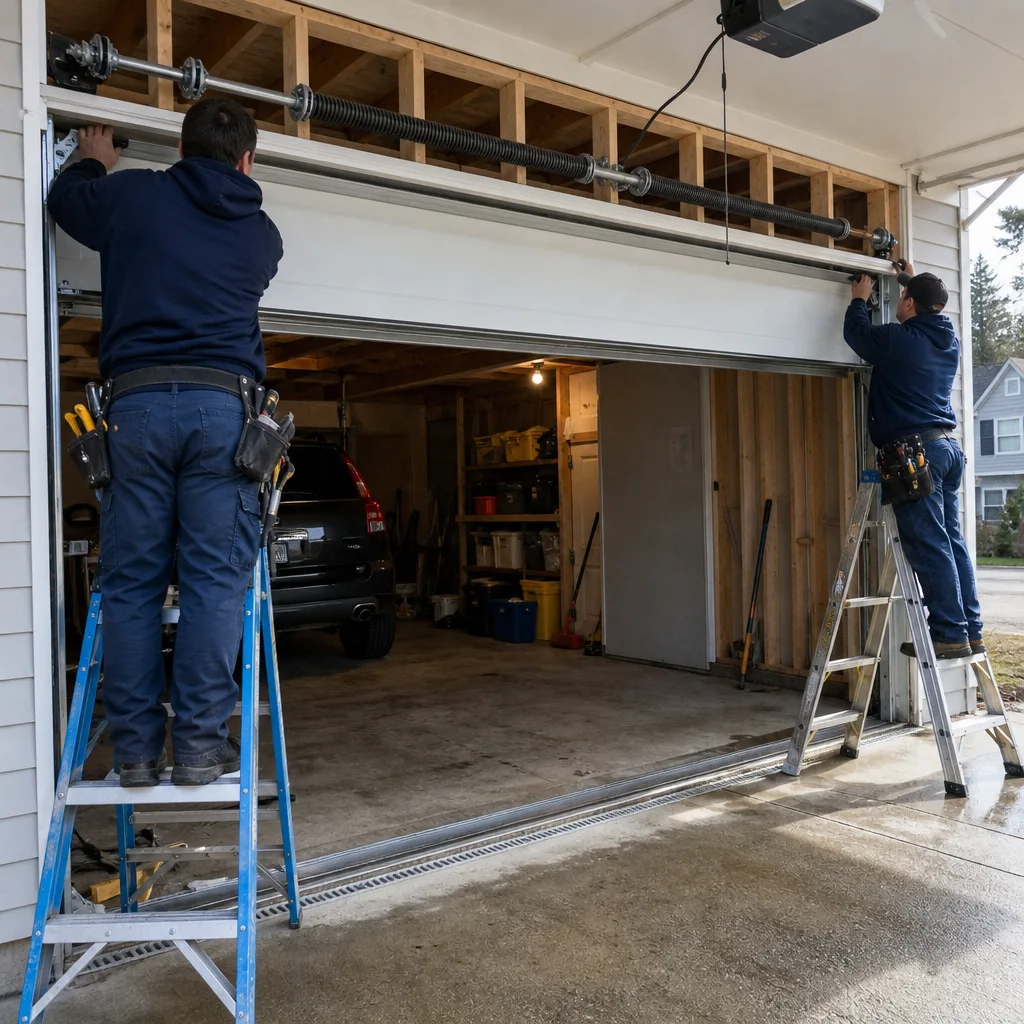
While torsion springs are standard on doors installed after 1990, many homes in Olympia’s older neighborhoods - particularly in the Eastside, North Eastside, and near the original downtown grid - still run extension spring systems. These are the stretched coils mounted parallel to the horizontal track on each side, and they present a different, more dangerous failure mode.
Visual Identification
Extension springs are easy to spot: two long coils, typically 25-30 inches when the door is closed, running from a rear bracket to the bottom fixture on each side. They should have a safety cable threaded through the center - a requirement since 1985 but often missing on original installations.
Failure Mode: The Flying Spring
When an extension spring breaks, the stored energy releases outward along the spring’s axis. Without a safety cable, the spring can strike the garage interior with force sufficient to damage vehicles or cause injury. We’ve documented cases in Olympia where broken extension springs have dented drywall, shattered windshields, and embedded in opposite walls. This is not theoretical - it is why we treat extension spring calls as same-day emergencies.
Upgrade vs. Repair
Extension spring replacement runs $160-$240 per pair. However, we typically recommend converting to a torsion spring system, which runs $380-$520 including hardware and rebalancing. Torsion springs are safer, last longer, and provide more consistent lift. The conversion requires a new torsion tube, end bearing plates, and center bracket - a half-day job that permanently eliminates the extension spring hazard. For Garage Door Repair in Olympia, we quote both options with written pricing before any work starts.
Common Mistakes to Avoid
- Ignoring a reversing door by holding the wall button down. The wall button’s constant-pressure input overrides the safety sensors, but it does not fix the underlying problem. In Olympia’s wet climate, a misaligned photo-eye often indicates bracket corrosion that will worsen until the sensor fails entirely.
- Applying WD-40 to rollers and hinges. WD-40 is a solvent and water displacer, not a lubricant. It strips existing grease and attracts dust, accelerating wear. Use lithium-based grease or silicone spray on metal-to-metal contact points.
- Attempting DIY spring replacement. Torsion springs are wound to 800-1,200 foot-pounds of torque. The winding bars must be inserted and removed in a specific sequence; a slip can cause serious injury or death. This is not a homeowner repair under any circumstances.
- Replacing the opener when the door is the problem. We see this mistake most often in the 2015-2020 built homes near Meridian and Lilly Roads, where homeowners assume a slow door means a failing motor. A $600 opener replacement does not fix $140 in binding rollers.
- Waiting for “both springs to break” before calling. On double-spring systems, the second spring is carrying overload from the moment the first fails. Operating on one spring accelerates wear on the remaining spring, the opener motor, and the cable drums. The second spring will fail sooner and more dramatically.
- Assuming rust means replacement. As described above, surface rust is cosmetic. The flex test takes 30 seconds and can save hundreds in unnecessary panel work.
- Accepting a verbal quote for spring work. Spring replacement requires specifying wire diameter, inside diameter, length, and wind direction. A verbal “about $200” quote often becomes $340 when the technician arrives and discovers a non-standard size. Written upfront pricing - Clause 1 of The Haven Standard - eliminates this.
When to Call a Professional
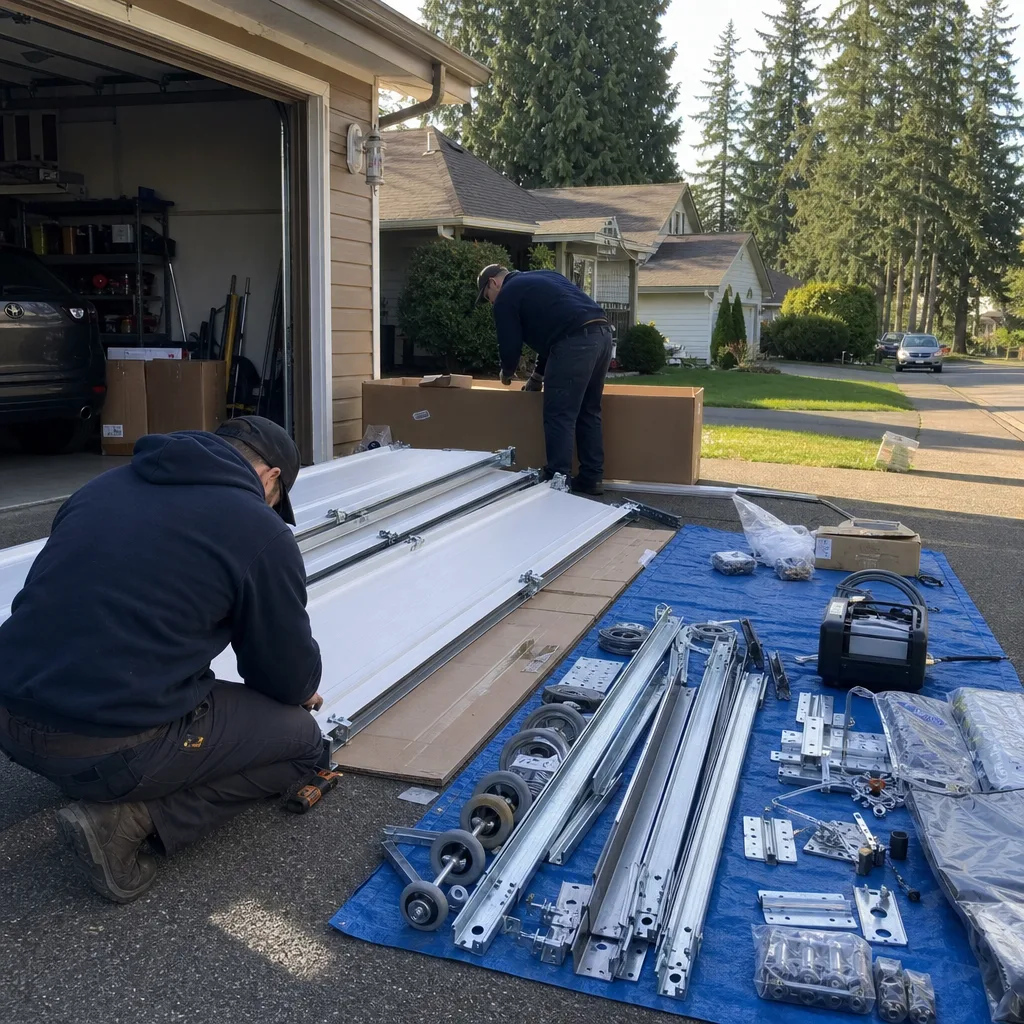
Call immediately if you observe any of the following: a single loud pop from above the door (spring failure); a door that crashes closed when released manually (cable or spring failure); visible fraying or separation in lift cables; rust-through on any panel that fails the flex test; or an opener that hums but does not move the door (potential motor burnout). These conditions involve components under high tension or load, and continued operation risks injury, property damage, or cascading failures that multiply repair costs.
For all other symptoms - grinding, squealing, slow travel, or minor reversing - schedule inspection within one to two weeks. The diagnostic fee at Servo Garage Doors Olympia is applied to any repair, and we provide a written, flat-price quote with full scope documentation before any work begins. Free estimates are available throughout Olympia; call (360) 995-1547 to schedule. Every visit includes a documented photo record of findings and completed work, delivered to you before the technician leaves.
Frequently Asked Questions
Single torsion spring replacement in Olympia typically costs $180-$260, while double-spring systems run $280-$340. Extension spring replacement is $160-$240 per pair, and conversion to a safer torsion system runs $380-$520. Servo provides a written, flat price before any work starts - no exceptions, per Clause 1 of The Haven Standard. Call (360) 995-1547 for an exact quote; estimates are free.
You can perform basic troubleshooting: clean the photo-eye lenses with a soft cloth, check for obstructions in the door path, and verify that the sensors’ LEDs are both solid (not flickering). If these steps don’t resolve it, the issue likely involves wiring continuity, close-force calibration, or track alignment - all of which require professional tools and training. The diagnostic fee covers the full inspection and is credited toward repair.
A loud noise with continued function typically indicates a component in progressive failure, not immediate failure. Grinding suggests steel rollers with seized bearings; squealing indicates dry hinges or nylon rollers degrading; a single pop means a spring has broken on a double-spring system, with the remaining spring carrying overload. Continuing to operate accelerates wear on surviving components. Schedule inspection within one week.
Perform the flex test: press firmly on the center of the affected panel. Sound steel flexes and rebounds; compromised steel deforms permanently or crinkles. Paint bubbles that reveal deep pitting and powdery metal loss indicate structural rust. Surface discoloration without pitting is cosmetic. In Olympia’s marine climate, bottom panels are most vulnerable where road salt and floor moisture collect.
Replace the opener if it was manufactured before 1993 (lacks modern safety reversing), if the motor has failed and the unit is over 10 years old, or if repair costs exceed 60% of replacement. Repair if the issue is a replaceable component - logic board, drive gear, limit switch, or trolley carriage - and the unit is under 12 years old with modern safety features. Always verify the door’s mechanical condition first; a new opener will not fix binding or spring problems.
Servo services all major brands including LiftMaster, Chamberlain, Genie, Clopay, Amarr, Wayne Dalton, Craftsman, and Raynor. We carry common repair parts for these brands on our service vehicles, and our technicians are trained on the specific diagnostic procedures for each manufacturer’s opener logic boards and safety systems. Written upfront pricing applies regardless of brand.
The Bottom Line
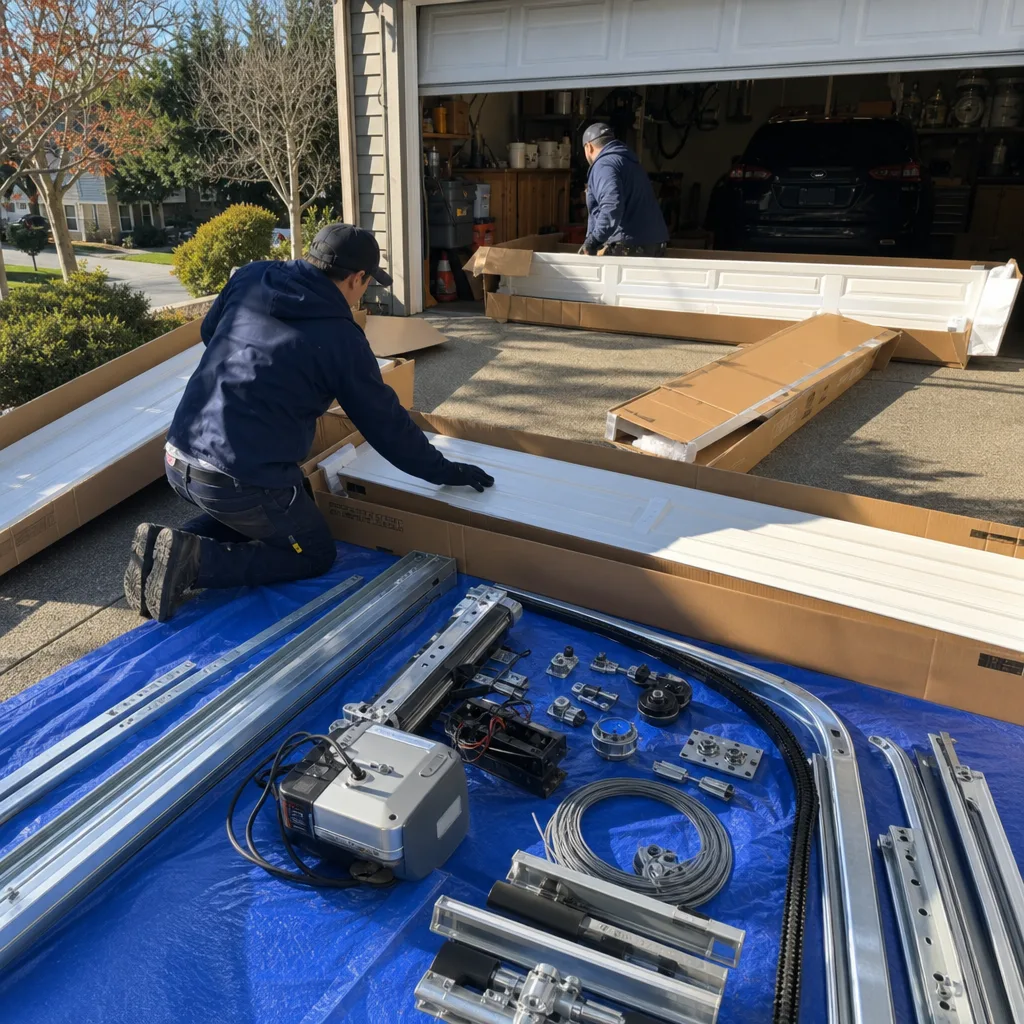
Garage door warning signs are specific, diagnosable, and attachable to real repair costs - when you know which component is failing. A reversing door is not “acting up”; it is a safety system responding to photo-eye misalignment, force miscalculation, or mechanical binding, with repair costs ranging from $85 to $280. A loud pop is a spring fracture requiring immediate stop-use and $180-$340 replacement. Grinding, squealing, and slow travel indicate progressive wear that costs less to fix today than to replace tomorrow. In Olympia’s marine climate, rust assessment and hardware selection matter more than in drier markets. For more guides & resources, explore our blog. The homeowner who can name the part and describe the failure mode arrives at the service call informed - and receives better service because of it.
Servo Garage Doors Olympia has operated since 2015 under The Haven Standard, with 18,000+ repairs completed under written upfront pricing and documented photo records. Every quote is flat, written, and delivered before work begins. The 365-Day Done Right Promise means if it’s not right, we make it right - backed by terms, not a handshake.
Written by Marcus Deller, Owner at Servo Garage Doors Olympia, serving Olympia since 2015.