
Last updated September 21, 2026
Full 25-point door and opener safety check with every visit - springs, cables, rollers, tracks, and your LiftMaster or Chamberlain opener included
You get a price before we start. It does not change when the truck arrives.
 Before
 After
After Before
 After
After Before
 After
AfterGarage Door Permits, Codes & Inspections in WA: What You Need to Know
Here’s a scenario we’ve encountered more than once in Olympia: a homeowner replaces their garage door with a modern steel-panel model, installs it with a reputable-looking crew, and three years later the buyer’s inspector flags the work during a sale. No permit on file. No fire-rating label visible. The closing stalls while Thurston County Community Development reviews retroactive paperwork, and the seller pays rush fees that dwarf what the original permit would have cost. This guide maps exactly when Washington State requires a permit for garage door work, what codes apply to attached versus detached garages in Olympia’s jurisdiction, and how to read the inspection requirements so you’re not caught unaware-one of more guides & resources for local homeowners.
Quick Answer
In Washington State, a garage door replacement requires a building permit when the work involves structural modification, changes the door’s fire rating, or alters the opening dimensions. Like-for-like replacements on detached garages in Olympia typically qualify for exemption under the Washington State Residential Code, but attached garages trigger additional fire-separation requirements that often necessitate permitting and inspection. Always verify with Thurston County Community Development before starting work, because the liability for unpermitted work rests with the property owner even when a contractor performs the installation.
Table of Contents
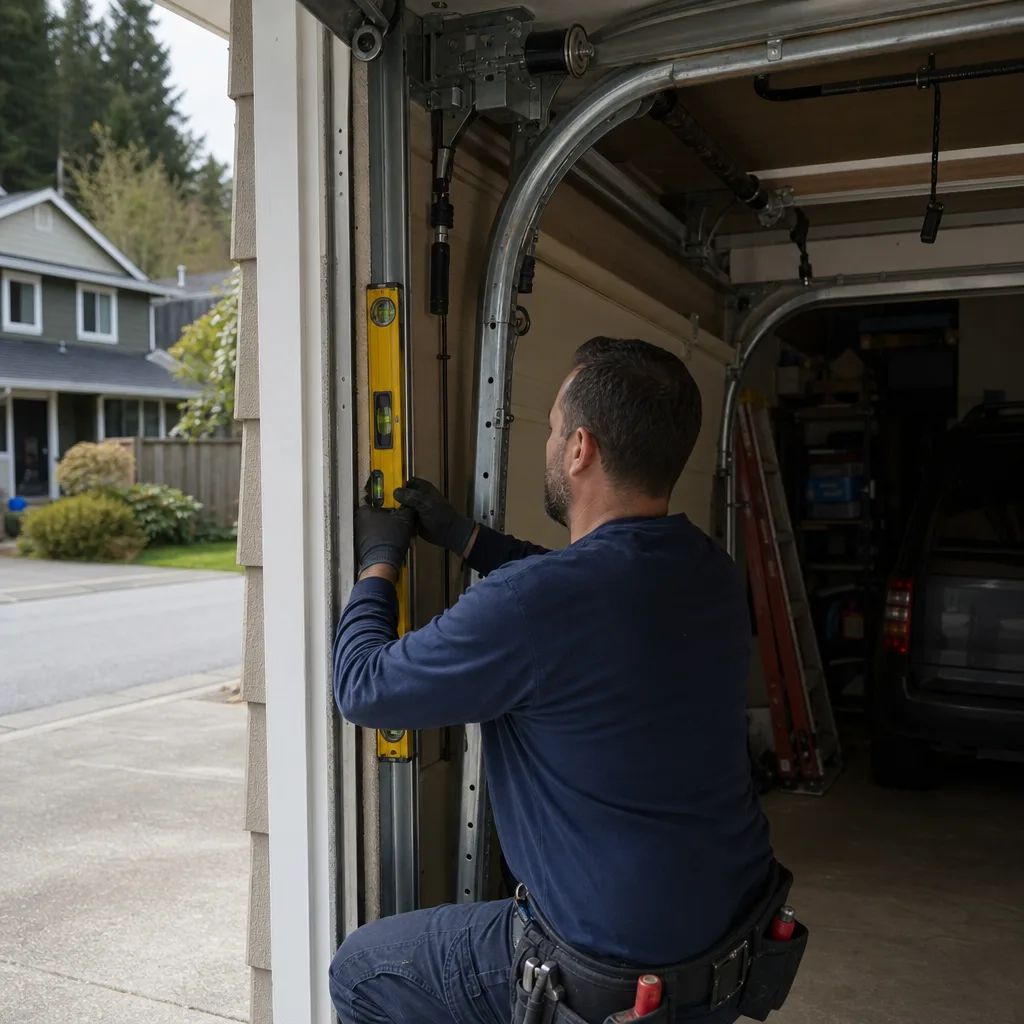
- When Is a Permit Required for Garage Door Work in Washington?
- Fire-Rating Requirements for Attached Garages
- Thurston County’s Permit Application Process
- What Inspectors Actually Check During Garage Door Inspections
- Who Pays When Unpermitted Work Is Discovered
- Garage Door Opener Electrical and Safety Codes
- Common Mistakes to Avoid
- When to Call a Professional
- Frequently Asked Questions
- The Bottom Line
 Before
 After
AfterWhen Is a Permit Required for Garage Door Work in Washington?
The Washington State Residential Code, which adopts the International Residential Code with state amendments, governs when garage door work needs a building permit. The distinction is not intuitive, and many homeowners in Olympia assume that because a garage door is “just a door,” it falls outside permitting requirements. That assumption is correct only in narrow circumstances.
A permit is required when any of the following conditions apply:
- The garage door opening is being widened, narrowed, raised, or lowered from its existing dimensions
- The header or supporting structure around the opening is being modified or replaced
- The work changes the fire-resistance rating of the door assembly in an attached garage
- The project involves converting a carport to an enclosed garage or vice versa
- The installation includes new electrical circuits for the opener or accessories
A permit is generally not required for a like-for-like replacement on a detached garage where the door dimensions, type, and operation remain unchanged. The key phrase is “like-for-like.” Swapping a 16-foot raised-panel steel door for another 16-foot raised-panel steel door on a detached structure in Olympia’s Westside or Eastside neighborhoods typically clears the exemption. But switching from a solid wood door to an insulated steel door with a different weight profile may trigger engineering review, especially if the torsion spring system and hardware must be recalculated for the new load.
We’ve seen this exact situation in the Carlyon neighborhood, where a homeowner replaced a 1980s wood-panel door with a modern Clopay insulated steel model-a scenario that would have been flagged by the Garage Door Warning Signs: A Olympia Homeowner’s Reference Guide. The new door weighed 40 pounds less but had a different wind-load rating. The contractor didn’t pull a permit because they assumed it was a simple swap. When the homeowner later applied for a roof permit, the county’s consolidated permit history flagged the garage door work. The inspector required documentation of the spring recalculation and wind-load certification. The homeowner paid for a retroactive review that cost more than the original permit would have.
The Washington State Residential Code Section R105.2 lists specific exemptions, but local jurisdictions can adopt more restrictive requirements. Thurston County, which encompasses Olympia, Lacey, and Tumwater, follows the state code with amendments published in the Thurston County Building Code. The county’s Community Development department maintains a permit exemption checklist online, but the document explicitly states that exemption determinations are made case-by-case. Calling before work starts is the only reliable method.
For electrical work connected to garage door openers, the rules split further. Replacing an existing opener on the same branch circuit usually does not require an electrical permit. Adding a new outlet, running a dedicated 20-amp circuit, or installing low-voltage wiring for smart-home integration typically does. The threshold is whether the work extends or alters the home’s electrical system beyond the existing outlet location.
Fire-Rating Requirements for Attached Garages
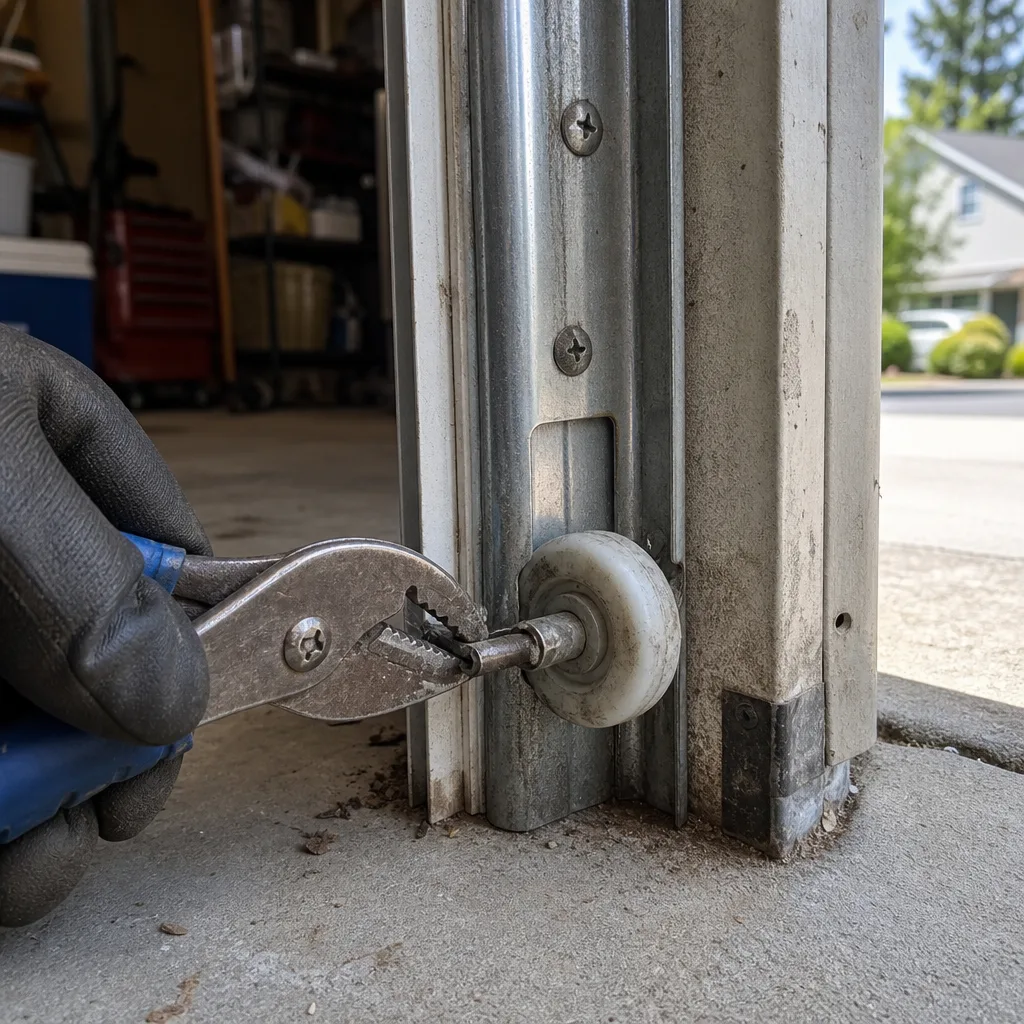
This is where most homeowners in Olympia get surprised, and where the liability exposure is sharpest. Washington State Residential Code Section R302.5 requires a 20-minute fire-rated door or equivalent assembly for any door connecting an attached garage to a living space. The requirement applies to the pedestrian door, not the overhead garage door itself, but the distinction matters less than homeowners think.
When you’re replacing the entire garage door assembly on an attached garage, the inspector is evaluating how that assembly integrates with the garage’s fire-separation envelope. An attached garage is treated as a separate fire area from the living space. The walls, ceiling, and any penetrations must maintain the integrity of that separation. The garage door, even though it opens to the exterior, is part of the garage’s boundary and must not compromise the fire-resistance rating of the structure.
Here’s what this means in practical terms for Olympia homes built between 1970 and 2010, which comprise a significant portion of our service area:
- If your original garage door was installed as part of the home’s initial construction and permitted, it was reviewed for compliance with the fire-separation requirements in effect at that time.
- Replacing it with a door of lesser fire-resistance rating, or with a model that lacks proper intumescent seals or smoke-blocking gaskets, can violate the maintained fire separation.
- Doors rated for wind load but not for fire exposure may pass a casual inspection but fail a formal code review if the assembly documentation doesn’t show 20-minute equivalence.
The 20-minute rating refers to the door’s ability to resist fire exposure for that duration under standardized test conditions. For pedestrian doors between garage and house, this is straightforward: the door bears a UL or Intertek label stating “20-minute fire rated.” For overhead garage doors, the rating applies to the entire assembly, including track hardware, seals, and the opening’s perimeter treatment. Not all residential garage door manufacturers test and label their products for this application.
Amarr and Wayne Dalton both produce garage door assemblies with documented fire-resistance ratings for specific configurations, but the rating applies to the exact model, size, and hardware package tested. A homeowner in the Bishop neighborhood of Olympia installed a Wayne Dalton 8300 series door based on a contractor’s verbal assurance that it was “fire rated.” The model they received was the standard wind-load version, not the fire-rated assembly with intumescent seals. The missing label was caught during a refinance inspection, and the door had to be reordered and reinstalled.
Olympia’s wet climate adds another variable. The International Residential Code’s fire-resistance testing assumes dry conditions. In our region, where garage interiors often reach 85% relative humidity in winter, the long-term performance of fire-rated seals and gaskets matters. We’ve observed intumescent seals that swelled properly when new but degraded after three to four years of moisture cycling. This doesn’t invalidate the initial rating, but it means the homeowner must maintain the assembly, and inspectors may look more carefully at older installations.
Thurston County’s Permit Application Process
Thurston County Community Development processes building permits through a consolidated system that covers unincorporated areas and contracts with several cities, including Olympia for certain permit types. Understanding which jurisdiction actually reviews your application saves significant time.
For garage door work in Olympia city limits, the permit path depends on the project’s scope:
| Project Type | Permit Required | Reviewing Authority | Typical Fee Basis |
|---|---|---|---|
| Like-for-like replacement, detached garage, no structural change | Exempt | N/A | N/A |
| Like-for-like replacement, attached garage, same fire rating | Exempt (verify with county) | Thurston County Community Development | Exemption confirmation only |
| Door replacement with different dimensions or rating | Building permit | Thurston County or City of Olympia | Valuation-based fee schedule |
| Structural modification to opening or header | Building permit + structural review | Thurston County | Valuation plus plan review fee |
| New electrical circuit for opener | Electrical permit | Washington State Department of Labor & Industries or local | Per-circuit or per-fixture fee |
| Retroactive permit for completed work | Building permit with penalty | Original jurisdiction | Double fee plus inspection surcharge |
The fee schedule for residential building permits in Thurston County uses a valuation-based formula. For garage door work, the county typically applies the door and installation cost as the project valuation, then charges a permit fee calculated from a tiered table. As of the current fee resolution, residential projects valued under $2,000 pay a base permit fee plus a plan review charge if engineering documents are required. Projects between $2,000 and $5,000 move to the next tier with a higher per-thousand multiplier.
We’ve reviewed permit receipts from customers in the Indian Creek and Bigelow neighborhoods where a standard residential garage door replacement with structural review totaled between $280 and $420 in permit fees. The variance depended on whether the plans required engineer stamping, which Thurston County requires when the header span exceeds certain limits or when the garage supports a living space above.
The application process follows these steps:
- Prepare scaled drawings showing existing and proposed conditions, including door dimensions, header size, and connection details.
- Submit through Thurston County’s online permit portal or in person at the Community Development office on Lakeridge Drive.
- Receive plan review comments within 10 business days for standard residential projects; complex structural reviews may extend to 20 business days.
- Address any corrections and resubmit; the county allows two correction cycles without additional review fees.
- Pay permit fees upon approval and receive the permit card, which must be posted on site before work begins.
- Schedule inspections at rough-in (if structural) and final completion stages.
One detail competitors rarely mention: Thurston County requires the permit applicant to be the property owner or a licensed contractor with a recorded agency authorization. A homeowner cannot validly permit work performed by an unlicensed contractor, and the county will reject applications where the contractor’s Washington State license number doesn’t match the Uniform Business Identifier on file. This is a common trap for homeowners who hire handyman services advertising on neighborhood platforms.
What Inspectors Actually Check During Garage Door Inspections
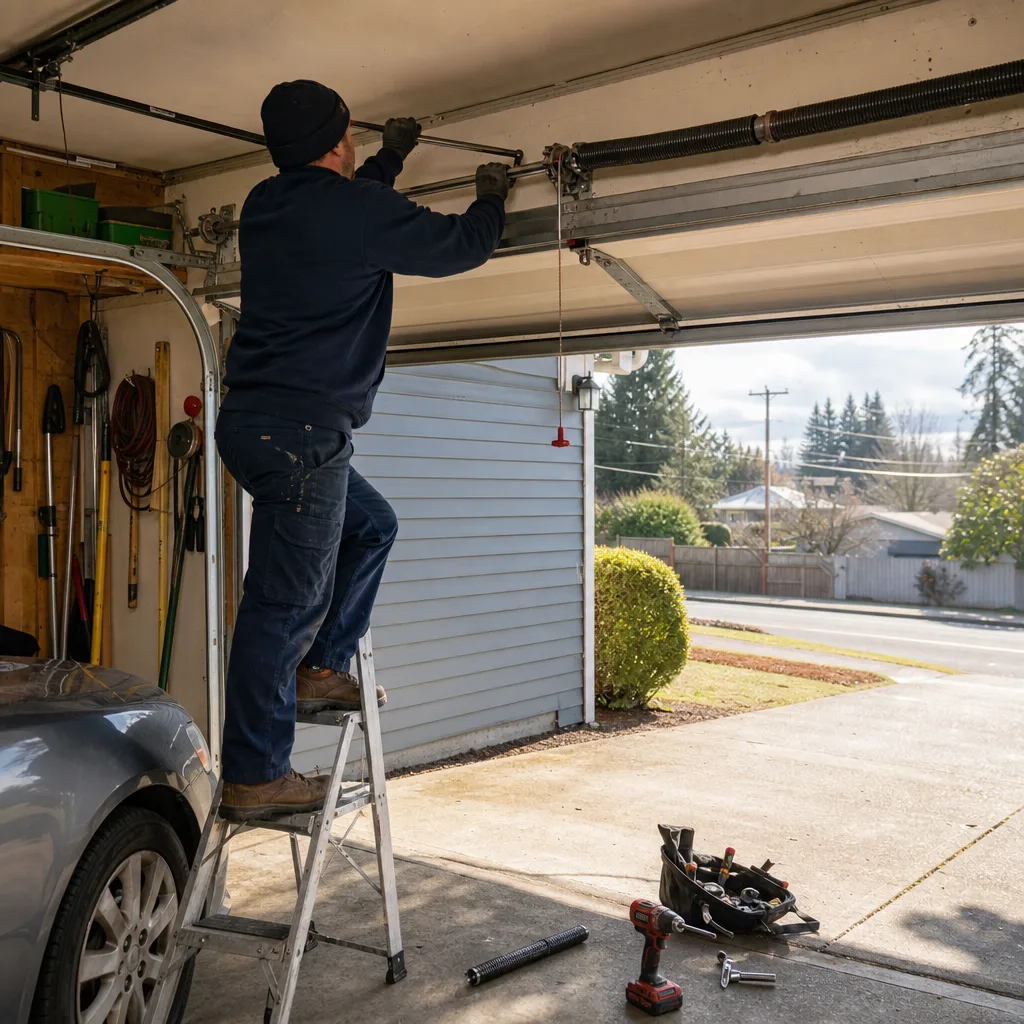
The inspection process for permitted garage door work is more extensive than most homeowners expect, and understanding what the inspector evaluates helps you prepare and reduces the risk of failed inspections with their associated re-inspection fees.
For a standard garage door replacement permit in Olympia, the county schedules two inspections: a rough inspection if structural work is involved, and a final inspection after completion. The rough inspection verifies that the header, jack studs, and attachment hardware meet the approved plans before the door and finish materials obscure them. The final inspection evaluates the completed installation against the permitted scope.
The inspector’s checklist includes these specific items:
- Header size and bearing: The header must match the engineered plans for span, species, and grade. Inspectors measure actual dimensions and check for proper bearing on jack studs, minimum one-and-one-half inches per end.
- Hardware attachment: Jamb brackets, flag brackets, and track mounting must follow the manufacturer’s installation instructions, which are part of the approved permit documents. Deviations require engineer approval.
- Door operation and safety: The door must operate smoothly through full travel without binding or excessive force. The inspector may use a force gauge or rely on manual assessment.
- Opener safety systems: Photo-eye sensors must be mounted within six inches of the floor and reverse the door when the beam is interrupted. The force-setting test must reverse the door within specified pressure limits.
- Fire-separation integrity: For attached garages, the inspector verifies that the door assembly maintains the required fire separation, including proper seals, gaskets, and any rated hardware.
- Emergency release: The manual release mechanism must function and be accessible, with the red handle visible and within reach height.
We’ve accompanied inspectors on final inspections in the Grass Lake and Lilly Road areas, and the most common failure points are predictable. Photo-eye misalignment accounts for roughly 30% of failed final inspections. The sensors get bumped during installation or settle slightly, and the beam doesn’t reliably interrupt. The inspector tests this with a standard 12-inch block, not a hand wave, and the door must reverse before contacting the block.
Header bearing is the second most common failure. A contractor installs a properly sized header but cuts the jack studs short, leaving less than the required bearing length. Or the header rests on trim studs rather than full-height jack studs carrying the load to the foundation. These errors are invisible once the door is hung and the interior finish is complete, which is why the rough inspection exists.
When an inspection fails, the correction process in Thurston County requires:
- The contractor or homeowner corrects the deficiency.
- A re-inspection is scheduled, typically with a 24- to 48-hour lead time.
- A re-inspection fee is charged if the failure was due to code violation rather than incomplete work. The current re-inspection fee is approximately half the original permit fee.
- If the correction involves work outside the original permit scope, an amendment may be required before re-inspection.
Failed inspections create documentation that persists in the property’s permit history. Future buyers or their inspectors can access this record, and multiple failed inspections may trigger additional scrutiny on subsequent permits. This is why we document our work with photographs at each stage, matching our field records to the inspection requirements before the inspector arrives. Clause 4 of The Haven Standard, our documented photo record on every visit, was built for exactly this accountability.
Who Pays When Unpermitted Work Is Discovered
This is the question that generates the most anxiety among homeowners, and the answer under Washington law is clear: the property owner bears primary liability for unpermitted work, even when a licensed contractor performed the installation without pulling the required permit.
Washington’s contractor registration laws, administered by the Department of Labor & Industries, require licensed contractors to comply with all applicable building codes and permit requirements. A contractor who performs work without a required permit violates RCW 18.27 and is subject to disciplinary action, including license suspension or revocation. However, this administrative penalty does not automatically shift the cost of correction to the contractor.
The practical sequence when unpermitted work is discovered typically unfolds as follows:
- The discovery occurs during a home sale inspection, refinance appraisal, or subsequent permit application that triggers a consolidated history review.
- The current owner, who may not have performed or even known about the original work, receives a notice of violation from the enforcing jurisdiction.
- The owner must either obtain a retroactive permit or remove/restore the work to pre-modification condition.
- Retroactive permitting requires the same documentation as original permitting, plus penalty fees, and may require exposed access for inspection.
- If the original contractor is still in business and licensed, the owner may pursue recovery through small claims court or the contractor’s bond, but success depends on documentation and the statute of limitations.
The statute of limitations for construction defects in Washington is generally six years from substantial completion for written contracts, or four years from discovery in some cases. For permit violations, the enforcement window is longer because the violation continues as long as the unpermitted work remains in place. We’ve consulted with homeowners in the South Capitol and Governor Stevens neighborhoods where unpermitted garage conversions from the 1990s were flagged during 2020s sales.
Under Washington’s consumer protection framework, a homeowner has stronger recovery position when they can prove the contractor affirmatively misrepresented that a permit was not required. This requires written documentation, which is why we provide a written scope and permit status disclosure as part of our standard documentation. Our customers receive explicit confirmation of whether their project requires a permit, and if so, whether Servo Garage Doors Olympia will obtain it or whether the customer prefers to owner-permit.
The contractor’s bond, required for all Washington residential contractors at $12,000 minimum, can be tapped for permit correction costs, but the bond claim process is adversarial and slow. Most homeowners in this situation pay for correction out of pocket to preserve a sale timeline, then pursue recovery separately.
One protection available to Olympia homeowners: Thurston County offers a voluntary compliance program that reduces penalties for self-reported unpermitted work. The program requires the owner to initiate contact, provide full documentation, and commit to prompt correction. Penalty fees are typically waived, though the base permit fee and inspection costs still apply. This program does not apply to work discovered through enforcement action or neighbor complaint.
Garage Door Opener Electrical and Safety Codes
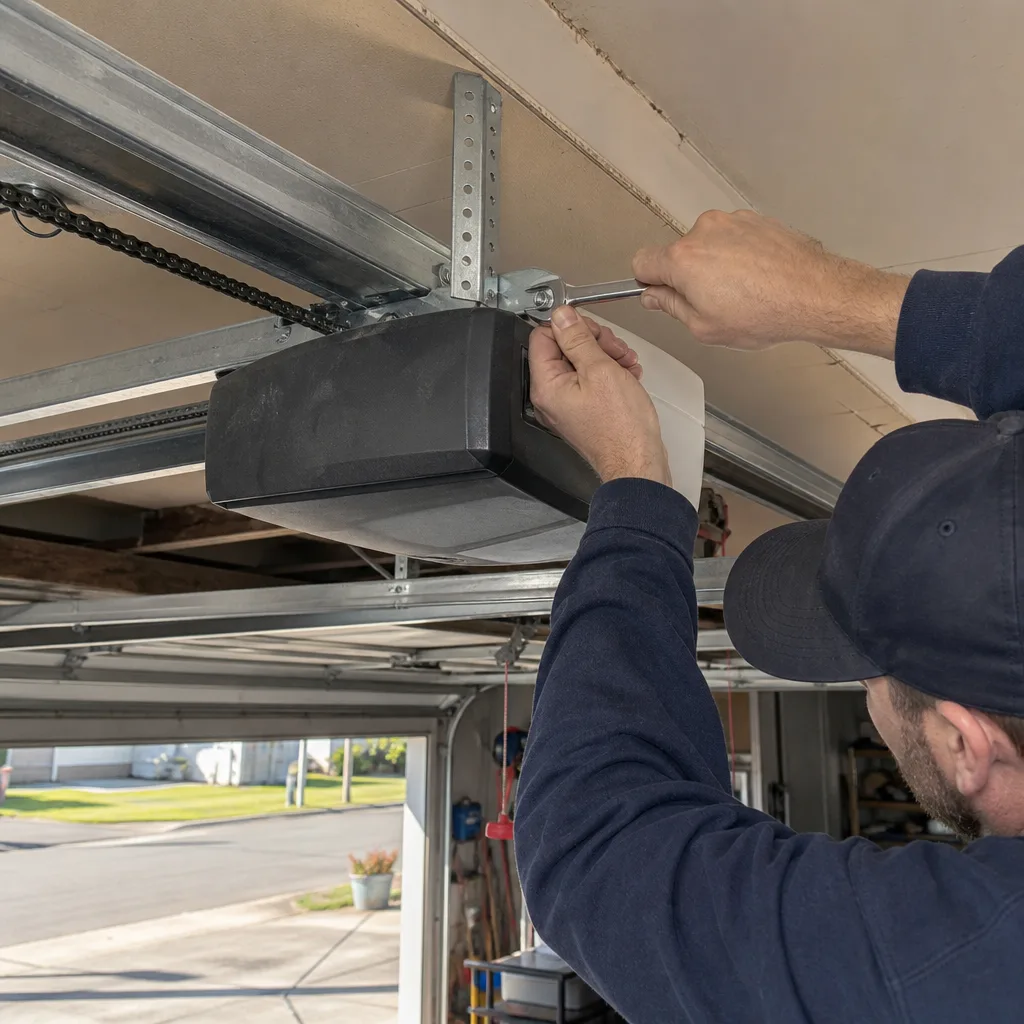
Garage door opener installation and repair in Washington must comply with the National Electrical Code as adopted by the state, plus specific safety requirements that go beyond basic electrical compliance. These rules affect when permitting is required and what the finished installation must include.
The electrical threshold is straightforward: replacing an existing opener on the same outlet does not require an electrical permit. Installing a new outlet, extending a circuit, or upgrading the service panel to accommodate a heavier opener does. The 2023 National Electrical Code, which Washington adopts with amendments, requires garage outlets to be GFCI-protected, including the dedicated outlet for a garage door opener. Many older homes in Olympia’s established neighborhoods, particularly those built before 2008, lack GFCI protection on garage circuits. Installing a modern opener on an unprotected circuit violates current code and may require electrical permit work to bring the circuit into compliance.
Safety requirements for openers are governed by UL 325, the standard for door, drapery, gate, louvre, and window operators and systems. Washington law references this standard through adoption of the International Residential Code. The key requirements include:
- Two independent entrapment protection systems: typically a photo-eye and an edge sensor, or photo-eyes and controlled closing with force limitation.
- Force settings that reverse the door within specified limits when encountering obstruction.
- A manual release mechanism that allows door operation during power failure.
- Warning labels and installation instructions provided with the opener and posted adjacent to the control button.
Genie and LiftMaster, two brands we service regularly, have both modified their product lines to comply with successive UL 325 revisions. Older openers, particularly those manufactured before 1993, lack the redundant entrapment protection now required and cannot be legally installed in new work, though they may remain in service if functional. We document the manufacture date and compliance status during our Garage Door Opener Repair & Installation in Olympia service calls, and customers receive this documentation as part of their photo record.
The wall control button location is also specified: it must be mounted at least five feet above the floor to prevent small children from operating the door, and must be in clear view of the door. We’ve corrected installations in the Woodard Heights area where the previous installer placed the button behind a storage shelf, violating both the visibility and height requirements.
For smart-home integrated openers, which connect to Wi-Fi and allow remote operation, Washington’s electrical code does not yet have specific provisions beyond the general requirements for low-voltage wiring. However, the manufacturer’s installation instructions, which become part of the code through reference, typically specify separation from power wiring and proper grounding. Inspectors are increasingly familiar with these devices and will check that the installation matches the provided instructions.
Common Mistakes to Avoid
- Assuming detached garage work is always exempt. Even detached garages require permits when structural modifications exceed the replacement-in-kind standard, and some Olympia neighborhood covenants impose additional requirements beyond code.
- Relying on contractor verbal assurances about permit status. Washington law requires the permit to be posted on site; if you don’t see the green permit card, the work isn’t permitted, regardless of what you were told.
- Ignoring fire-rating labels on replacement doors. The label must be visible and legible at final inspection; painting over it or removing it for aesthetics voids the rating documentation.
- Installing smart openers without checking Wi-Fi reach. A Genie Aladdin Connect or similar system that drops connection creates a safety issue if the remote monitoring feature is relied upon for security.
- Failing to schedule the rough inspection before covering structural work. Once drywall or trim conceals the header and framing, the inspector cannot verify compliance without destructive removal.
- Using owner-builder permits for contractor-performed work. This practice, common on cost-saving advice from internet forums, creates liability gaps if the work is defective; the owner-builder assumes all contractor responsibilities under law.
- Neglecting to verify that your contractor’s license is active and in good standing. Washington’s L&I website provides real-time license verification; an expired or suspended license invalidates the permit application and may void insurance coverage.
When to Call a Professional
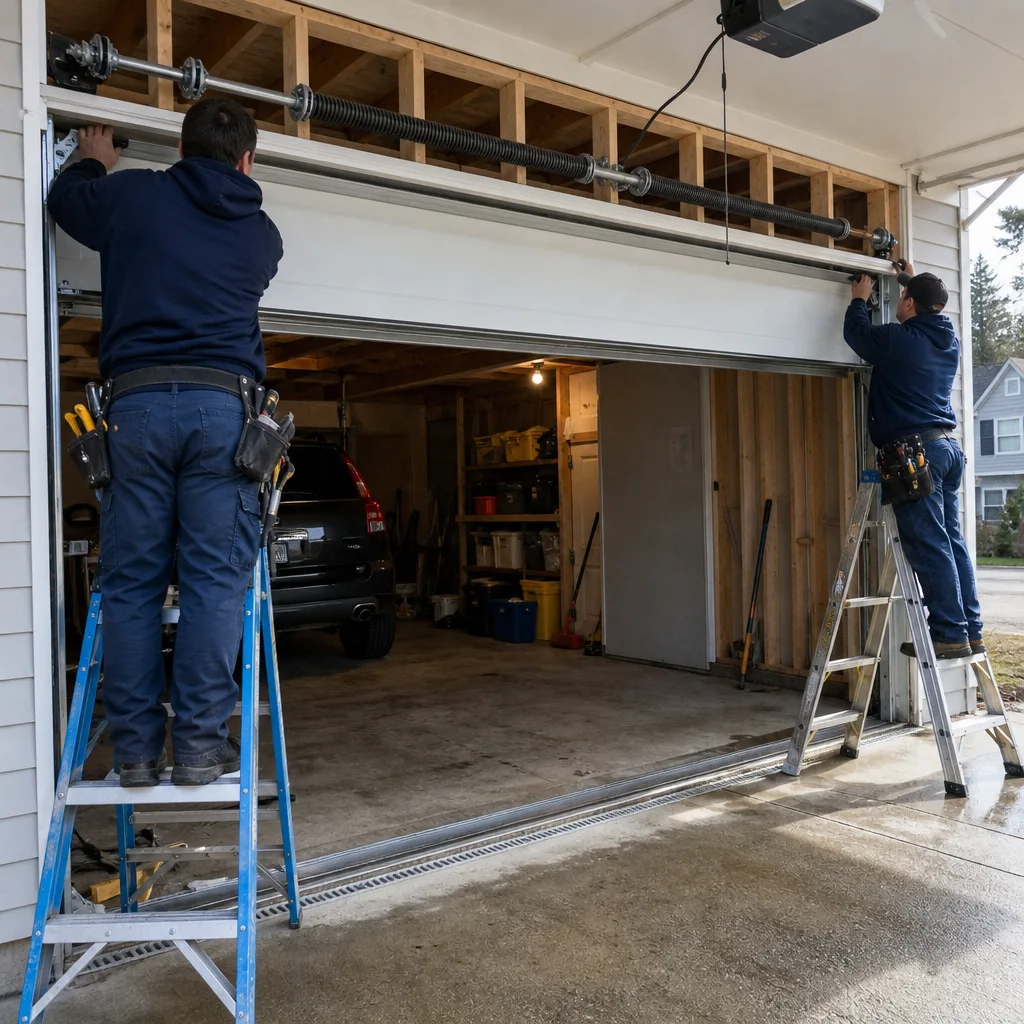
Call a licensed garage door contractor when your project involves any structural modification, fire-rating change, or when you’re uncertain whether your specific situation requires a permit. The cost of a professional consultation is negligible compared to the expense of retroactive permitting or failed sale inspections. Garage Door Installation in Olympia projects particularly benefit from advance planning, as the measure-and-order timeline allows permit application to proceed in parallel with material procurement.
Servo Garage Doors Olympia offers free estimates in Olympia, including permit requirement assessment as part of our written scope. Every estimate includes explicit documentation of whether permitting is required, which jurisdiction will process the application, and the estimated permit fees. We also provide a Garage Door Repair Maintenance Checklist for Olympia Homeowners with every completed project. We obtain permits directly for projects we perform, and we provide the permit number on your written price scope before work begins. Call (360) 995-1547 to schedule.
Frequently Asked Questions
A permit is required when the replacement changes the door dimensions, modifies the supporting structure, or alters the fire rating of an attached garage. Like-for-like replacements on detached structures typically qualify for exemption, but Thurston County Community Development makes final determinations case-by-case. Call (360) 995-1547 for a free estimate that includes permit status documentation.
Residential garage door permits in Thurston County typically range from $280 to $420 for standard replacements requiring structural review, based on the county’s valuation-based fee schedule. Electrical permits for new opener circuits are additional. Retroactive permits with penalties can double these amounts. We include estimated permit fees in every written estimate we provide.
The inspector issues a correction notice specifying the deficiency, and a re-inspection is required after correction. Thurston County charges a re-inspection fee approximately half the original permit fee for code-violation failures. Common failures include photo-eye misalignment, inadequate header bearing, and missing fire-rating labels. Our documented photo record process catches most of these issues before the inspector arrives.
No. Attached garages require assemblies that maintain the structure’s fire-separation integrity. The door must either carry a specific fire-resistance rating or be part of an assembly that achieves equivalent protection through seals, gaskets, and perimeter treatment. Not all residential doors meet this standard; verify with the manufacturer’s documentation before ordering.
The property owner holds primary liability under Washington law, though the contractor violated licensing requirements by performing unpermitted work. The owner must correct the violation through retroactive permitting or removal, then may pursue the contractor through bond claims or court action. Protect yourself by requiring permit documentation before final payment.
Replacing an existing opener on the same outlet typically does not require an electrical permit. Installing a new outlet, extending a circuit, or upgrading to accommodate a heavier unit usually does. All garage outlets must be GFCI-protected under current code; older homes may need electrical updates. We assess this during our opener service calls and document the findings.
The Bottom Line
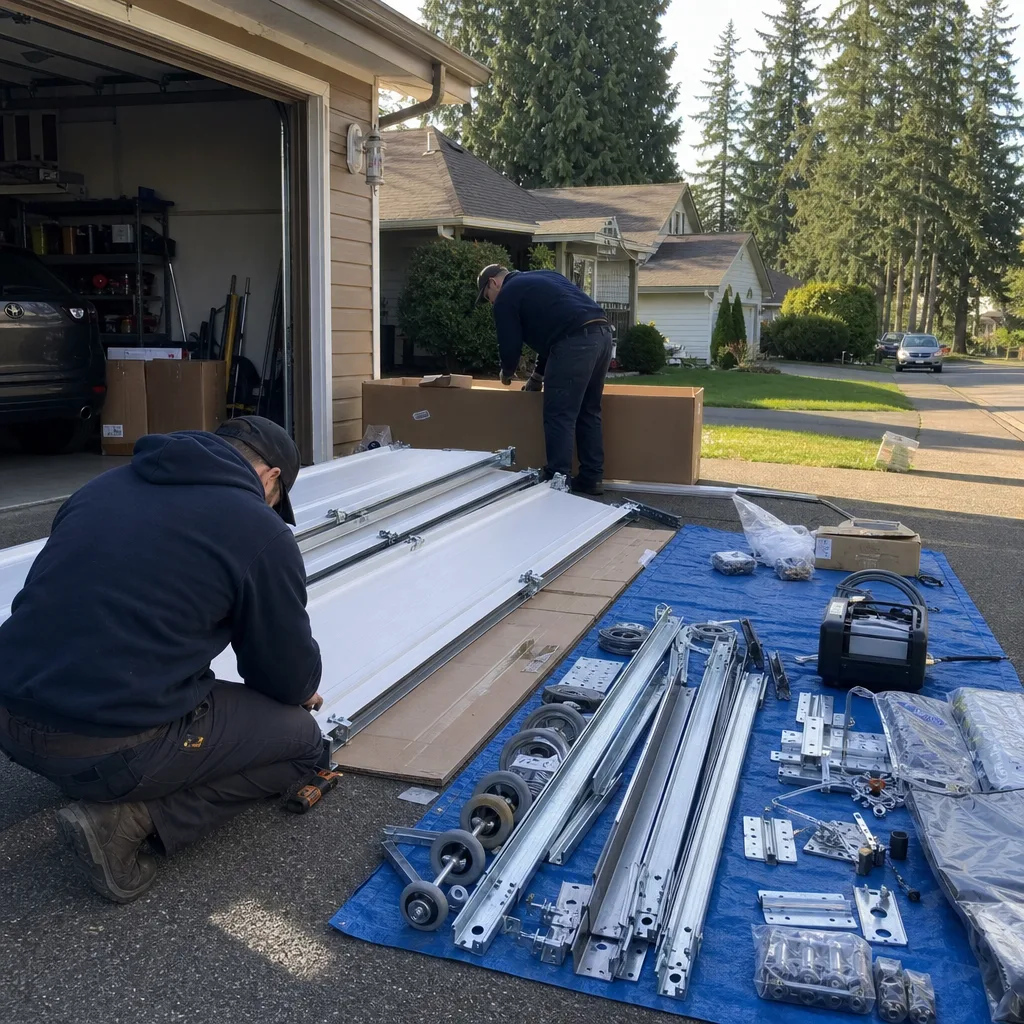
The permit question for garage door work in Washington is genuinely situational, not a simple yes or no. The variables are your garage’s attachment status, the scope of structural change, the fire-rating requirements for your specific configuration, and the jurisdiction that enforces your property. For Olympia homeowners, Thurston County Community Development is the authority that makes binding determinations, and their case-by-case review process means generic advice from national websites may not apply to your situation.
The highest-return action you can take is documentation: get the permit status in writing before work starts, verify your contractor’s active license through L&I, and retain all records including manufacturer specifications and inspection approvals. This documentation protects your property value, prevents sale complications, and establishes clear accountability if problems emerge later.
At Servo Garage Doors Olympia, we built our practice on this principle. Clause 1 of The Haven Standard requires a flat, written price and written scope before any work begins. Clause 4 requires the documented photo record that traces every finding and every action. These aren’t marketing claims; they’re the operational rules we’ve followed since 2015, across more than 18,000 garage doors, because evidence outperforms promises every time.
Written by Marcus Deller, Owner at Servo Garage Doors Olympia, serving Olympia since 2015.