
Last updated September 21, 2026
Full 25-point door and opener safety check with every visit - springs, cables, rollers, tracks, and your LiftMaster or Chamberlain opener included
You get a price before we start. It does not change when the truck arrives.
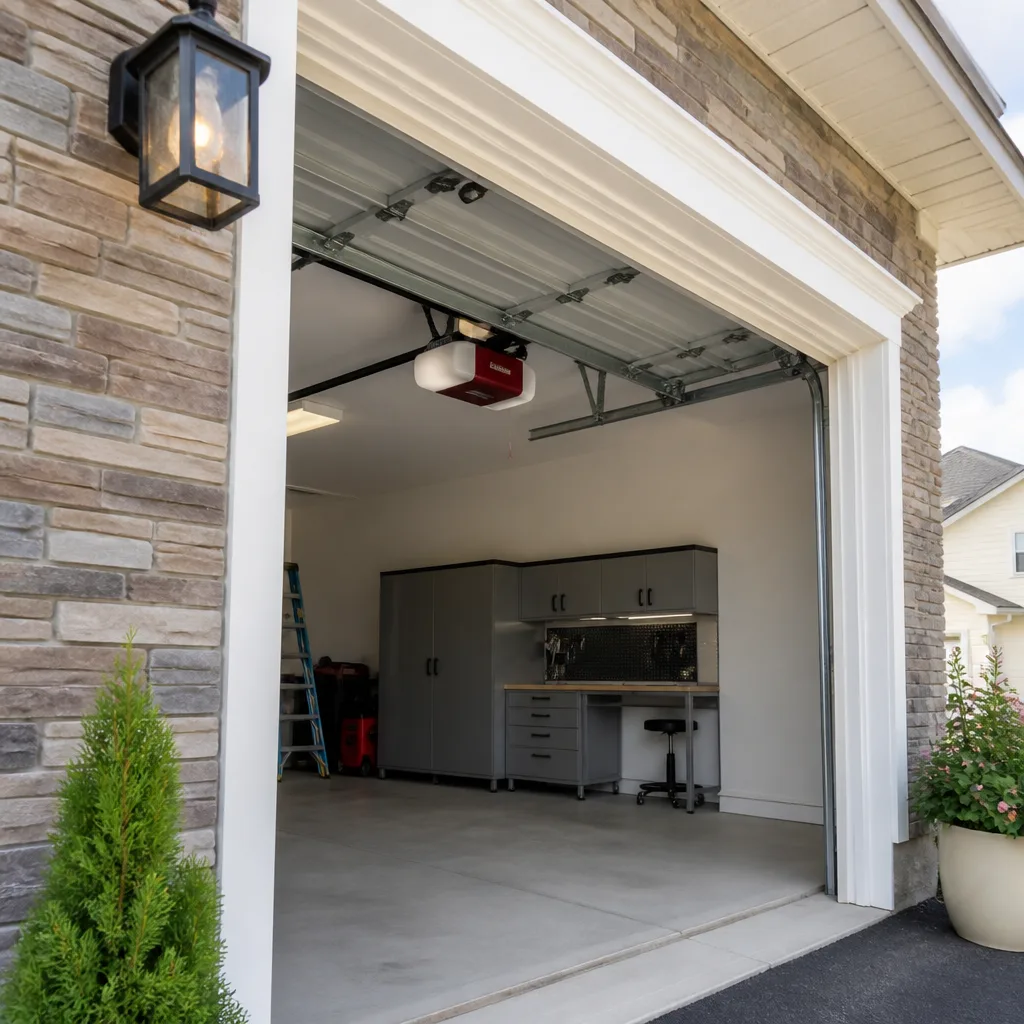
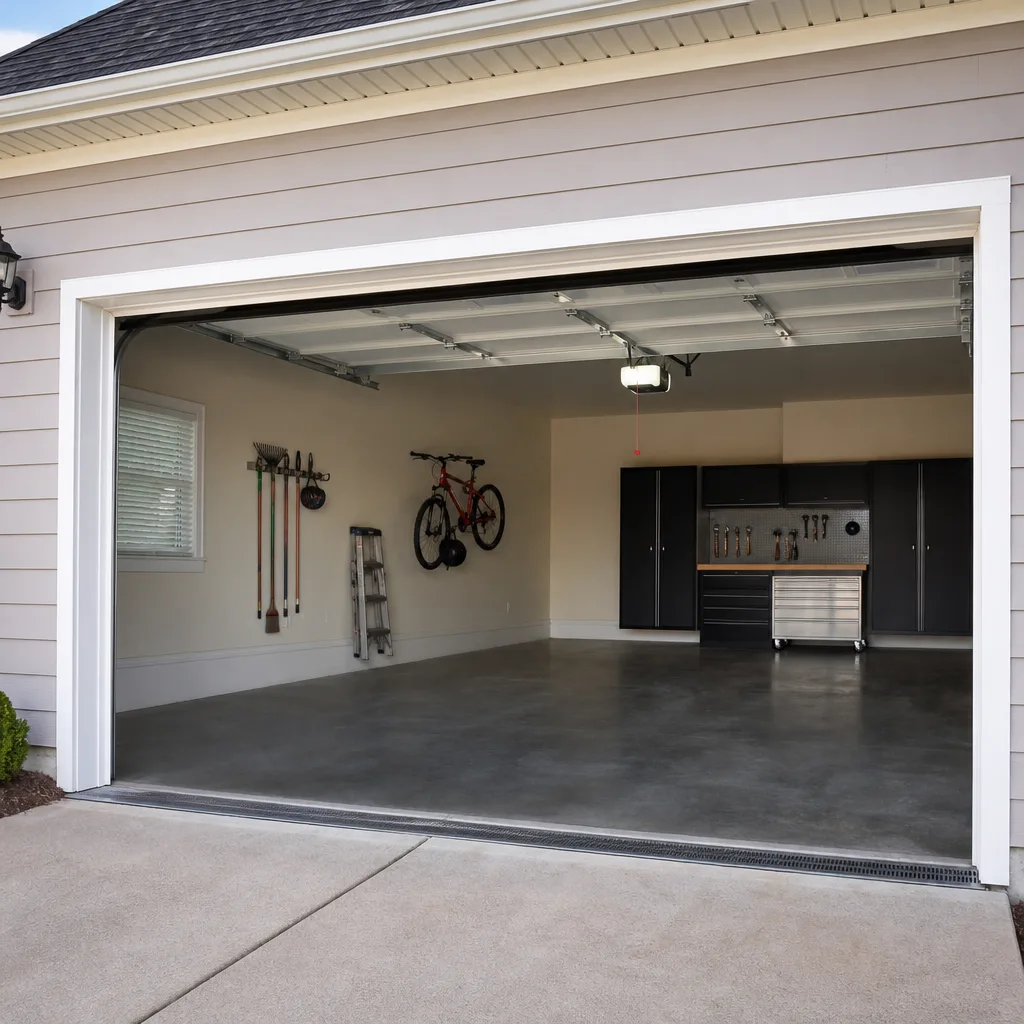
 Before
 After
After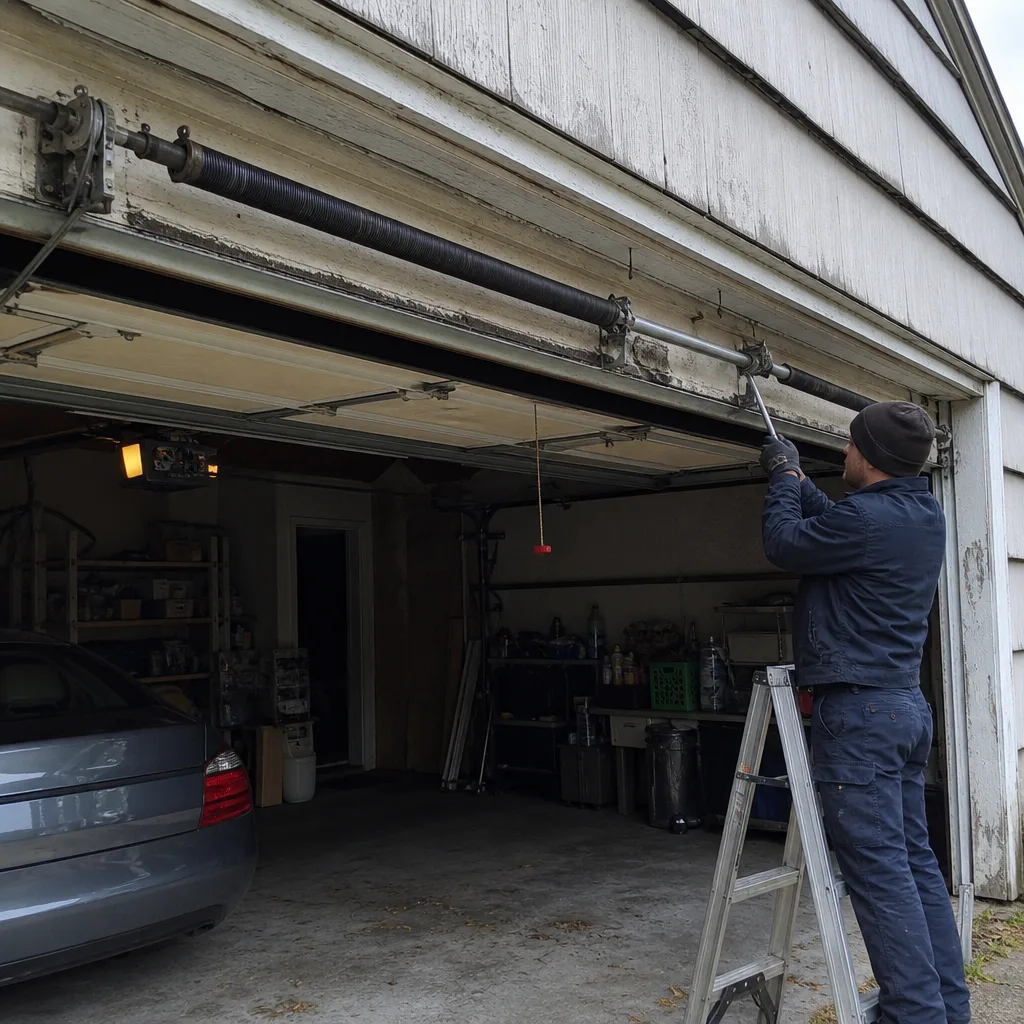 Before
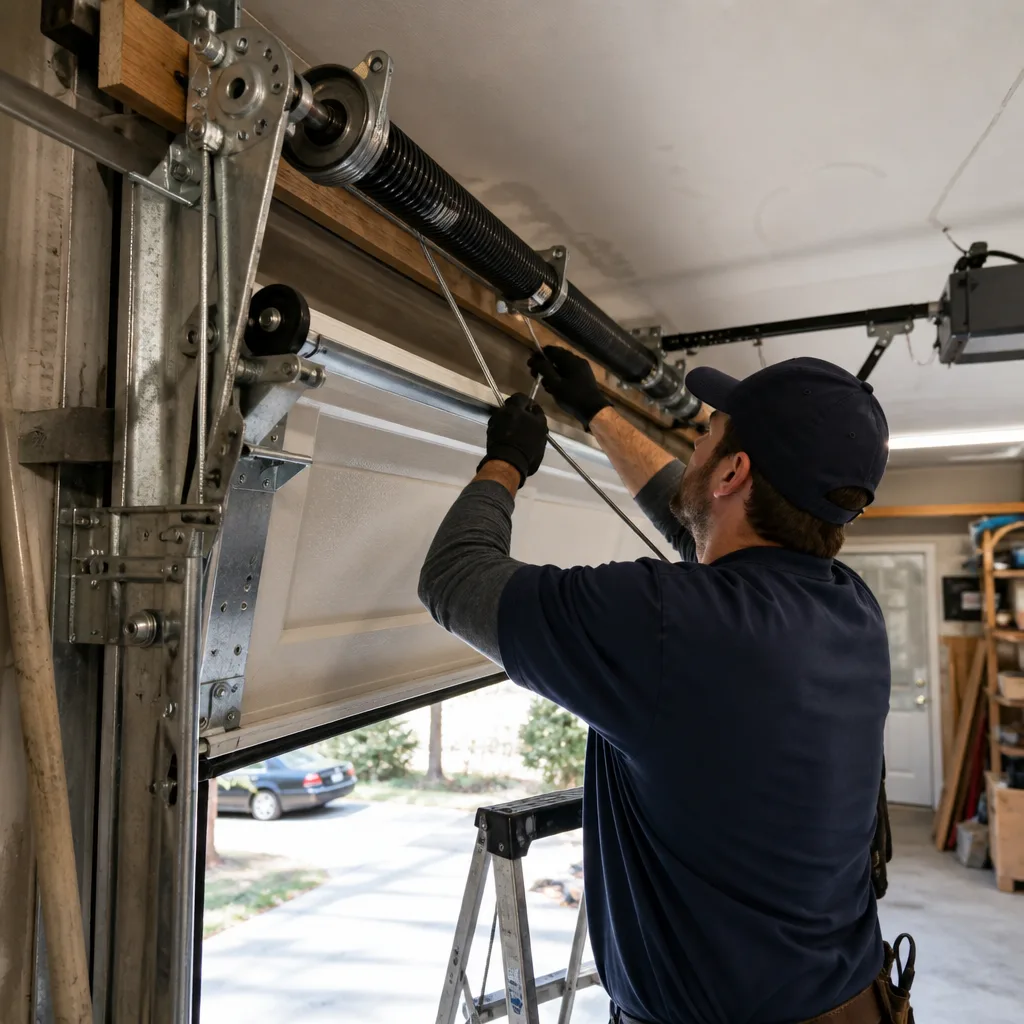 After
After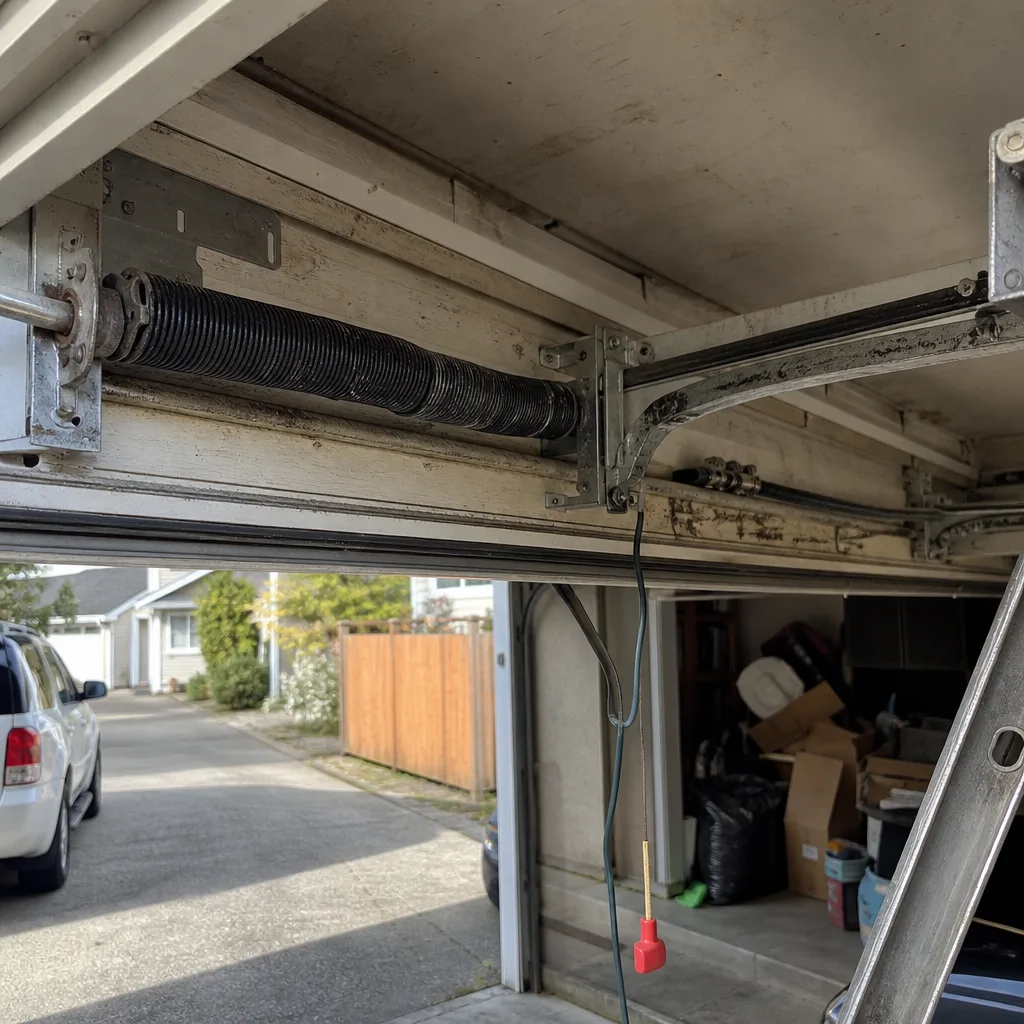 Before
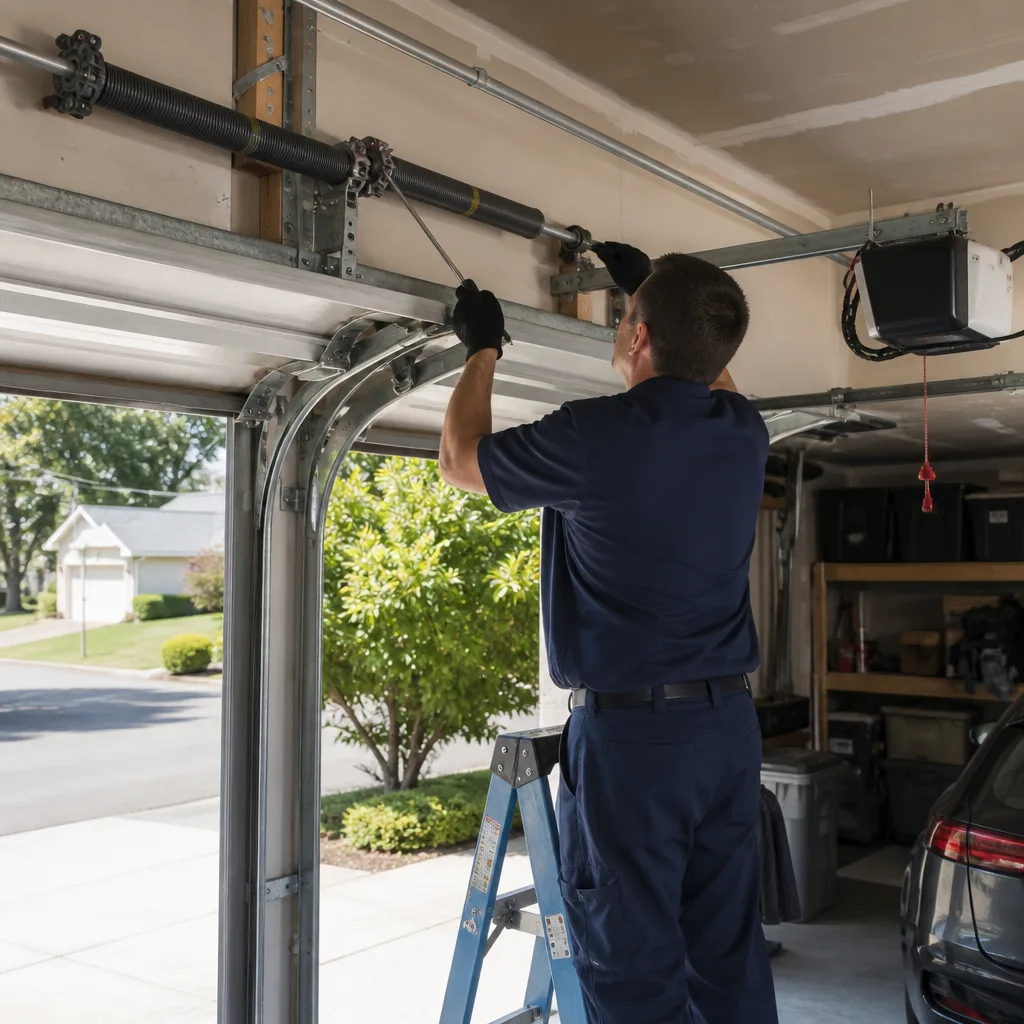 After
AfterSeasonal Garage Door Care for Olympia: Year-Round Homeowner’s Guide
Olympia averages only 17 days below freezing per year. Most homeowners here skip winterization entirely - and that’s the mistake. It’s not sustained cold that damages garage doors in Thurston County; it’s those 17 freeze events arriving after weeks of rain saturation, when swollen bottom seals meet a sudden hard frost and crack, or when untreated wood panels absorb October moisture and warp by January. In The Complete Guide to Garage Door in Olympia, we’ll walk through what Olympia’s specific climate pattern - sustained moisture cycling, brief UV exposure, and mild freeze events - actually does to your garage door, and the seasonal maintenance that prevents the service calls we run most often in neighborhoods from Lacey to Tumwater to the Cooper Point peninsula.
Quick Answer
Olympia homeowners should perform garage door maintenance four times yearly: seal inspection in fall before the rainy season, freeze-event recovery in winter, track and hardware cleaning in spring after wet-season grit accumulation, and UV seal protection in summer. The single most important annual task is spring tension verification, which prevents roughly 60% of the emergency calls we handle in Olympia.
Table of Contents
- Fall Maintenance: Sealing Out the Rain Season
- Winter Maintenance: Surviving Olympia’s Freeze Events
- Spring Maintenance: Recovering from the Wet Season
- Summer Maintenance: UV Protection During the Dry Stretch
- The Annual Task That Prevents 60% of Service Calls
- Common Mistakes to Avoid
- When to Call a Professional
- Frequently Asked Questions
 Before
 After
AfterFall Maintenance: Sealing Out the Rain Season
October and November in Olympia bring the transition that defines our entire maintenance calendar: the return of sustained precipitation after a dry summer. The Puget Sound convergence zone keeps Thurston County wetter than Seattle’s rain shadow, and your garage door seal is the first line of defense.
Inspect and Replace the Bottom Astragal
The bottom seal - technically called the astragal - is where we find the most preventable water intrusion in Olympia homes. Here’s what to check before the rains settle in:
- Close the door on a bright day and look for daylight. Any visible gap between the seal and the floor means water will enter. In older Olympia construction, particularly homes built before 1990 in neighborhoods like Eastside or the original plats near downtown, garage floors often settle unevenly. A standard straight-profile astragal won’t conform to these irregularities. We regularly install bulb-style or oversized astragals with a wider contact footprint for these floors.
- Compress the seal and release it. EPDM rubber should rebound to shape within seconds. If it stays flattened or shows surface cracking, it’s lost elasticity. Vinyl astragals harden faster in Olympia’s UV-plus-moisture cycle and typically need replacement every 3-4 years versus 5-7 for quality EPDM.
- Check the retainer track. The aluminum or steel channel that holds the astragal can corrode where road salt from winter driving drips onto it. Tap it lightly - if it flakes or sounds hollow, the retainer itself needs replacement, not just the seal insert.
Side and Top Weatherstripping
Olympia’s driving fall rains hit the west and southwest faces of garage doors hardest. The PVC or vinyl flap seals on the jambs should maintain continuous contact with the door panel when closed. Look for:
- Gaps wider than 1/8 inch at any point
- Stiffness or cracking in the vinyl, especially on the southwest corner
- Loose fasteners where the stripping pulls away from the jamb
We stock replacement weatherstripping for all major brands including Clopay, Amarr, and Wayne Dalton, and we measure on-site because the retainer profiles vary by manufacturer and year.
The Floor Seal Freeze Risk
Here’s the Olympia-specific factor most DIY guides miss: a worn astragal that allows water pooling in October becomes a frozen adhesion point in December. Water seeps under the seal, saturates the concrete, and when that rare 28°F night arrives, the door freezes to the floor. The homeowner forces the opener, and the trolley carriage or opener logic board fails. We’ve replaced more openers in Olympia from this sequence than from actual mechanical wear.
Garage Door Repair in Olympia addresses these failures, but a $35 astragal replacement in October prevents the $400-$800 opener repair in January.
Winter Maintenance: Surviving Olympia’s Freeze Events
December through February in Olympia doesn’t bring the sustained subzero cold of the Midwest. It brings something more insidious for garage doors: repeated freeze-thaw cycles on moisture-laden components. The average low in January is 33°F - just warm enough to keep liquid water present, just cold enough to freeze it occasionally.
When Your Door Freezes to the Floor
If you find your garage door stuck to the floor on a cold morning, do not force the opener. The opener’s torque is designed to move the door, not break ice bonds. Forcing it strips the nylon gear inside the opener housing or overloads the logic board.
Safe thawing methods for Olympia’s typical freeze events:
- Warm water, not hot. Pour lukewarm water along the threshold. Hot water creates thermal shock in concrete and can crack older garage floors, especially the pre-1980 poured slabs common in the Governor Stevens neighborhood and similar areas.
- No salt on the seal. Rock salt or calcium chloride degrades EPDM and vinyl compounds, accelerating the cracking you’ll see by spring. If traction is needed on the garage floor, use sand or kitty litter, and sweep it before it tracks into the door’s lower track.
- No heat guns or propane torches. Directed heat warps steel door panels and damages the paint finish. We’ve replaced panels in Olympia where a homeowner melted the factory coating trying to thaw a seal.
- Manual release and patience. Pull the red emergency release cord on the opener trolley carriage to disengage the motor. Lift manually if possible, or wait for natural warming. The door will release when the ice bond weakens.
Humidity and Metal Components
Olympia’s winter humidity averages 85-90%. This sustains surface rust on hinges, rollers, and track that would dry out in a continental climate. Every two weeks during the wet season, open and close the door manually and listen. Grinding or squealing indicates rust particles in the roller bearings or hinge pins. A silicone-based lubricant on the hinges and roller stems - not WD-40, which attracts moisture - prevents the binding that leads to premature roller failure.
We see a spike in torsion spring breaks in late January and February. The spring wire doesn’t rust through; it work-hardens from the additional friction of corroded hardware, cycling more stress into the spring itself. A spring that should last 10,000 cycles fails at 7,000.
Spring Maintenance: Recovering from the Wet Season
March through May in Olympia brings the payoff for fall and winter neglect: doors that bind, openers that strain, and hardware that’s been quietly corroding for five months. This is the season we schedule the most Garage Door Repair in Olympia calls, and most trace back to preventable wet-season damage.
Track Cleaning: The Step Everyone Skips
Road grit, pine pollen, and rust particles accumulate in the vertical and horizontal tracks through winter. By March, the roller wheels - especially the steel ones on older doors - are riding through abrasive sludge. The correct cleaning procedure:
- Close the door and disconnect the opener. Pull the emergency release cord. The door should stay in the down position; if it drifts upward, the spring tension is unbalanced and needs professional adjustment. Torsion springs store lethal energy; do not attempt adjustment yourself.
- Vacuum the track interior. Use a narrow attachment to remove loose debris. Don’t force the nozzle against the track walls; you’re removing debris, not polishing.
- Wipe with a solvent-dampened cloth. Mineral spirits or a similar degreaser removes the oily residue that traps grit. Avoid water-based cleaners - they leave moisture in the track that accelerates rust.
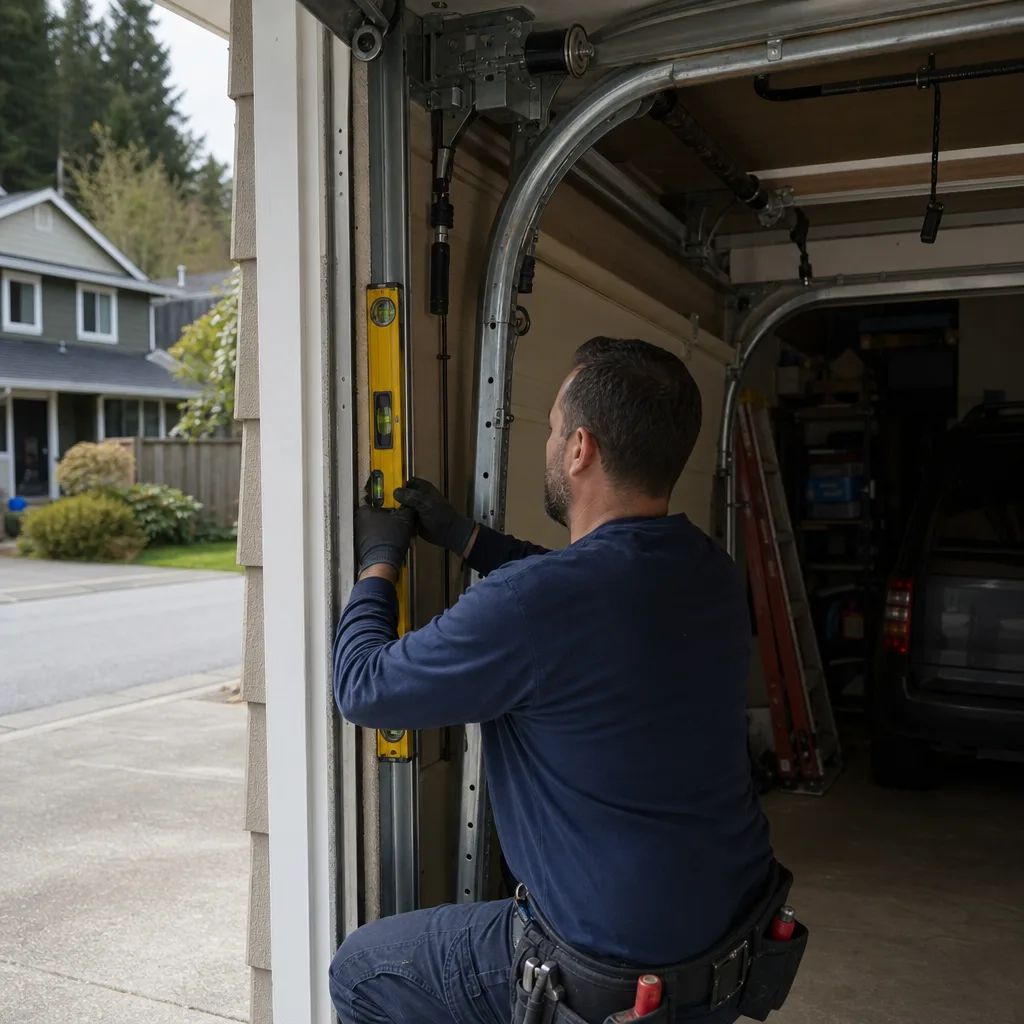
- Inspect the track alignment. The vertical tracks should be plumb within 1/4 inch over their full height. Horizontal tracks should slope slightly toward the back of the garage. Misalignment from settling - common in the clay soils of Olympia’s west side - causes rollers to bind and pop out.
Hinge and Roller Inspection
With the door closed, examine each hinge where the door panels flex. Look for:
- Rust streaks running from the hinge pin - indicates the pin is corroding and swelling
- Cracks in the hinge casting, especially at the bolt holes
- Loose fasteners that allow the hinge to shift
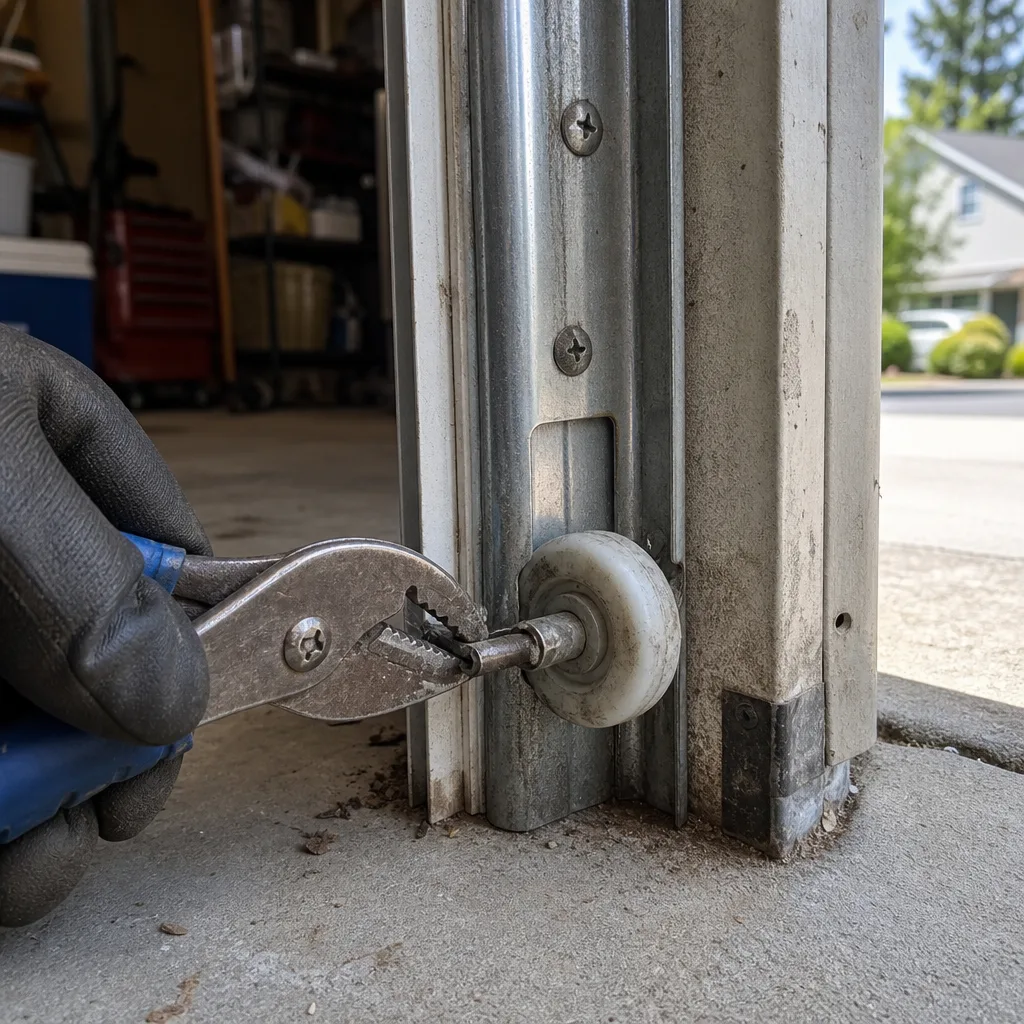
Rollers should spin freely when flicked with a finger. Steel rollers will show surface rust; nylon rollers won’t rust but can crack from cold embrittlement. In Olympia’s climate, we prefer sealed-bearing steel rollers with a zinc coating for wet-season durability, or high-density nylon for noise reduction in attached garages.
The critical safety note: if you find a cracked hinge or a roller that won’t turn, do not operate the door until replacement. A failed hinge allows the door panel to separate from the track, and the 150-250 pound door becomes an uncontrolled fall hazard. We carry hinge and roller inventory for all major brands including Craftsman and Raynor, and we replace these with the door secured, not under load.
Opener Logic Board Check
Olympia’s winter humidity affects electronics too. The opener’s logic board, located in the motor housing, can develop corrosion on its terminal connections. Symptoms include intermittent remote response, flashing LED codes that don’t match the diagnostic chart, or complete failure after a power outage. We test logic board voltage and signal output as part of our spring maintenance visits - it’s a five-minute check that prevents a complete opener replacement.
Summer Maintenance: UV Protection During the Dry Stretch
June through August in Olympia brings an underappreciated stressor: concentrated UV exposure during our driest months. July averages only 0.8 inches of rain, and the sun angle is high enough to hit south-facing garage doors directly. This is when rubber and vinyl seals degrade fastest, but most homeowners aren’t checking because the rain has stopped.
UV Degradation of Seals: EPDM vs. Vinyl
The bottom astragal and side weatherstripping face different UV challenges depending on material:
| Material | UV Behavior | Olympia-Specific Lifespan | Compatible Protectant |
|---|---|---|---|
| EPDM rubber | Surface chalking, gradual hardening | 5-7 years with protectant; 3-4 without | 303 Aerospace Protectant (water-based, no petroleum) |
| Vinyl/PVC | Plasticizer loss, cracking, shrinkage | 3-4 years with protectant; 2-3 without | Same; avoid solvent-based dressings |
| Thermoplastic elastomer (TPE) | Moderate UV resistance, newer formulation | 6-8 years estimated | Mild soap and water only |
Apply UV protectant in late June, after the rainy season has fully ended and before July’s peak exposure. Clean the seal first - protectant over grime traps abrasive particles. Wipe, don’t spray directly; overspray on the door panel can streak the finish.
Panel and Finish Inspection
Steel doors with factory-applied paint hold up well in Olympia’s climate, but check the bottom panel where splash-back from summer lawn watering hits. Fertilizer residues in the water accelerate corrosion. Rinse this area monthly during watering season.
Wood doors - still common in the historic districts near Capitol Way and in custom homes on the Budd Inlet - need different attention. Olympia’s dry summer weeks cause moisture content to drop, and panels that swelled in winter now shrink, revealing gaps at the stile-and-rail joints. These gaps admit moisture in fall, and the cycle repeats. We recommend resealing wood doors every two years with a penetrating oil finish, not a film-forming varnish that traps moisture.
Opener Thermal Stress
Garage temperatures in Olympia can reach 85-95°F in unventilated spaces during August afternoons. The opener motor runs hotter, and the thermal overload may trip on consecutive cycles. If your opener stops mid-travel on hot days and resumes after 15-20 minutes, the motor is overheating. Ensure the opener housing has clearance for airflow - don’t store items against it - and consider a garage vent fan if the space lacks windows.
Garage Door Opener Repair & Installation in Olympia includes thermal testing and motor amp-draw measurement to identify overload conditions before failure.
The Annual Task That Prevents 60% of Service Calls
Spring tension verification is the single most impactful maintenance task for Olympia homeowners, and it’s the one most skip because the door “still works.” Here’s why that logic fails.
What Torsion Springs Actually Do
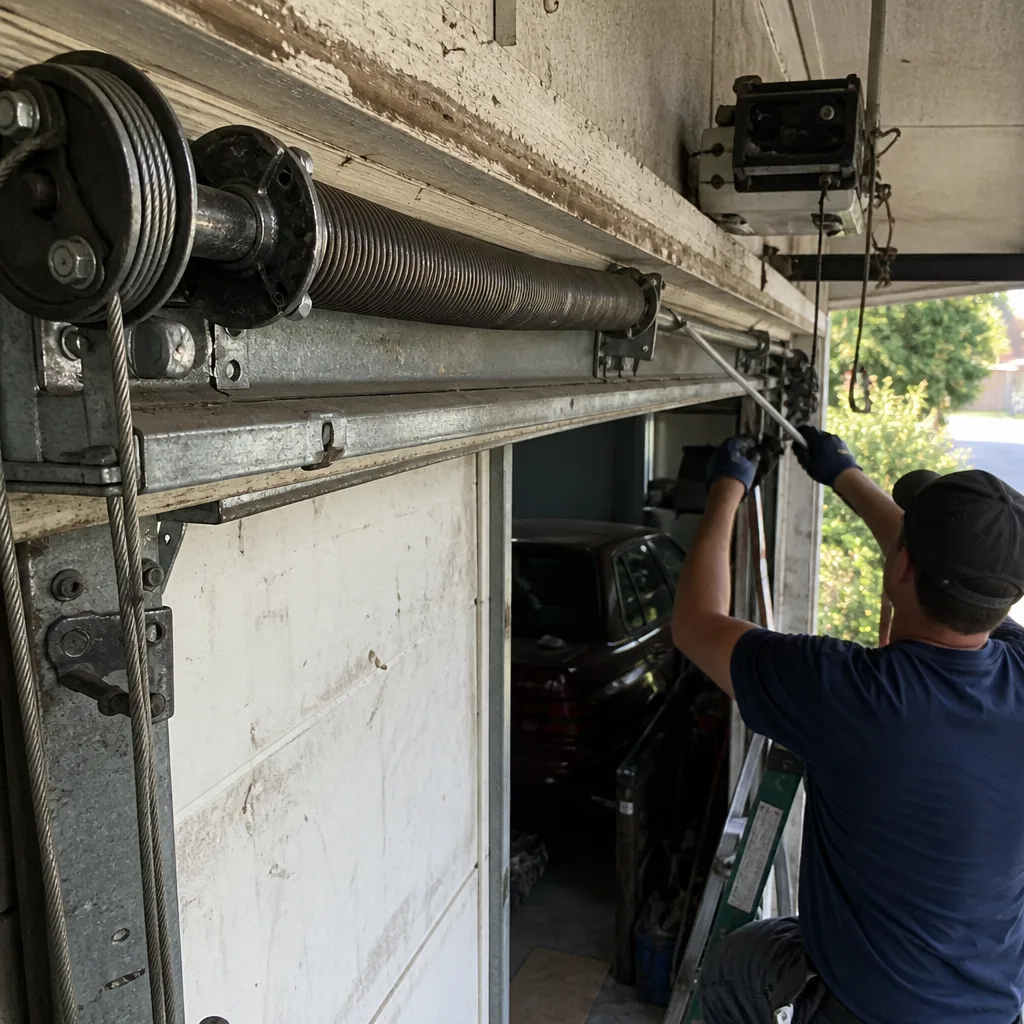
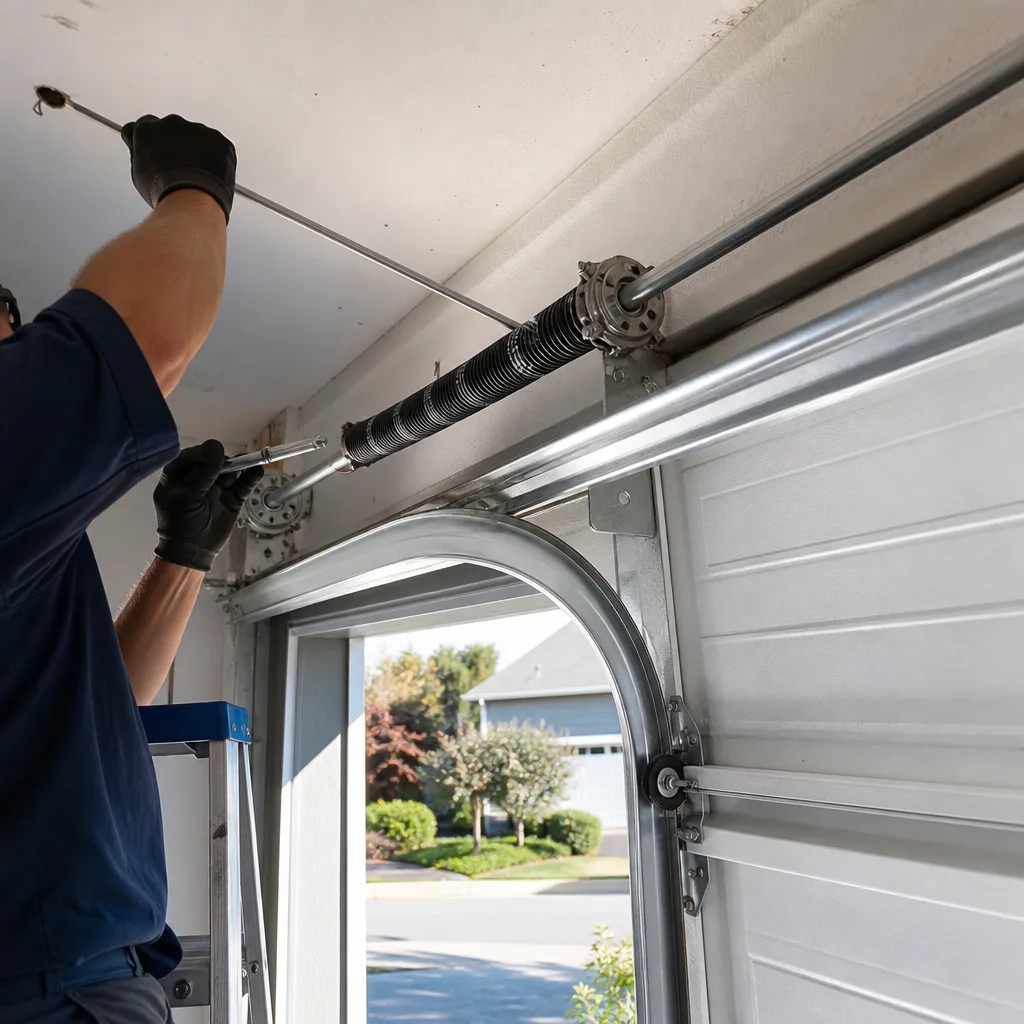
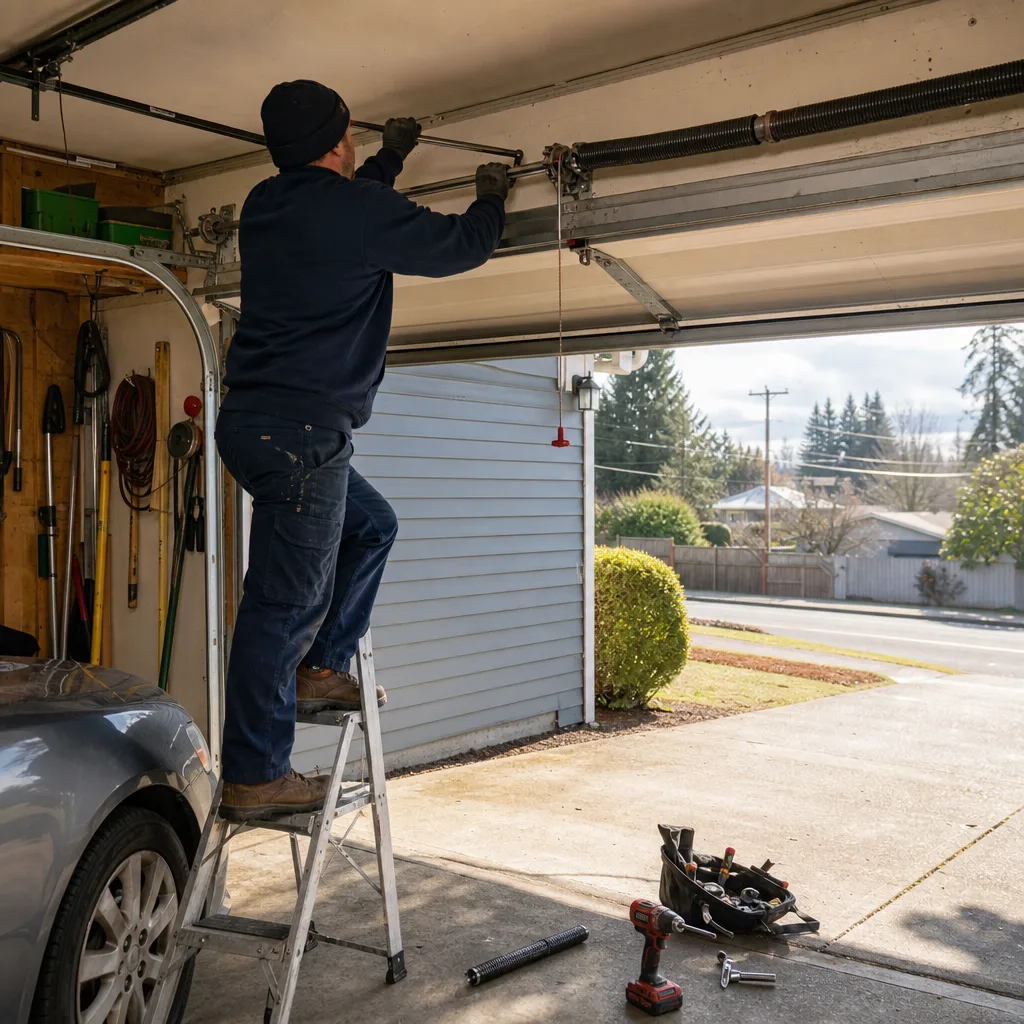
The torsion spring, mounted on a steel shaft above the door opening, stores the mechanical energy that offsets the door’s weight. A properly tensioned 16×7 foot steel door weighs effectively 8-10 pounds when you lift it manually - the spring carries the rest. When tension drops, the opener motor bears the full load, and the door feels heavy or stalls at certain points.
The Olympia-Specific Wear Pattern
Our wet-season humidity cycle accelerates a problem called spring fatigue. The spring wire doesn’t break from rust; it breaks from micro-fractures that propagate through repeated stress cycling. But the stress increases when the door’s hardware is corroded, which is exactly what happens during Olympia’s five-month wet season. The door doesn’t move as smoothly, the spring works harder, and fatigue accelerates.
Observable symptoms that tension verification is needed - on any schedule:
- The door stops 6-12 inches above the floor and won’t close further
- The opener strains audibly at the start of the open cycle
- The door rises faster on one side, indicating unequal tension on a two-spring system
- Manual lifting requires noticeably more effort than when the door was new
- The door won’t stay open at the halfway point when disconnected from the opener
The Safety Imperative
Torsion springs are under extreme torque - enough to cause serious injury or death if mishandled. The winding cones, set screws, and shaft assembly are not DIY serviceable. We verify spring tension with a calibrated winding bar and measure the door’s balance at multiple heights. If adjustment is needed, we quote a flat price before touching the system, per Clause 1 of The Haven Standard.
The documentation matters: we photograph the spring’s wire diameter, coil count, and wind direction before quoting replacement, so you see what we found. That’s Clause 4. The written scope specifies whether we’re adjusting, replacing, or converting from extension to torsion springs. And the photo record at completion shows the installed component and the door’s balanced position.
Spring tension verification takes 20 minutes and costs less than half of an emergency spring replacement call. We recommend it annually, ideally in September before the rainy season adds friction to the system, or in March when winter damage reveals itself.
Common Mistakes to Avoid
- Using WD-40 as a garage door lubricant. WD-40 is a solvent and water displacer, not a lubricant. It evaporates within days and leaves a sticky residue that attracts Puget Sound moisture and grit. Use a silicone-based spray or white lithium grease on metal-to-metal contact points.
- Ignoring the manual release cord. Many Olympia homeowners have never pulled the red emergency release cord to test manual operation. If the opener fails during a power outage - common in winter windstorms - you need to know the door moves freely without it. Test quarterly.
- Applying salt to thaw a frozen seal. The salt crystals embed in the rubber compound and accelerate cracking. We’ve replaced astragals in March that were fine in October until a homeowner used rock salt in January. Use warm water or wait for natural thawing.
- Pressure-washing the door or seals. The high-pressure stream forces water past the astragal and into the track, and it can delaminate the bottom of steel doors where the panel meets the end stile. Hand-wash with a soft brush and mild detergent.
- Assuming a slow door means the opener is failing. In Olympia, a slow or straining door more often indicates spring tension loss or track misalignment. Replacing a functional opener because of a spring problem is a $500-$1,200 mistake we see several times yearly.
- Skipping summer seal inspection because “it’s not raining.” UV damage is cumulative and invisible until the seal cracks. The seal that fails in October was damaged in July; you just didn’t notice until the water came in.
- Not checking the photo-eye alignment after any track or hardware work. The safety sensors at the door base must face each other within 6 degrees. A bumped sensor causes the door to reverse immediately or not close at all, and homeowners blame the opener when it’s a two-minute alignment fix.
When to Call a Professional
Some maintenance is homeowner-appropriate: visual inspection, track cleaning, lubrication, and seal protectant application. Some is not. Call a technician for any of the following:
- Broken or loose torsion spring, or any door that feels heavy to lift manually
- Door that has come out of the track or has damaged rollers
- Opener that hums but doesn’t move the door, or reverses immediately on closing
- Visible panel damage, especially cracks that expose the interior construction
- Any repair that requires working on the door while it’s under spring tension
Servo Garage Doors Olympia offers free estimates in Olympia - call (360) 995-1547. Our technicians arrive with a documented photo record of findings, a flat written price before any work starts, and the parts inventory to complete most repairs in a single visit. The 365-Day Done Right Promise means if it’s not right, we make it right, with the terms on paper, not a handshake.
Frequently Asked Questions
Four times yearly: seal inspection in fall, freeze-event recovery in winter, track and hardware cleaning in spring, and UV protection in summer. Add spring tension verification annually, or immediately if you notice the door straining, stopping short, or feeling heavy. Call (360) 995-1547 to schedule a maintenance visit with written pricing upfront.
A professional maintenance visit in the Olympia market typically runs $89-$149, depending on door size and whether spring tension verification is included - see our Garage Door Cost Breakdown: The Olympia Homeowner’s Reference for 2026 for full pricing details. Repairs found during maintenance are quoted separately with a flat, written price before work begins - per Clause 1 of The Haven Standard. We also offer a Free Second Opinion on any written estimate from another company; bring the paperwork, no coupon required.
Homeowners can safely lubricate hinges, roller stems, and the opener chain or screw drive. Use silicone-based spray or white lithium grease, not WD-40. Do not lubricate the track itself - rollers need friction to roll, not slide. Never attempt to lubricate or adjust the torsion spring; the stored energy is lethal. If you’re unsure which components need attention, we include lubrication as part of our maintenance visit and document what was serviced in your photo record.
Olympia’s freeze events are brief but arrive after prolonged rain saturation. Water seeps under a worn bottom seal, saturates the concrete, and the first hard freeze creates an ice bond. The concrete temperature lags behind air temperature, so even a 33°F air temperature can mean 28°F concrete at 6 a.m. Replacing the astragal before winter and ensuring proper drainage away from the threshold prevents this sequence.
Standard torsion springs are rated for 10,000 cycles (roughly 7-10 years for typical residential use). In Olympia’s humidity, actual lifespan often shortens to 6-8 years because corroded hardware increases friction and cycling stress. We verify spring condition by measuring wire diameter, coil count, and door balance - not by guessing based on installation date. High-cycle springs rated for 20,000-30,000 cycles are available for doors with heavy use.
Our maintenance visit includes: 25-point mechanical inspection, spring tension and door balance measurement, track cleaning and alignment check, hardware torque verification, opener safety reverse test, photo-eye alignment, seal condition assessment, and lubrication of specified components. You receive a documented photo record of all findings, a written summary of any recommended repairs with flat pricing, and the 365-Day Done Right Promise on any work performed. Live phone coverage 24/7 schedules your visit with a named technician and an on-the-way text.
The Bottom Line
Olympia’s garage door climate is defined by moisture cycling, not temperature extremes. The homeowners who avoid emergency calls are those who inspect seals before the rainy season, thaw frozen doors without force or salt, clean tracks after winter grit accumulation, and protect seals from summer UV. The annual spring tension verification prevents more service calls than any other single action. Documentation matters: know what your door’s condition was, know what was done, and know the price before work starts. For year-round maintenance tips, explore our more guides & resources. That’s the system we built Servo Garage Doors Olympia on in 2015, and it’s how we approach every door in Thurston County.
Ready for a maintenance visit with flat, written pricing and a documented photo record? Call Servo Garage Doors Olympia at (360) 995-1547. We’re independently owned and operated under The Haven Standard, with live phone coverage 24 hours a day, including holidays.
Written by Marcus Deller, Owner at Servo Garage Doors Olympia, serving Olympia since 2015.