
Last updated September 21, 2026
Full 25-point door and opener safety check with every visit - springs, cables, rollers, tracks, and your LiftMaster or Chamberlain opener included
You get a price before we start. It does not change when the truck arrives.
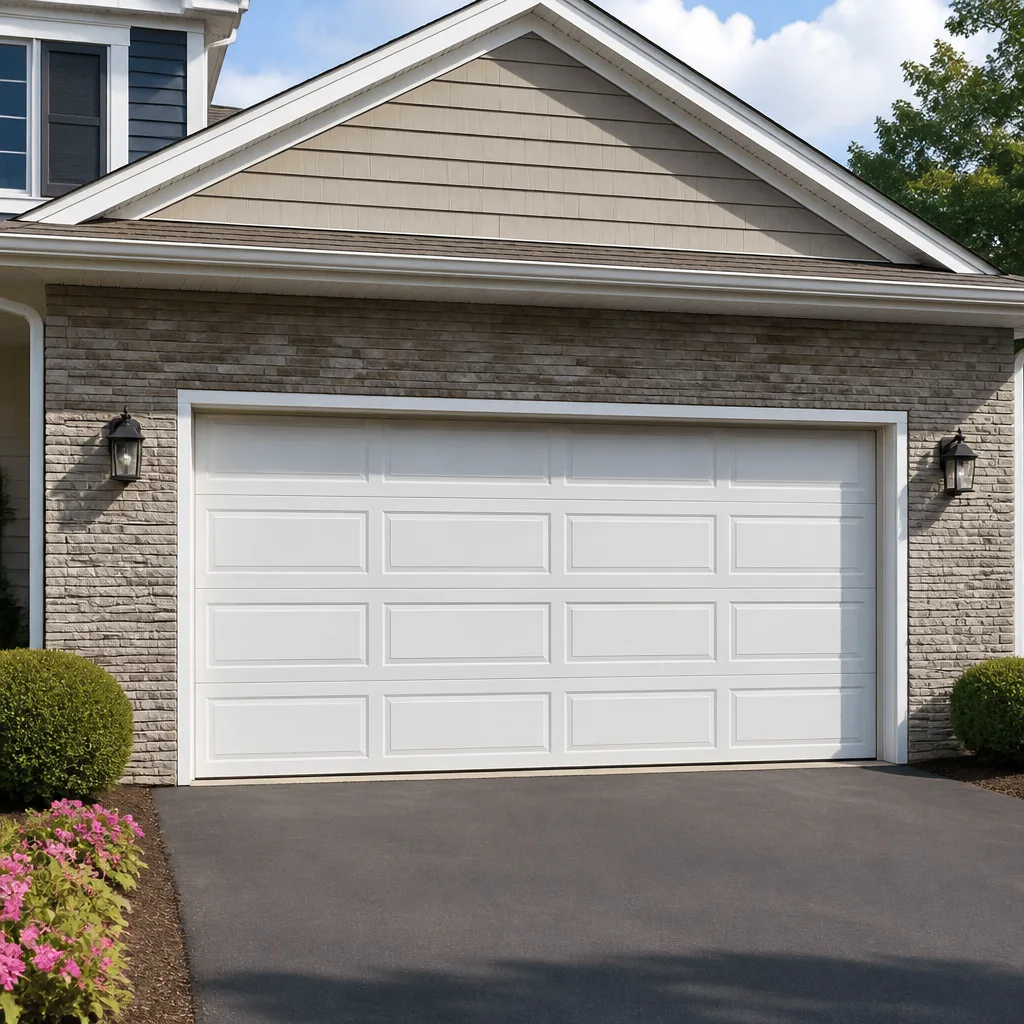
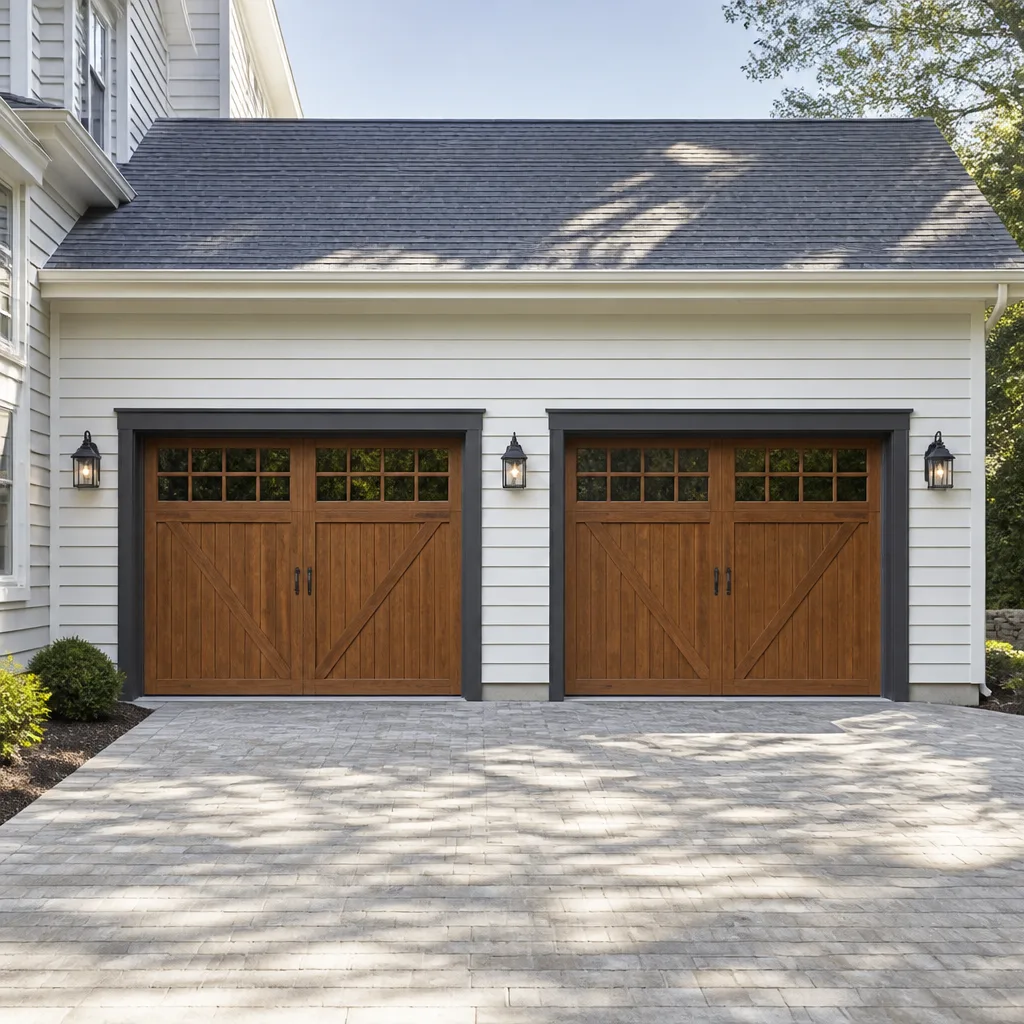
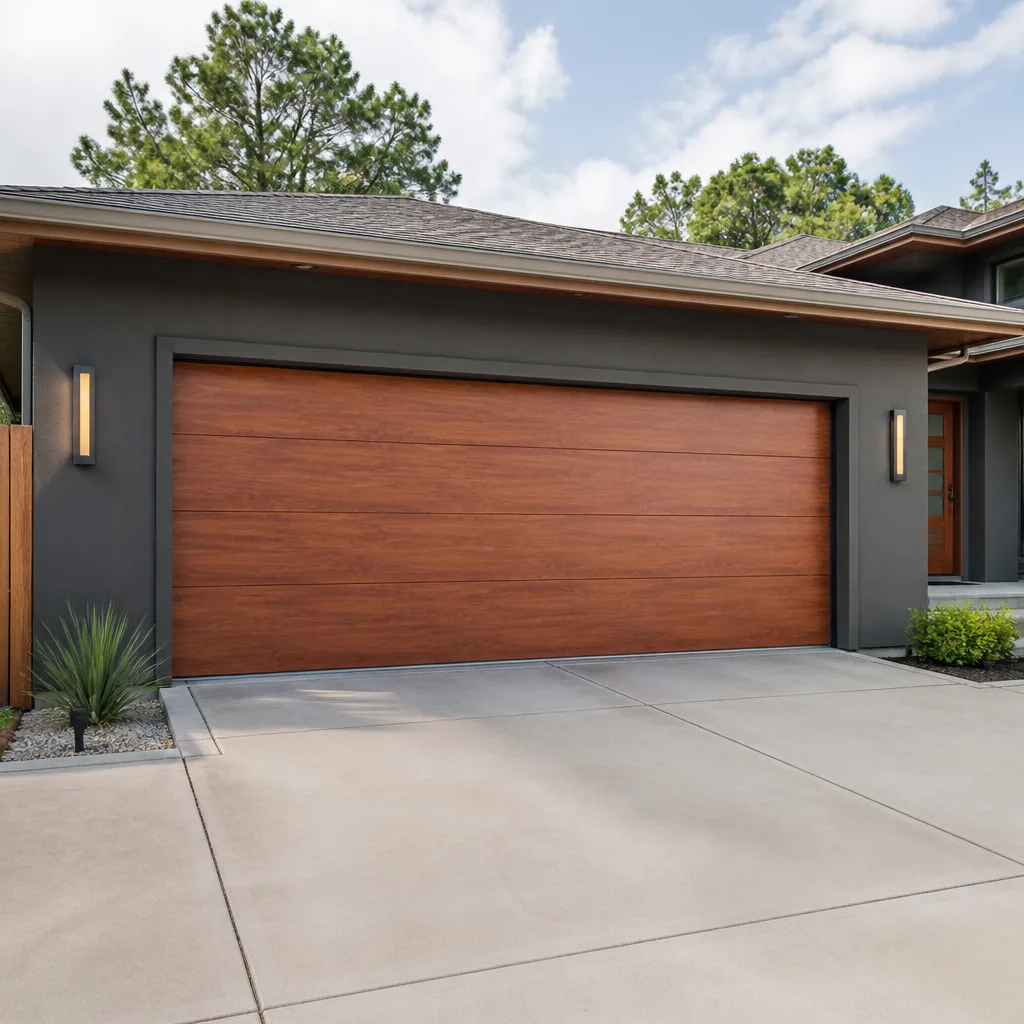
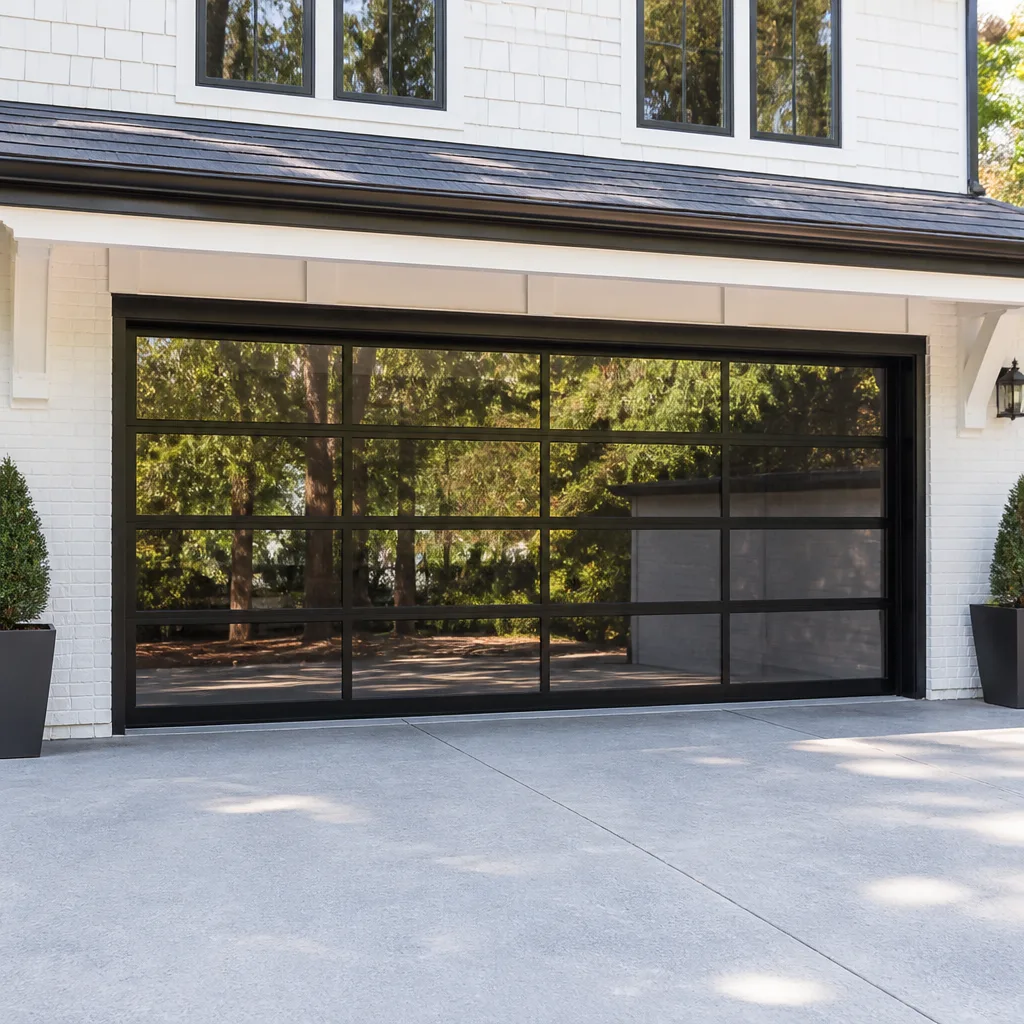
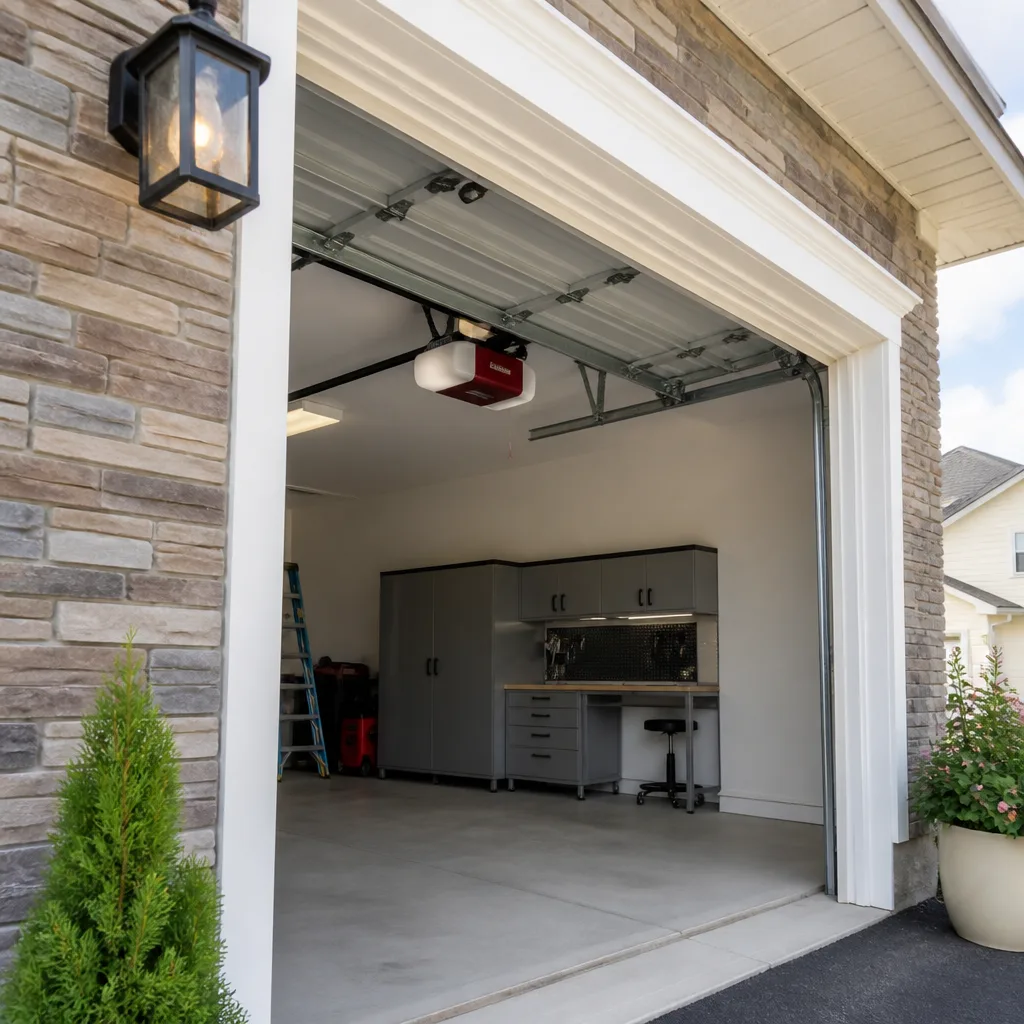
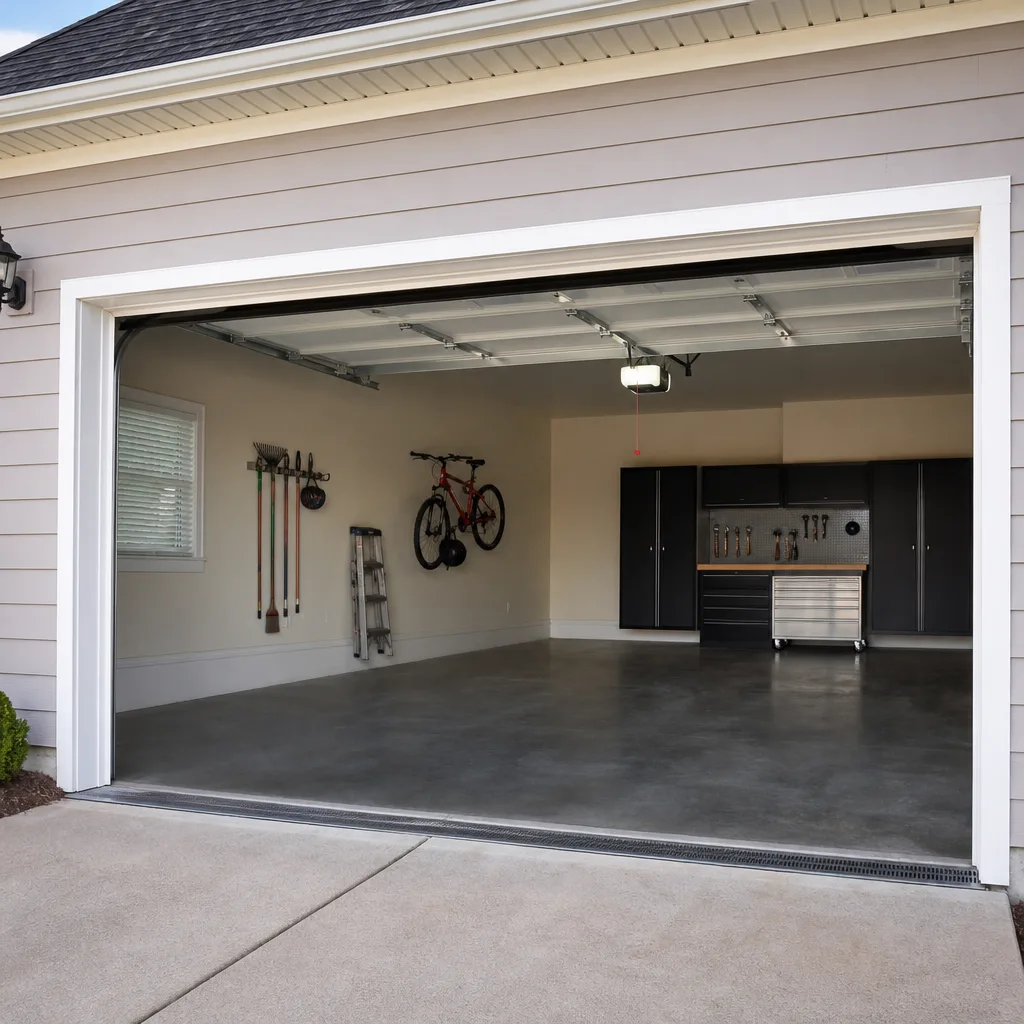
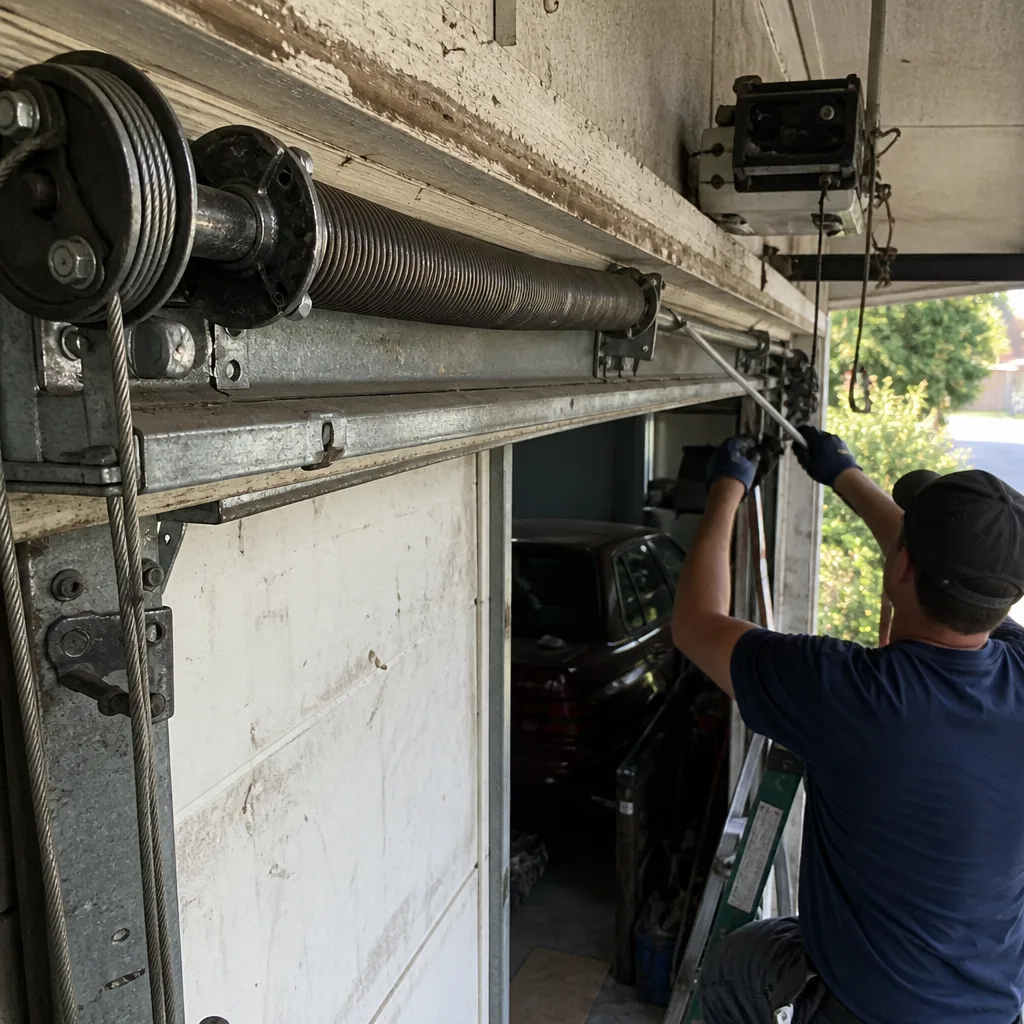 Before
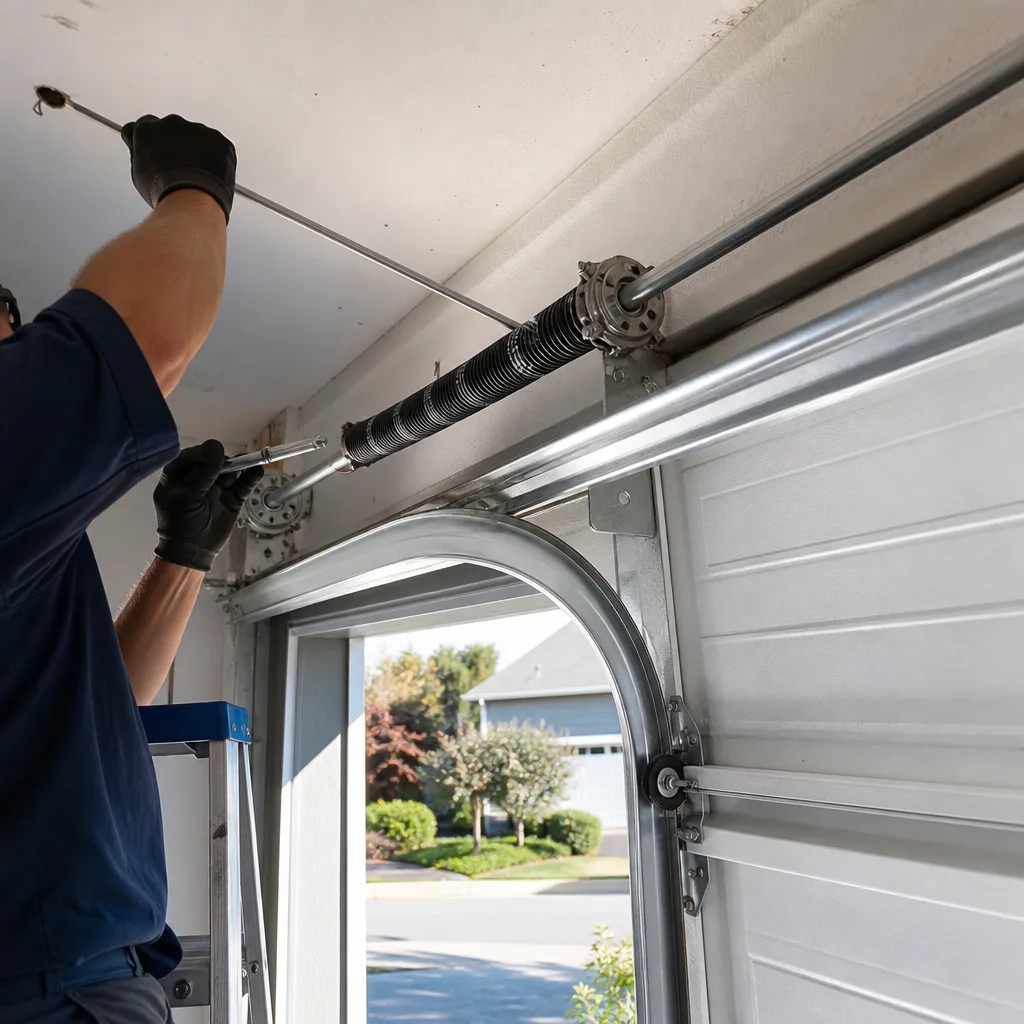 After
After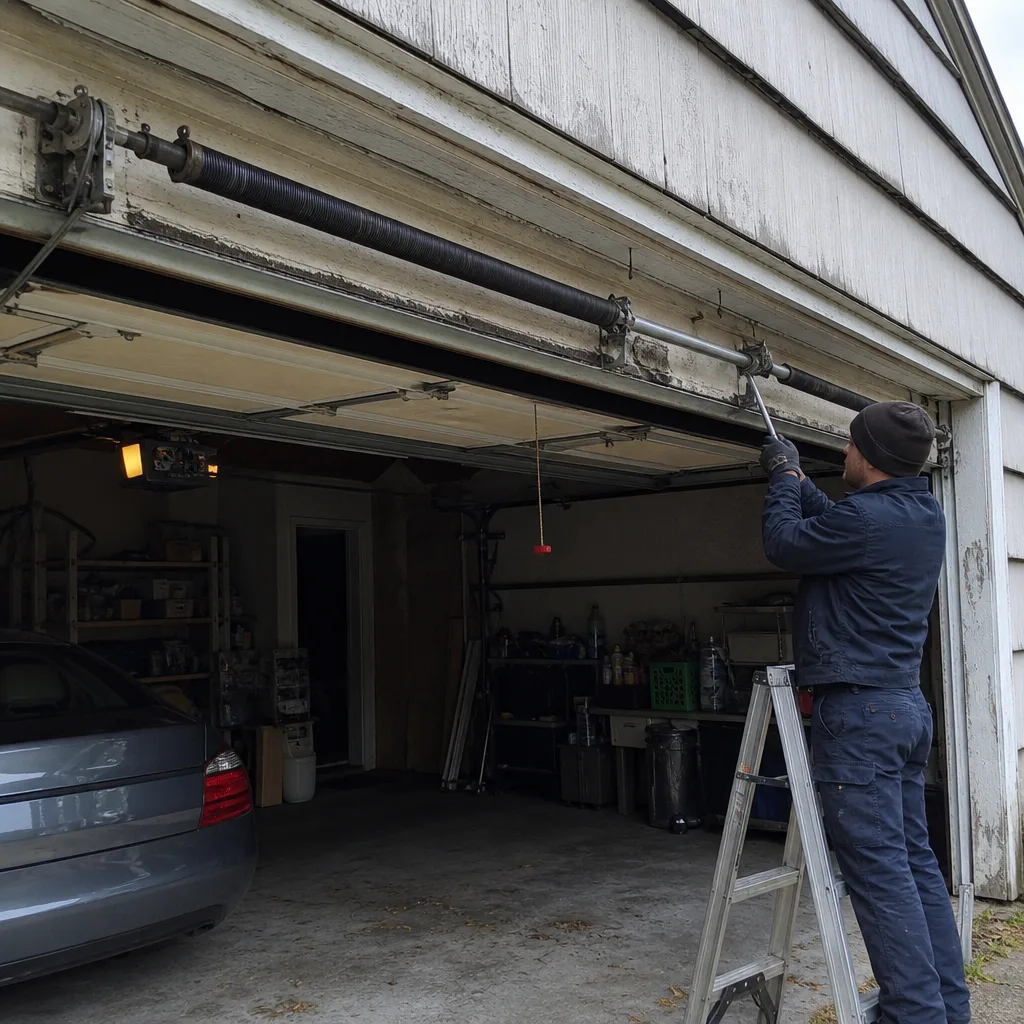 Before
 After
After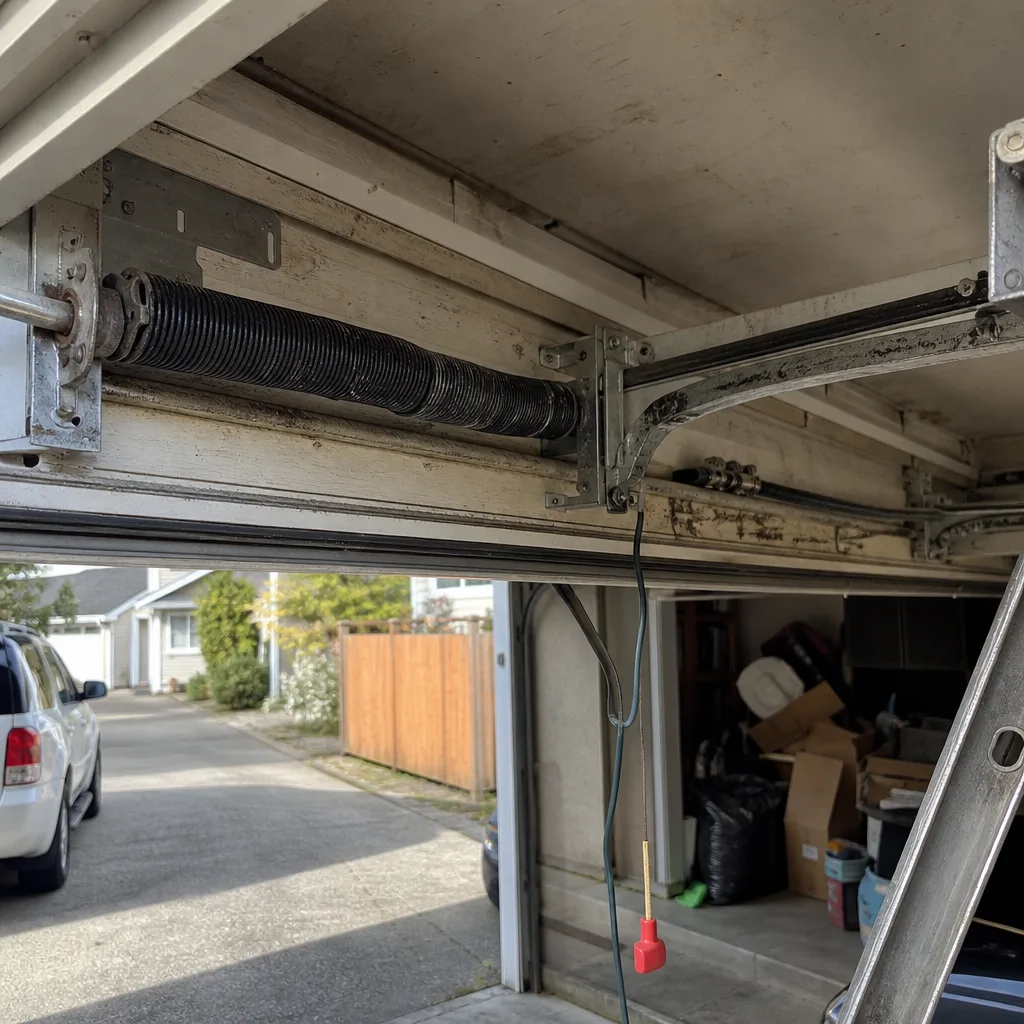 Before
 After
AfterDIY vs Professional Garage Door: The Olympia Homeowner’s Decision Guide
A standard residential torsion spring stores between 100 and 200 foot-pounds of torque under load. The winding bars used to set that tension are not sold at home improvement stores because the tool’s absence is a safety mechanism, not a supply chain gap. In Olympia, where the marine climate accelerates corrosion on hardware and homeowners in neighborhoods like Eastside and South Capitol face aging housing stock from the 1970s through early 2000s, the question isn’t whether you’re handy enough to fix your garage door. It’s whether the component you’re touching can kill you if you slip, and whether doing the work yourself transfers risk you didn’t know you were carrying. This guide breaks down the component-by-component reality of garage door work in Olympia, what the physics actually demand, and when the paperwork matters as much as the wrench; for more guides & resources, see our blog.
Quick Answer
Most Olympia homeowners can safely handle weather seal replacement, photo-eye realignment, remote reprogramming, and cosmetic panel work themselves. Torsion spring replacement, cable work under load, and track realignment on a weighted door should be handled by a trained technician. The dividing line is stored mechanical energy, not skill level, and doing the wrong job yourself can void warranties, complicate insurance claims, and create liability gaps at resale.
Table of Contents
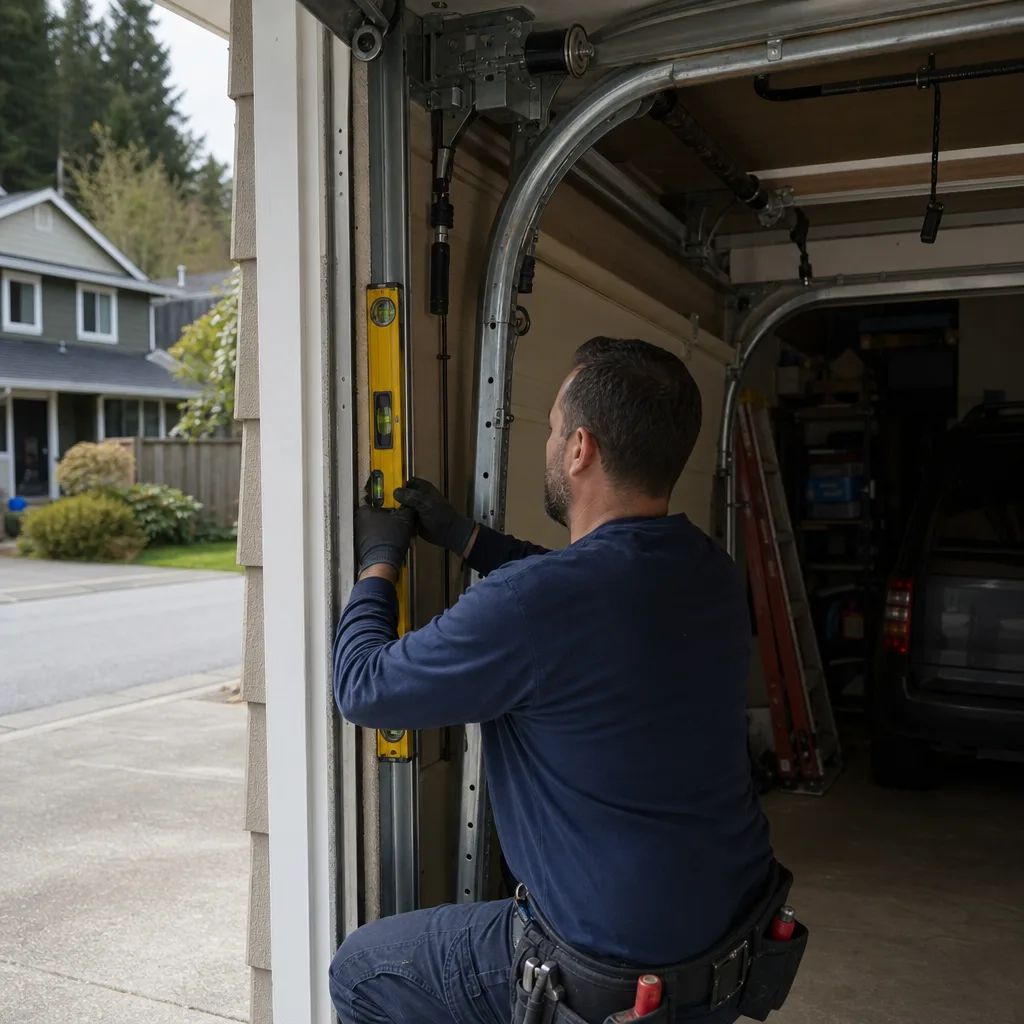
- The Component-by-Component DIY/Professional Matrix
- The Physics of Torsion Spring Failure
- What DIY Work Can Void in Washington State
- The Honest Cost Comparison: When DIY Saves Money and When It Doesn’t
- How to Document DIY Work Properly
- How Olympia’s Marine Climate Affects Garage Door Maintenance
- Common Mistakes to Avoid
- When to Call a Professional
- Frequently Asked Questions
- The Bottom Line
 Before
 After
AfterThe Component-by-Component DIY/Professional Matrix
Garage door systems are assemblies, not single machines. Each component carries a different risk profile, and the DIY-versus-professional decision should be made component by component, not door by door.
What Most Olympia Homeowners Can Handle Safely
These tasks involve minimal stored energy, standard hand tools, and clear manufacturer documentation. The consequences of error are cosmetic or easily reversed.
- Weather seal replacement: The rubber or vinyl strip at the bottom of the door slides into a retainer channel. No spring tension is involved. In Olympia, where November through March brings persistent moisture, we see homeowners replace seals every 3-5 years as the material hardens and cracks. Cost: $15-40 in material, 30 minutes.
- Photo-eye alignment: The safety sensors near the floor send an invisible beam across the door opening. When they misalign, the door reverses immediately or won’t close. Cleaning the lenses and adjusting the brackets until both indicator lights glow steady is within reach of most homeowners. The Chamberlain and LiftMaster units common in Olympia subdivisions have LED indicators that tell you exactly what’s wrong.
- Remote and keypad reprogramming: This is logic-board work, not mechanical work. The process varies by brand, Genie and Craftsman units use different button sequences than LiftMaster or Raynor, but every manual includes the steps. No physical risk.
- Panel painting and cosmetic touch-up: Steel and fiberglass panels can be painted with exterior-grade acrylic. Wooden doors, still common in the older homes near Priest Point Park and the Westside, need more attention to moisture sealing but remain a maintenance task, not a repair.
- Lubrication of hinges, rollers, and bearings: A silicone-based spray on the hinge pins and roller bearings, never on the track itself, reduces noise and wear. We recommend this twice yearly in Olympia’s climate.
What Requires Professional Handling
These components are under load, carry stored energy, or affect the structural balance of the door system. Error here causes injury or cascading damage.
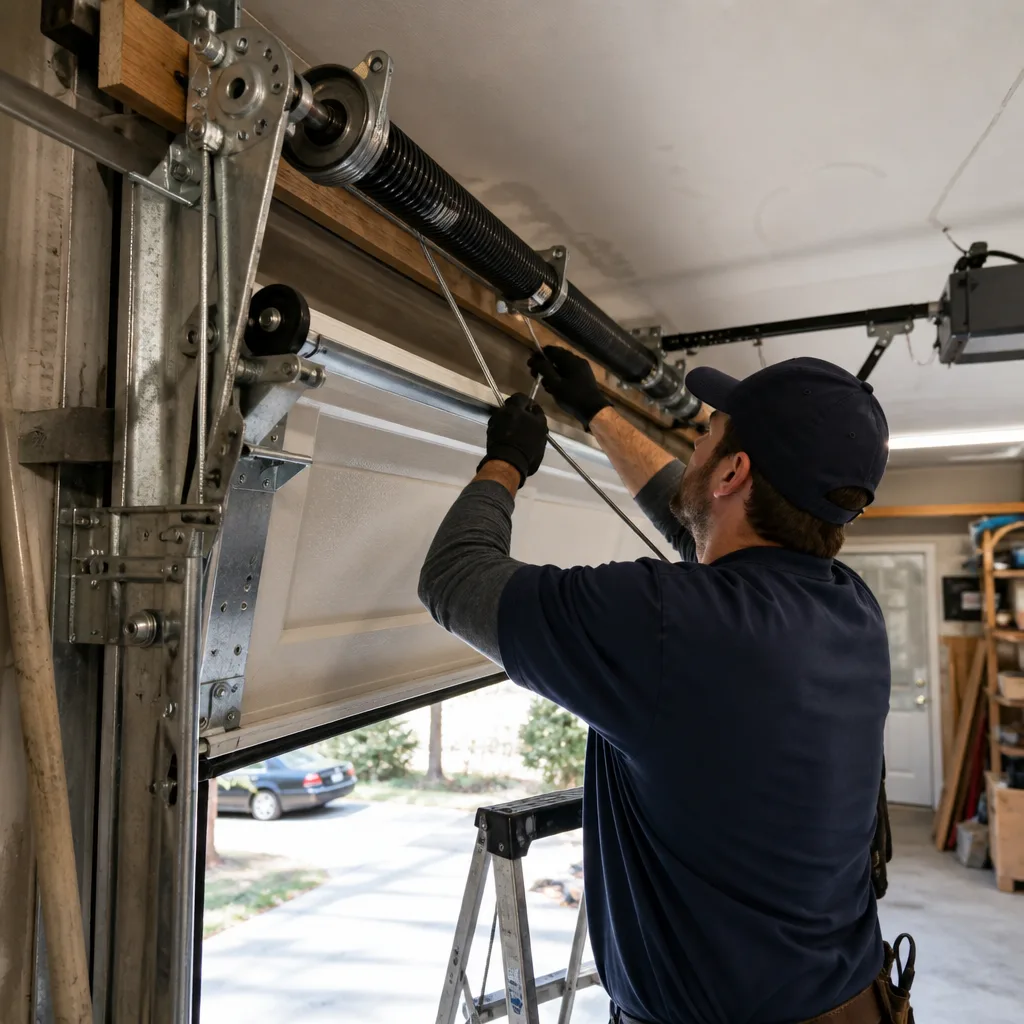
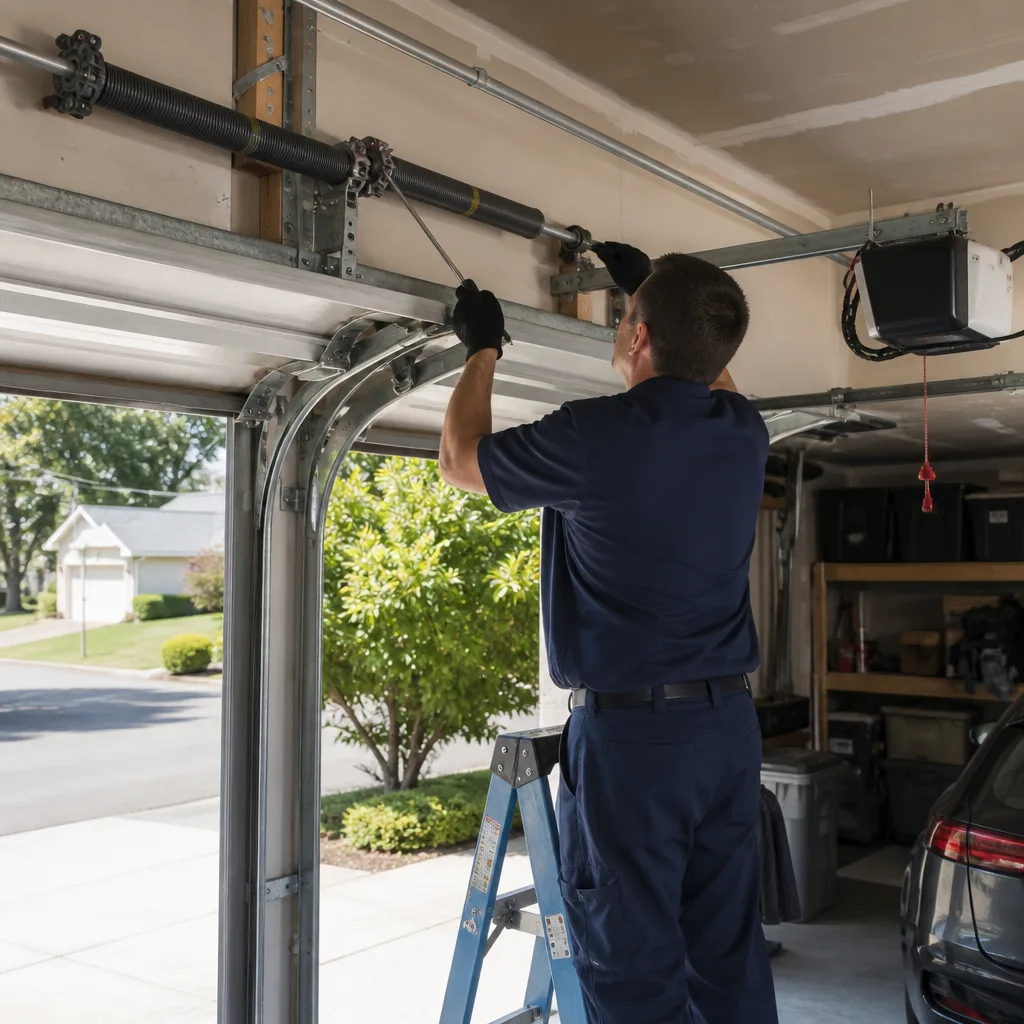
- Torsion spring replacement: The spring above the door is wound tight, storing the energy that lifts 150-400 pounds of door weight. Winding bars must be inserted into the cone while tension is released or applied. There is no gradual failure mode that gives warning. We cover the physics in detail below.
- Cable replacement with the door loaded: The lift cables run from the bottom bracket to the drum at the spring shaft. If the spring is still wound, the cable is under tension even when the door appears closed. A slipped wrench can release the drum suddenly.
- Track realignment on a weighted door: The vertical and horizontal tracks guide the rollers. If the door is not supported independently, adjusting track position changes load distribution unpredictably.
- Spring-assisted one-piece door hinge repair: Older Olympia homes, particularly in the Governor Stevens and Bigelow neighborhoods, still have swing-up one-piece doors with extension springs stretched along the horizontal tracks. These are under tension in both open and closed positions.
- Opener logic board replacement on chain-drive units with worn gears: The electrical work is simple, but if the trolley carriage is binding due to worn nylon gears, replacing the board without addressing the mechanical issue burns out the new part in weeks.
The pattern is mechanical energy, not complexity. Programming a remote has more steps than releasing a torsion spring, but the remote won’t remove your fingers if you press the wrong button in the wrong order.
The Physics of Torsion Spring Failure
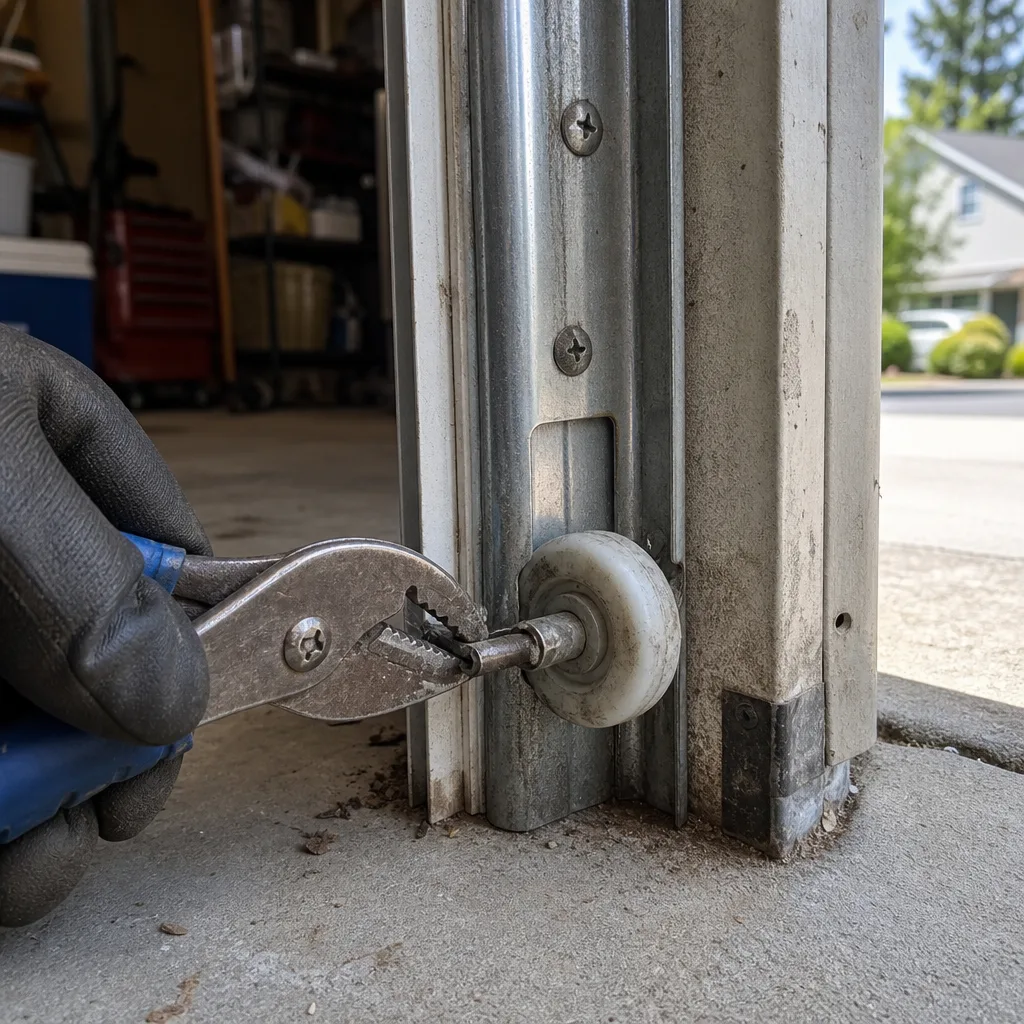
Understanding why torsion spring work is different requires understanding what “100 to 200 foot-pounds of torque” actually means in a garage.
A foot-pound is the torque produced by one pound of force applied one foot from the pivot. A 200 foot-pound spring is equivalent to a 200-pound person standing on the end of a one-foot wrench. Now imagine that wrench is the winding bar in your hands, and the “person” is a steel spring waiting to unwind. The bars are solid steel, 18 inches long, half-inch diameter. They go into the cogs of the winding cone. If the set screw slips or the bar is pulled out at the wrong angle, the bar becomes a projectile and the spring unwinds in a fraction of a second.
The velocity matters. A broken torsion spring doesn’t sag gently. The sudden release of energy causes the coil to expand radially and the shaft to rotate freely. The winding cone, a cast metal fitting, can fracture and throw fragments. The door itself, now unbalanced, can drop or twist in the tracks.
In our experience serving Olympia since 2015, we’ve documented the aftermath of three homeowner attempts on torsion springs. Two resulted in emergency room visits, one for a facial laceration from a slipped winding bar, one for a hand fracture when the door dropped unexpectedly. The third caused $2,800 in damage when the uncontrolled door fell onto a vehicle. These are not hypothetical warnings. They are the reason we photograph the failed spring before quoting replacement under Clause 4 of The Haven Standard, so the customer sees what was holding that energy before anyone touches it.
The winding bars are not sold at retail because no responsible manufacturer wants to equip an untrained person for this task. Specialty tool suppliers sell them to trade accounts with verification. This is not gatekeeping. It is engineering ethics.
For Olympia homeowners, the additional factor is corrosion. The marine air from Puget Sound, particularly for homes west of Capitol Way or in exposed locations on the Budd Inlet side, accelerates rust on the spring shaft and cones. A corroded set screw is more likely to slip under load. A pitting crack in the cone may not be visible to an untrained eye. We replace springs in Olympia that have cycled fewer times than their rating suggests because the environment has degraded the metal faster than the usage has.
What DIY Work Can Void in Washington State
The risk-transfer calculation includes paperwork, not just physics. Doing work yourself can invalidate protections you assume are separate from the repair.
Manufacturer Warranties
Most major brands require certified installer records for warranty claims on structural failures. The specifics vary:
- Clopay: Sectional door panel warranties require installation by a Clopay Master Authorized Dealer for the full coverage period. DIY installation limits coverage to factory defects only, not installation-related issues like seal failure or hardware loosening.
- Amarr: Wind load and impact ratings on coastal-zone doors, relevant for Olympia’s exposure to Strait of Juan de Fuca weather patterns, require documented professional installation to maintain the rating certificate.
- Wayne Dalton: TorqueMaster spring system warranties are void if the enclosed spring tube is opened by anyone other than an authorized technician. The design intentionally conceals the spring for safety, and breaking the seal voids coverage.
- LiftMaster and Chamberlain: Opener motor and rail warranties remain valid for DIY installation, but the force-limitation and safety-reverse system must be tested and documented per the manual. Failure to produce test records voids liability coverage for property damage.
- Genie: Screw drive and chain drive units carry a DIY-installation warranty on the motor, but the Safe-T-Beam system must be aligned and tested to factory spec. We find many Olympia homeowners skip the force-test step, which becomes relevant after any incident.
Homeowner’s Insurance Coverage
Washington State homeowner’s policies vary by carrier, but the common pattern is this: damage caused by “faulty maintenance or repair” is excluded from coverage if the work was done by the homeowner and not to code. A garage door that falls due to improper spring installation, damaging a vehicle or injuring a person, may trigger this exclusion. The insurer will request maintenance records. If the spring was replaced by the homeowner without documentation of correct part specification and installation torque, the claim can be denied.
The critical distinction is between maintenance and repair. Cleaning photo-eyes and lubricating hinges is maintenance. Replacing a load-bearing component is repair. Insurance adjusters treat them differently.
Permit and Resale Compliance
Olympia requires permits for garage door replacement when the door opening is altered or when an electric opener is installed in a new location; see our guide to Garage Door Permits, Codes & Inspections in WA: What You Need to Know for details. The permit must be closed with an inspection. DIY work without permit creates a title issue at sale. In Thurston County’s current market, where homes in the East Olympia and Lacey border areas turn over frequently, unpermitted electrical or structural work appears on disclosure forms and can delay or derail transactions.
Documentation is the bridge. We provide the permit, the inspection coordination, and the signed completion record as standard on installation jobs. DIY homeowners must self-permit through the City of Olympia Community Planning and Development office, schedule their own inspection, and retain the signed card.
The Honest Cost Comparison: When DIY Saves Money and When It Doesn’t
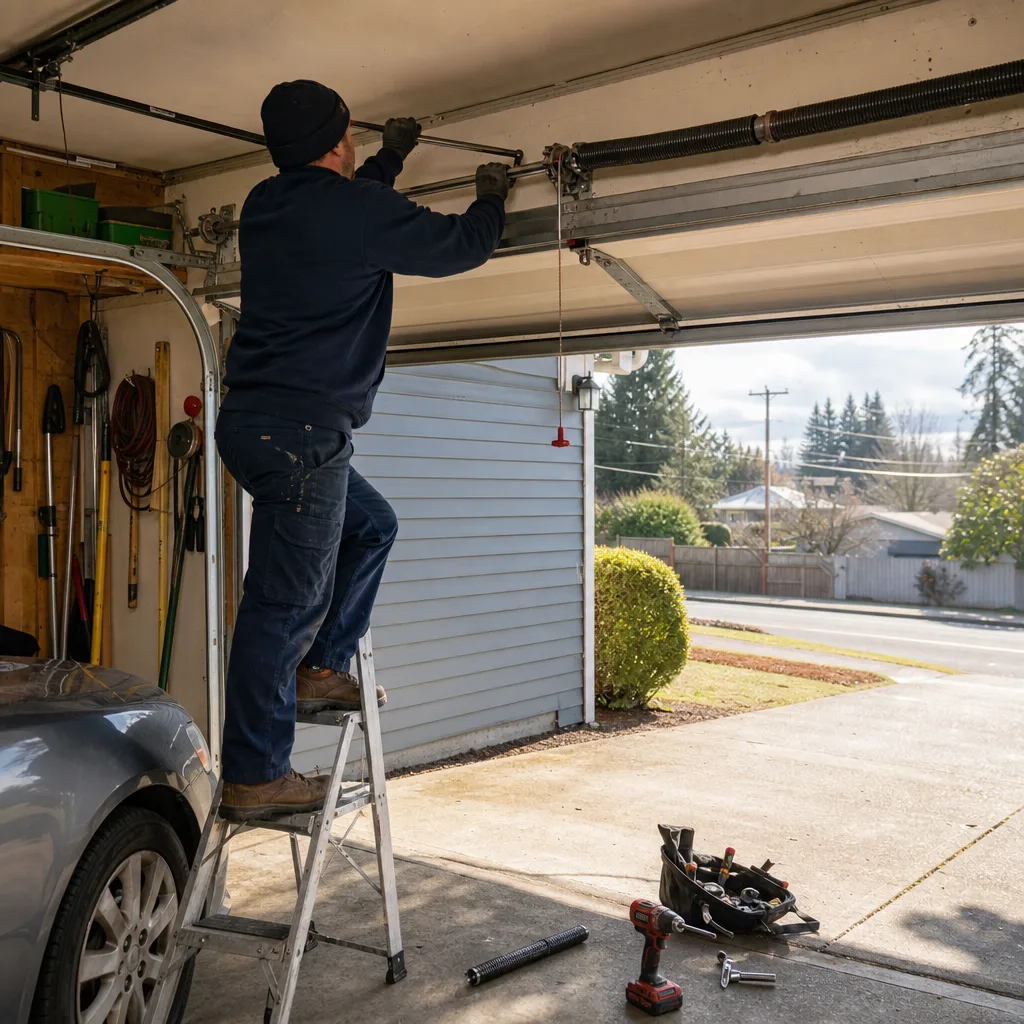
The financial calculation is often misrepresented by both sides. DIY advocates ignore tool costs, second attempts, and time value. Contractors ignore that some tasks genuinely are cheaper to self-perform. Here is the actual math for Olympia homeowners in 2024-2025.
When DIY Saves Real Money
| Task | DIY Material Cost | Professional Range in Olympia | Net Savings |
|---|---|---|---|
| Bottom weather seal replacement | $18-35 | $95-165 | $60-130 |
| Photo-eye cleaning and alignment | $0 | $85-125 service call | $85-125 |
| Remote/keypad reprogramming | $0 | $85-125 service call | $85-125 |
| Hinge and roller lubrication | $12 (silicone spray) | $95-145 as part of tune-up | $80-130 |
| Cosmetic panel painting (single) | $30-60 (paint, primer, supplies) | $200-400 (removal, shop paint, reinstall) | $140-340 |
These savings are real and appropriate for homeowners comfortable with basic tools. The tasks require no special equipment, carry no injury risk beyond normal household hazards, and have forgiving error modes.
When Professional Work Is Financially Equivalent or Cheaper
| Task | DIY True Cost | Professional Range in Olympia | Notes |
|---|---|---|---|
| Torsion spring replacement (single) | $80-140 spring + $60-90 winding bars + $45 spring scale + potential ER visit or property damage | $180-340 | Tool purchase amortized over one use; injury risk unpriced |
| Opener installation (chain drive, ½ HP) | $180-280 unit + $40 hardware + 4-6 hours + potential rework | $350-550 | Includes haul-away, warranty, force testing, photo-eye alignment |
| Track realignment (two-car door) | $0-25 shims/hardware + 2-3 hours + risk of door damage | $150-280 | Requires supporting door independently; common DIY error bends track |
| Cable replacement (pair, with spring loaded) | $25-40 cables + $40 cable puller tool + extreme injury risk | $160-290 | Cable puller is single-use for most homeowners; incorrect winding causes uneven lift |
The honest comparison for torsion spring work: even if you already own winding bars and a spring scale, the professional price includes the correct spring specification (we measure wire diameter, inside diameter, and length to the quarter-inch), the warranty, the disposal, and the liability transfer. At $180-340 in the Olympia market, the margin over DIY narrows to the point that the risk-adjusted value favors professional work for anyone who does not plan to do this repeatedly.
For opener installation, the gap is larger, but so is the error rate. We receive calls monthly from Olympia homeowners who installed their own opener, found the force setting incorrect, and damaged the top panel when the door hit an obstruction. The $350-550 professional price includes the force-limitation test that prevents this, plus the 365-Day Done Right Promise if anything is off.
How to Document DIY Work Properly
If you choose to perform maintenance or minor repairs yourself, documentation protects you at resale, during insurance claims, and if a subsequent professional needs to understand what was done. The standard we apply on every job, Clause 4’s photo record, is worth emulating for your own work.
- Photograph the condition before touching anything. Date-stamped photos of the component, the surrounding hardware, and the overall door assembly establish baseline condition. If a spring breaks six months after you lubricated it, the photo proves the corrosion was pre-existing.
- Record part numbers and specifications. The spring tag, the opener model and serial, the panel brand and style number. Write them in a home maintenance log, not just on the box. We find that Olympia homeowners who keep a dedicated garage door file, digital or physical, have smoother transactions when they sell.
- Photograph the work in progress and completed state. The photo-eye alignment with both LEDs lit. The weather seal fully seated in the retainer. The lubrication points, not dripping excess. This creates evidence of competent execution.
- Note the date and the weather. In Olympia’s climate, maintenance timing matters. A weather seal replaced in January during a freeze-thaw cycle performs differently than one replaced in July. Document the conditions.
- Retain manufacturer manuals and warranty cards. For openers, the force-test record sheet. For panels, the installation certificate if you have it. For any professional work you have done, keep the written scope and flat-price quote, the same documentation we provide under Clause 1 of The Haven Standard.
- Disclose on sale, with documentation. Washington’s Form 17 Seller Disclosure asks about modifications and repairs. “Replaced bottom weather seal, 2023, self-performed with photos and part record” is a complete answer that satisfies buyers and their inspectors. “Replaced spring, 2022, no documentation” raises questions.
The goal is not to prove you’re a technician. It is to prove you’re a competent homeowner who treats the property’s systems with care. In Thurston County’s competitive resale market, that distinction matters.
How Olympia’s Marine Climate Affects Garage Door Maintenance
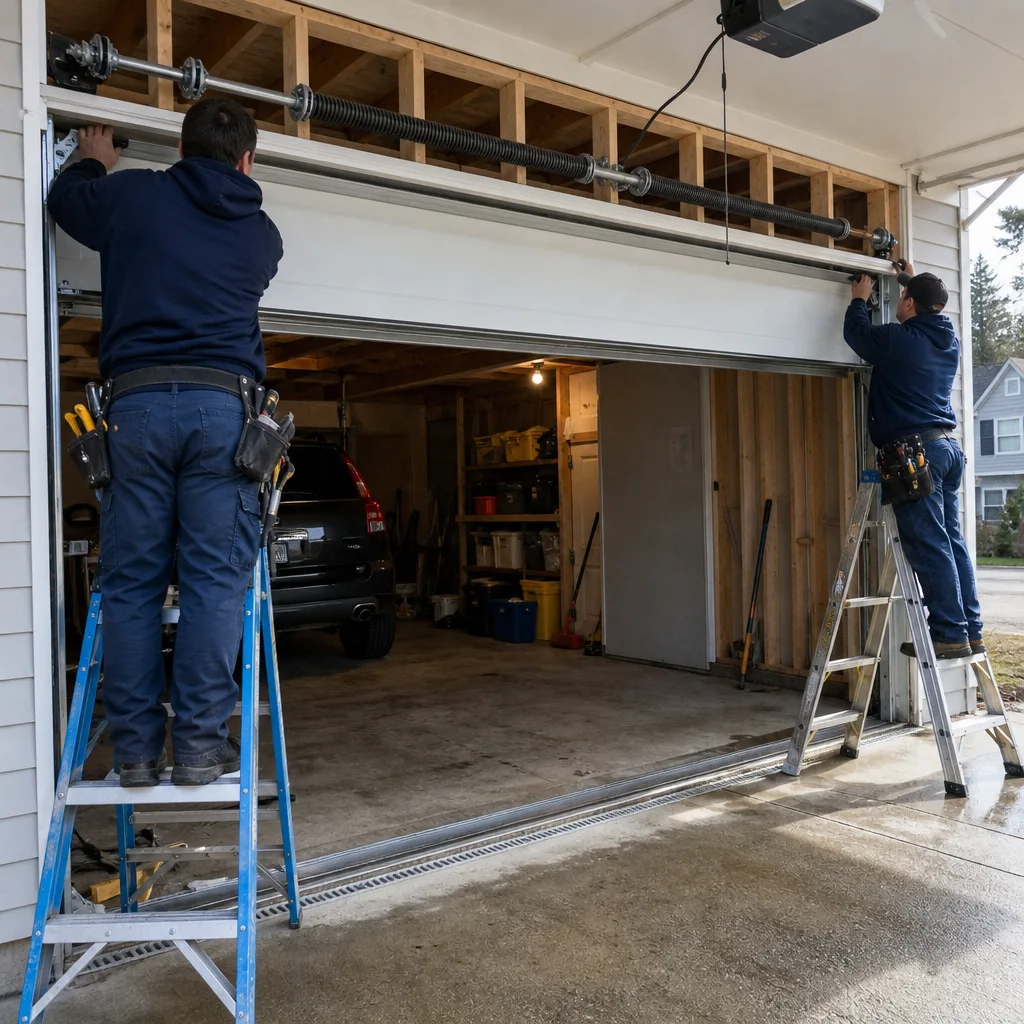
Olympia’s location at the southern tip of Puget Sound creates specific maintenance conditions that inland Washington homeowners do not face. The marine layer, the salt air from Budd Inlet, and the persistent November-to-May moisture accelerate certain failure modes and change the DIY-versus-professional calculation for some tasks.
Rust formation on torsion springs and hardware is faster here than in Spokane or Yakima. We replace springs in Olympia with visible corrosion pitting that have not reached their cycle rating. A homeowner inspecting a spring for DIY replacement may see surface rust and assume normal aging; the pitting that indicates incipient failure requires magnification or experience to identify. This is one reason we photograph the spring surface under Clause 4, the customer sees what we see.
Wooden doors, still present in the historic districts and the Craftsman-era homes near downtown, require more frequent sealing and painting in this climate. DIY maintenance is appropriate, but the frequency is higher. A door that needs refinishing every five years in Denver needs attention every three in Olympia. Failure to maintain the seal allows moisture ingress, panel warping, and eventual structural failure that requires full replacement rather than repair.
The photo-eye system is also affected. Moisture condensation on the lenses, common in unheated garages during temperature swings, causes false obstruction readings. Cleaning is a simple DIY task, but diagnosing whether the issue is condensation, misalignment, or failing emitter requires systematic testing. We walk customers through this by phone when appropriate, our 24/7 live answer means you reach a person who can troubleshoot, not a callback queue.
Wind exposure varies by neighborhood. Homes on the exposed hills above West Olympia or along the East Bay waterfront see higher gust loads than sheltered inland locations. This affects the importance of wind-load-rated doors and the proper setting of opener force limits. An incorrectly set force limit on a windy day causes the door to reverse unnecessarily or, worse, to fail to reverse when it should. The adjustment is in the opener manual, but the testing protocol requires a 2×4 board and careful observation that many homeowners skip.
Common Mistakes to Avoid
- Using the wrong spring specification. Torsion springs are rated by wire diameter, inside diameter, length, and wind direction. A spring that is close but not exact creates uneven lift, cable drift, and premature opener failure. In Olympia, we see this most often when homeowners order from national suppliers without measuring the existing spring under load, which requires special tools.
- Lubricating the track. The vertical and horizontal tracks should be clean and dry. Lubricant attracts dust and grit, creating an abrasive paste that accelerates roller wear. We clean tracks with solvent during tune-ups, never lubricate them. Homeowners often misapply spray lubricant to every surface.
- Ignoring the door balance after opener work. A properly balanced door stays at any position when disconnected from the opener. If the door drifts after you adjust the opener travel limits, the spring tension is wrong, not the opener. Adjusting the opener to compensate burns out the motor in months.
- Replacing one spring on a two-spring door. Matched springs age together. One new spring with one old spring creates torque imbalance, door binding, and eventual cable jump. We replace torsion springs in pairs, always, and document the pair match in the photo record.
- Skipping the force test after any adjustment. The entrapment protection test, placing a 2×4 flat on the floor and verifying the door reverses on contact, is not optional. It is federal law under UL 325, and it is the most skipped step in DIY installation. In Olympia’s wet climate, a door with excessive closing force can trap a pet or child against a slippery floor with no traction to escape.
- Not checking permit requirements for opener relocation. Moving an opener to a new location, not just replacing in the same spot, requires electrical work that may need permit and inspection. The City of Olympia’s permitting office processes these, but unpermitted work surfaces at sale.
- Assuming all brands program the same way. A Craftsman remote will not program to a Genie opener using LiftMaster button sequences. The manual matters, and the sequences are not intuitive. We receive calls from frustrated Olympia homeowners who have factory-reset their opener trying to guess the sequence.
When to Call a Professional
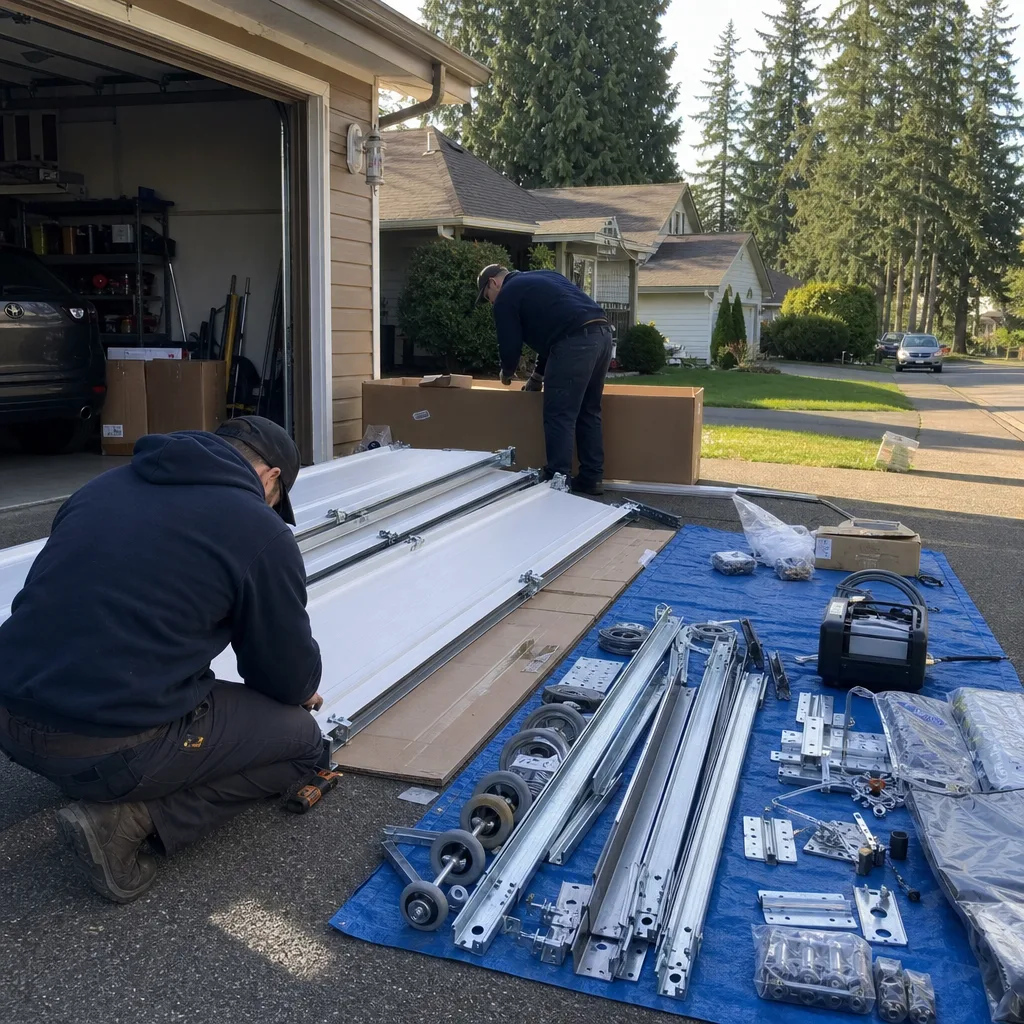
Call a technician when the component is under load, when the work affects structural balance, when warranty or insurance documentation is required, or when you have attempted the task and the problem persists. Specific scenarios: a broken torsion spring or visible cable fray, a door that has come off its tracks, an opener that reverses unpredictably after you’ve cleaned the photo-eyes, any damage from vehicle impact, or preparation for home sale where disclosure documentation must be complete.
Garage Door Repair in Olympia from Servo Garage Doors includes the documented photo record, the flat written price before work starts, and the 365-Day Done Right Promise. We also offer a Free Second Opinion on any written estimate from another company, bring the paperwork, no coupon needed. Servo Garage Doors Olympia home has our full service details, or call (360) 995-1547 for a free estimate. Emergency calls are answered live, 24/7, with a named technician and an on-the-way text.
Frequently Asked Questions
Single torsion spring replacement in Olympia typically runs $180-340, and double-spring systems range from $280-480 depending on wire size and door weight. The price is quoted flat, in writing, before any work starts, per Clause 1 of The Haven Standard. Call (360) 995-1547 for an exact quote on your specific door, estimates are free.
You should not replace a torsion spring yourself. The stored energy, 100-200 foot-pounds of torque, can cause serious injury or death if the winding bar slips. The proper tools are not sold to consumers by design. Extension springs on older one-piece doors are similarly dangerous. This is not a skill issue, it is a physics issue. Call a trained technician for any spring work.
It depends on the component and brand. Clopay, Amarr, and Wayne Dalton panel warranties require certified installer records for full coverage. LiftMaster and Chamberlain opener warranties remain valid for DIY installation if the force-test documentation is completed and retained. Always check your specific warranty terms before starting work, and keep detailed records of anything you do yourself.
Disconnect the opener by pulling the red release handle, then manually lift the door to waist height. A balanced door stays in place. If it rises or falls on its own, the spring tension is incorrect. Do not adjust spring tension yourself. The test is safe, the adjustment is not. If your door fails this test, call for professional adjustment.
Replace the bottom weather seal when it cracks or hardens, typically every 3-5 years in Olympia’s moisture; for a complete schedule, see our Garage Door Repair Maintenance Checklist for Olympia Homeowners. Lubricate hinges, rollers, and bearings with silicone spray twice yearly. Clean photo-eye lenses monthly, more often if your garage faces a dusty road. Inspect wooden doors annually for seal failure and moisture intrusion. These tasks require no special tools and carry minimal risk.
Yes. Every estimate is free, flat-priced, and delivered in writing before any work begins. We also provide a Free Second Opinion on any written estimate from another company, no coupon or code required. Emergency calls are answered live 24/7. Call (360) 995-1547 to schedule.
The Bottom Line
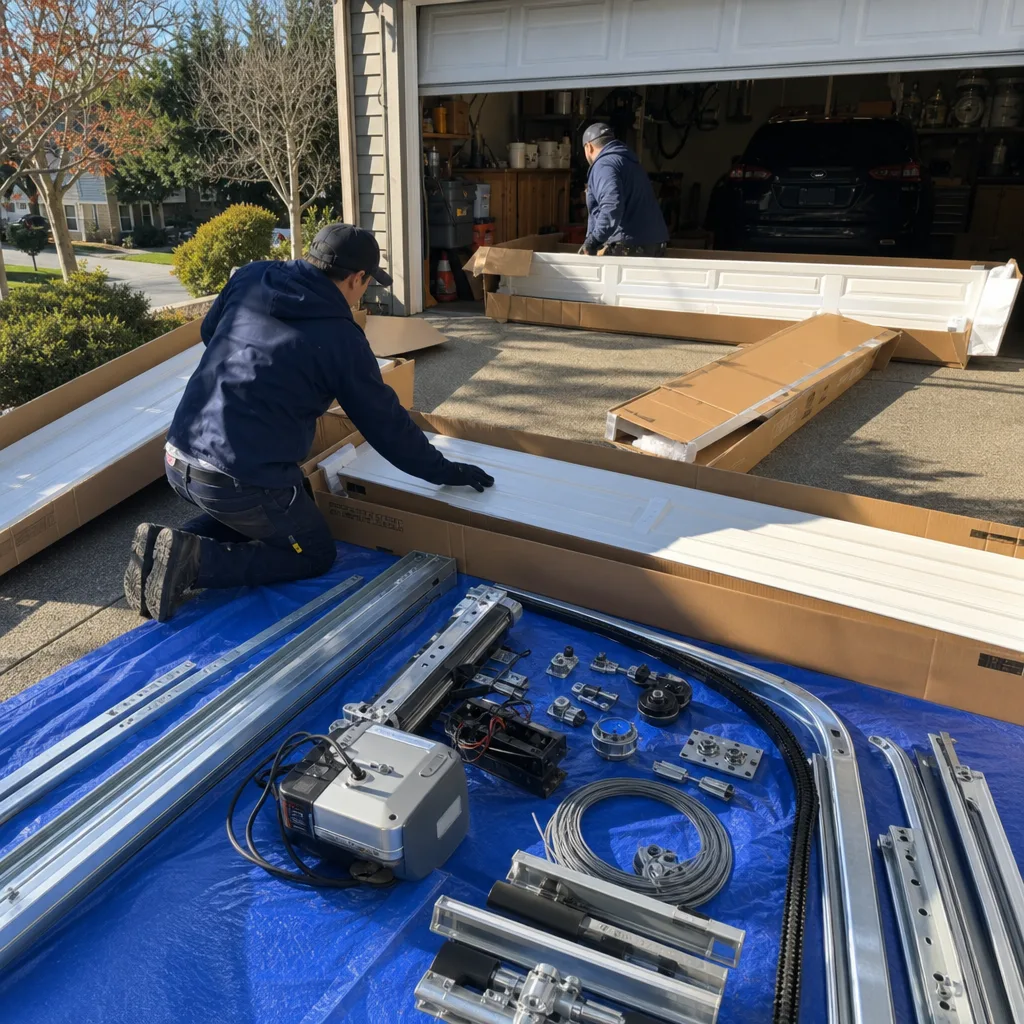
The DIY-versus-professional decision for garage door work is a risk-transfer calculation, not a test of your competence. Programming a remote, replacing a weather seal, and maintaining photo-eyes are appropriate homeowner tasks with real cost savings and minimal risk. Torsion spring replacement, cable work under load, and track realignment on weighted doors transfer injury risk that no amount of YouTube research can eliminate. In Olympia’s marine climate, corrosion accelerates hidden failures that experienced eyes catch before they become emergencies. Document whatever you do yourself, know what your warranties and insurance require, and recognize that the professional price often includes value, not just labor, when tools, risk, and documentation are counted honestly. The right choice is the one that matches the component to your actual tolerance for mechanical, financial, and legal risk.
Written by Marcus Deller, Owner at Servo Garage Doors Olympia, serving Olympia since 2015.